How to Flush a Water Heater in 2027
Turn off the power or gas, connect a garden hose to the drain valve, open a hot tap, and let the tank empty. Then pulse cold water through the tank until it runs clear, close the valve, refill the tank, and restore power. That is how to flush a water heater, and the whole job takes about an hour.
Your water heater talks before it quits. It pops and rumbles when the burner fires, the shower runs lukewarm halfway through, and the energy bill creeps up a little each month.
Most owners hear all three and blame the heater. The real culprit sits at the bottom of the tank, a layer of grit that grows a little thicker every year.
That grit is sediment, mostly calcium and magnesium that drops out of tap water when it heats. Left alone it insulates the water from the heat, so the heater works longer for the same hot shower. A yearly flush clears it out with a garden hose and about an hour of your time.
What is sediment doing to your heater?
Dissolved minerals ride in with every gallon of tap water, mostly calcium and magnesium. Heat makes them drop out and sink, so the tank floor slowly collects a layer of sand and scale, and the layer grows far faster in a hard water home.
The layer acts like insulation between the burner or the lower element and the water. The US Department of Energy notes that sediment forces the heater to run longer and burn more energy to heat the same water. Trapped water under the layer can flash into steam, which is the popping sound owners hear.
On an electric heater the buried lower element runs hot and can fail early. Once you learn how to flush a water heater, that popping sound stops being a mystery.
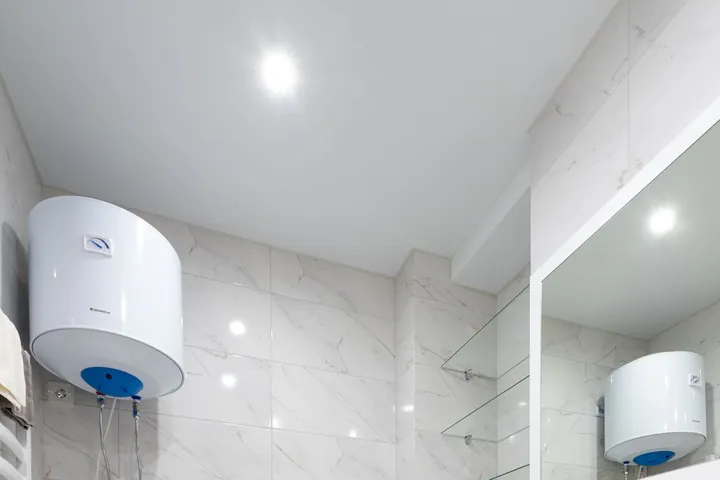
Keep the thermostat at 120 degrees. The Department of Energy recommends 120 degrees for most homes because it is hot enough for showers and dishes, it slows scale buildup, and it lowers the scald risk. A hotter tank scales faster and costs more to run.
How often should you flush?
Once a year suits most homes on city water. Hard water, well water and older heaters need it twice a year.
Most manufacturers print the same advice in the manual: learn how to flush a water heater once a year. Check your manual for the exact schedule, because warranty terms vary by maker. The US Department of Energy also suggests pulling about a quart of water from the tank every 3 months as a light routine between full flushes.
Check the temperature and pressure relief valve every 6 months, too. It is the safety valve that releases pressure if the tank overheats, and a quick lift of its lever tells you it still moves freely.
| Water type | Flush schedule |
|---|---|
| City water, soft to medium | Once a year |
| Hard water, over 7 grains per gallon | Every 6 months |
| Well water with sand or iron | Every 6 months |
| Water softener installed | Once a year |
| Tankless heater | Descale once a year, twice with hard water |
Find your water hardness in the water quality report your supplier must publish every year, or test it with a cheap strip kit. Above 7 grains per gallon counts as hard, and the 6 month schedule applies. Put the date on your home maintenance checklist so the job does not slip a year.
The 10 minute mini flush
A full flush takes an hour. A mini flush takes 10 minutes and keeps sediment from hardening between yearly flushes.
Think of the mini flush as the short form of how to flush a water heater, a quick rinse between full flushes. It works best on a tank that already gets a full flush once a year.
Place a bucket under the drain valve and open the valve for about 1 to 2 minutes. Let 2 to 3 gallons run out, then close it.
Catch the water in a clear bucket and look at it. Clear water means the tank is in good shape. Sandy or cloudy water means the full flush is due soon.
Do it every 3 months, on the same day you check the smoke alarms. It takes less time than a coffee break.
What you need
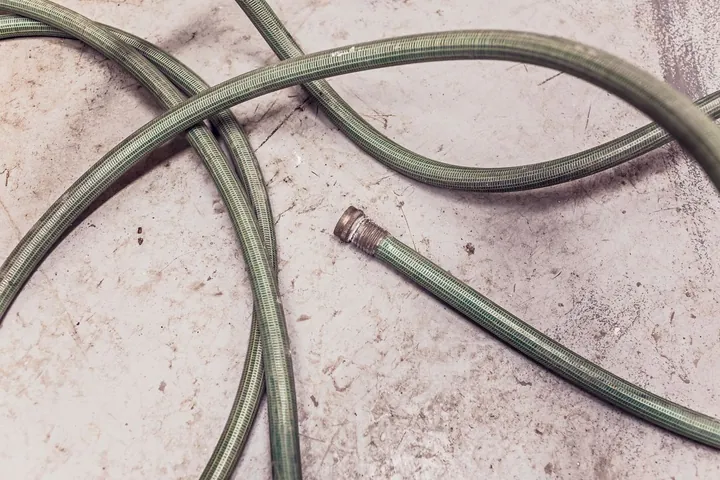
Gather everything before you touch a valve, because a half drained tank is a bad time to shop for a hose. You need a garden hose long enough to reach from the heater to a floor drain or outside, a clear bucket, old towels, a flat head screwdriver, and work gloves.
Keep a replacement drain valve on hand if yours is the cheap plastic type that came with the tank. Plastic valves crack or stick shut after years of sitting untouched, and a brass ball valve costs $10 to $15 at a hardware store. Teflon tape for the threads costs a couple of dollars more.
How to flush a water heater, step by step
Plan on 1 to 2 hours from start to finish, including cooling and refilling. A 40 or 50 gallon tank takes 20 to 45 minutes to empty on its own. The steps below are the full version of how to flush a water heater, in order.
Step 1: Switch the heat off. Electric: switch off the dedicated breaker and tape a note on the panel so nobody flips it back. Gas: turn the control knob to Pilot, which keeps the pilot lit and stops the main burner.
Step 2: Give the water time to cool. Give the tank a few hours, or switch it off the night before. Run the hot taps for a while to pull hot water out and let cold water in, which cools the tank faster.
Step 3: Shut off the cold water inlet. Find the cold water shutoff valve on top of the heater and turn it clockwise to close it. That keeps the tank from refilling while you drain it.
Step 4: Open a hot water faucet. Open the hot tap nearest the heater and leave it open. Air enters through the tap and breaks the vacuum, so the water can flow out freely.
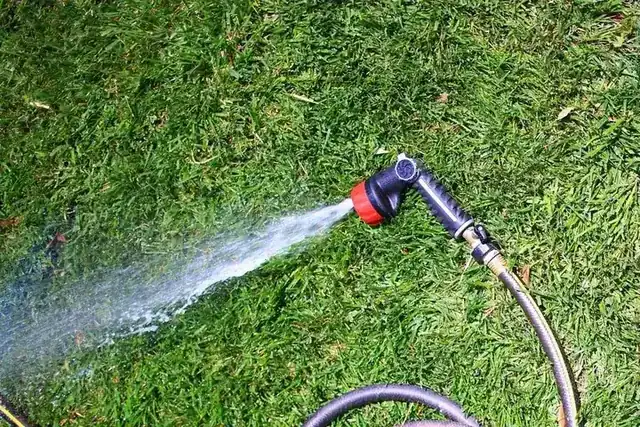
Step 5: Attach the garden hose. Screw the hose onto the drain valve near the bottom of the tank and run the other end to a floor drain, a sump pit or outside, downhill from the heater so gravity does the work. With no floor drain, run the hose out a door onto a driveway, away from plants and walkways.

Step 6: Let the tank drain. Open the valve a little at a time and keep your hands clear, because the first water out is the hottest and dirtiest. Let the tank drain until the flow stops.
Step 7: Rinse the sediment out. With the drain valve still open, turn the cold water inlet on for 10 to 15 seconds at a time.
Each burst stirs up the grit on the bottom and pushes it out through the hose. Repeat until the water runs clear.
Step 8: Close up and refill. Close the drain valve firmly and disconnect the hose. Open the cold water inlet to refill the tank.
Leave the hot faucet open until it runs in a steady stream with no sputtering, which means the tank is full. Then close the faucet.
Step 9: Restore power or gas. Only now switch the breaker back on, or turn the gas knob to On. Relight the pilot first only if it went out, following the label on your heater.
An electric element switched on in an empty tank burns out in seconds, so the full tank check in step 8 saves you a repair bill. Allow 30 to 60 minutes for a full tank to reheat.
The first time you learn how to flush a water heater, give yourself the full two hours. Run hot water at a few fixtures for a minute to clear air and grit from the pipes. If a tap runs gritty, unscrew the aerator, rinse it, and screw it back on.
Read what comes out of the hose
The water tells you how the tank is doing, so catch some in a clear bucket before it runs clear and look at it. If you have never drained a tank before, our guide to how to drain a water heater walks through the emptying part in more detail.
| What you see | What it means | What to do |
|---|---|---|
| Clear water, a little sand | Normal wear, yearly flush is enough | Stay on the yearly schedule |
| Rusty or brown water | Corrosion inside the tank, often a worn anode rod | Check the rod, call a plumber if it keeps coming back |
| White or gray chunks | Heavy mineral scale, common with hard water | Move to a 6 month schedule |
| Rotten egg smell | Bacteria reacting with a worn anode rod | Ask a plumber about an aluminum zinc rod |
If the water still looks sandy after three or four cold water bursts, run a few more, then stop. A tank that has never been flushed may need a pro with a pump to clear the rest.
Check the anode rod while the tank is empty
The anode rod is a magnesium or aluminum rod that hangs inside the tank and rusts so the steel tank does not. It is the part that actually keeps a tank alive for a decade, and a flush is the perfect time to look at it. Check it every 3 to 4 years, the schedule the US Department of Energy gives, and it is one more reason to learn how to flush a water heater yourself.
With the power and water off and the tank partly drained, find the hex head on top of the heater and unscrew it with a one and one sixteenth inch socket. You need ceiling clearance equal to the tank height to pull the rod out.
Replace it if the steel core wire shows over much of its length, if it is coated thick in calcium, or if it measures under half an inch thick. A new rod costs $20 to $50 and takes about 15 minutes to fit.
A spent anode rod is the most common reason tanks rust out early. If the rod is gone and the tank is over 10 years old, start budgeting for a replacement rather than more maintenance. Our guide to how a water heater works explains the rod and the rest of the tank in plain words.
What if the drain valve clogs?
On a heater that has never been flushed, sediment can pack the drain valve solid. You open it and get a dribble or nothing. A clogged valve is the most common surprise when you learn how to flush a water heater on an old tank, so try these fixes in order.
Back flush it. With the tank full and the water on, open and close the valve several times. The pressure pulses can break up the plug.
Our guide to draining a water heater uses a second method for the same clog, a washing machine hose between a faucet and the drain valve, so try that next if this one fails.
Clear it with a wire. With the valve open, carefully poke a straightened coat hanger up into the valve to break through the crust. Have the hose routed to a drain first, because when it breaks free the water comes fast.
Replace the valve. If the cheap plastic factory valve is the problem, drain what you can, unscrew it, and install a full port brass ball valve for $10 to $15 with thread seal tape on the threads. Brass valves drain much faster and rarely clog.
If none of this works and the heater is over 10 years old, take the hint. The tank is full of sediment and near the end of its life, so put the effort toward shopping for a replacement instead.
Tankless heaters need a different flush
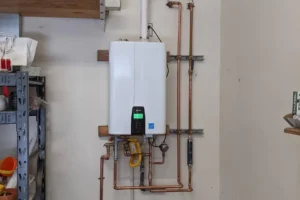
A tankless heater holds no stored water, so there is nothing to drain. Minerals coat the heat exchanger instead and choke efficiency, so a tankless unit needs descaling once a year, twice with hard water. Tankless owners search for how to flush a water heater too, and the answer is different.
Turn off the power, close the hot and cold isolation valves, and connect a small pump to circulate white vinegar or a manufacturer approved descaler through the service valves for 45 to 60 minutes. Then flush with clean water, reopen the valves, and restore power.
A descaling kit with a pump runs $100 to $150, and a pro descaling costs $150 to $250 according to Angi. Skipping it in hard water areas can shorten the life of the unit a lot, and many warranties require it, so keep the receipt.
What a plumber charges to flush a water heater
Doing it yourself costs almost nothing, a hose you already own and an hour of a Saturday. Hiring a plumber buys speed and a trained eye on the valves, the anode rod and the relief valve.
Angi updated its figures on October 30, 2026, and the national average for a pro flush is $160. Knowing how to flush a water heater yourself turns that $160 into an hour of your Saturday.
| Service | Typical cost in 2026 |
|---|---|
| DIY flush with your own hose | $0 to $25 |
| Pro flush, tank heater | $75 to $150, average $115 |
| Pro flush, most homeowners pay | $110 to $200 |
| Pro flush, tankless descaling | $150 to $250, average $200 |
| Weekend or emergency call | Up to $400 |
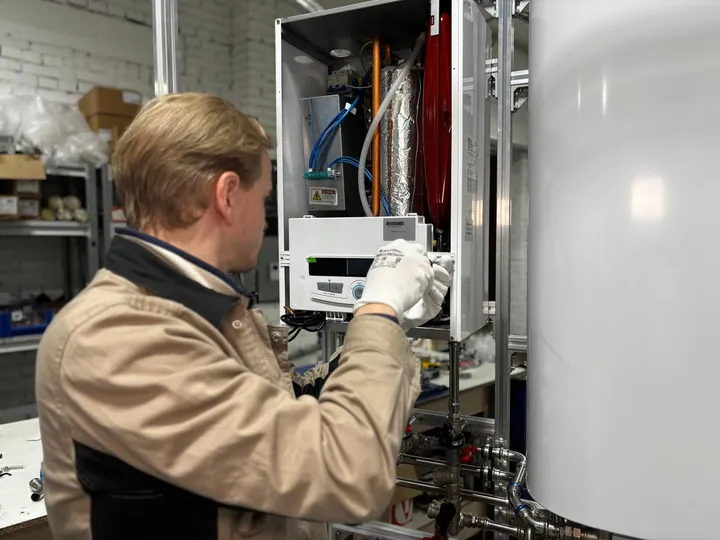
I would rather spend an hour with a hose than $160 on a plumber visit, but the pro price is fair when the valve is stuck, the tank is old, or the warranty requires pro service. Get the quote in writing and ask whether it includes an anode rod check.
When flushing comes too late
Flushing is maintenance, not repair. It cannot fix a tank that is already failing, and on a very old tank it can even expose a leak. Watch for the signs that the tank is done: rusty hot water that stays rusty after a flush, a leak from the base of the tank, or a rotten egg smell that a new anode rod does not fix.
If your heater is over 10 years old and has never been flushed, talk to a plumber before you open the valve. Packed sediment can be the only thing sealing tiny corrosion spots, and disturbing it can start a leak. When replacement is the answer, our guide to replacing a water heater walks through the costs and the choices.
Check your warranty before you start, too. Some manufacturers tie warranty coverage to documented maintenance, so keep the receipt from a pro flush and note the date of a DIY flush in your home records.
Mistakes that cost money
- Opening the valve on a hot tank and letting scalding water run through a hose you are holding.
- Turning the gas back to On before the tank refills, which can overheat the tank bottom.
- Closing the drain valve while grit is still in the threads, so it drips for days.
- Running the hose uphill or letting it kink, so the tank drains at a trickle for hours.
- Forgetting to check the valve for drips the next day, so a slow leak soaks the floor.
Related guides
These guides cover the heater itself, the yearly routine, and what to do when the tank is done.
- How Does a Water Heater Work? Inside the Tank in 2027
- How to Drain a Water Heater in 2027
- How to Replace a Water Heater
- Home Maintenance Checklist for Every Season
- How to Drain a Gas Water Heater in 2027
- How to Drain Electric Water Heater in 2027
- How to Flush a Gas Water Heater in 2027
- How to Flush Tankless Water Heater Units in 2027
- How Long Does It Take to Drain a Water Heater in 2027
- How Often Should You Drain Your Water Heater in 2027
- How Long Does a Water Heater Last in 2027
Frequently Asked Questions
How often should I flush my water heater?
Once a year is enough for most tanks, and twice a year if your water is hard or comes from a well. Once you learn how to flush a water heater on that schedule, the job stays a quick yearly habit. The US Department of Energy also suggests pulling about a quart from the tank every 3 months as a light routine, plus a check of the temperature and pressure valve every 6 months.
Can you flush a water heater yourself?
Yes, most owners can. You need a garden hose, a bucket, gloves and about an hour, plus a few hours for the tank to cool first. The steps above cover the whole job, and the only part that needs care is making sure the tank is full again before you switch the power back on.
How long does it take to flush a water heater?
Plan on 1 to 2 hours the first time, including cooling and refilling, and about an hour once you have done it before. A 40 or 50 gallon tank takes 20 to 45 minutes to empty on its own, and the narrow drain valve sets the pace.
What happens if you never flush a water heater?
The sediment layer keeps growing until it insulates the water from the heat, so the heater runs longer, the bill climbs, and the lower element or the tank bottom overheats. Rumbling starts first, then rusty water, then leaks. A tank that never gets flushed often fails years before a maintained one.
Can you flush a tankless water heater the same way?
No. A tankless unit holds no stored water, so there is nothing to drain. It needs descaling instead, which means circulating white vinegar or a manufacturer approved descaler through the heat exchanger with a small pump for 45 to 60 minutes, once a year.
Is it too late to flush an old water heater?
It can be. If the tank is over 10 years old, has never been flushed, and still works fine, packed sediment may be sealing tiny corrosion spots, and disturbing it can start a leak. Call a plumber first and weigh the flush against the price of a replacement.
Hot water, gas lines and live electricity share one small box, so respect all three. If you smell gas at any point, stop and call your gas company from outside the house.
Never switch an electric heater back on until the tank is full, and never block the relief valve. A leak from the tank body itself means the tank is finished, so call a licensed plumber and do not wait.
Mark the date on the calendar tonight, while the job is fresh in your mind. Next year, when you already know how to flush a water heater and the water runs clear on the first bucket, you will know the hour was well spent.
Sources: Angi, How Much Does It Cost to Flush a Water Heater, updated October 30, 2026; US Department of Energy, Energy Saver, Storage Water Heaters; ABS Pipes, How to Flush a Water Heater, Step by Step Maintenance; HomeNestor, How to Flush a Water Heater to Remove Sediment; Sensible Digs, How to Flush a Water Heater. These figures are national planning ranges, not quotes for your home, so ask a licensed local plumber for written advice before you budget or touch a gas appliance.