
How Often Should You Drain Your Water Heater in 2027
The shower went cold halfway through on a January morning, and the tank was only six years old. That is the moment most people start asking how often should you drain your water heater, and the honest answer is that the calendar matters less than the water running through the tank. A yearly flush suits most homes.
Hard water cuts that to six months. What follows shows you how to find your own number, what the makers say, and the small habits that keep a tank quiet between flushes.
How often should you drain your water heater? Once a year for most homes on city water, and every six months if your water is hard or comes from a well. A tank past eight years old that has never been flushed is a different case, so read the old tank section before you touch the drain valve.
Pick Your Interval From This Table
Every guide gives the same two numbers, once a year or twice a year, and then leaves you to guess which one fits your house. The table below turns the guess into a choice. Find your row, and you have your schedule.
It answers how often should you drain your water heater for the water you actually have, not for a house across town.
| Your water and household | Full flush | Between flushes |
|---|---|---|
| City water, soft to moderate hardness, normal use | Once a year | 1 quart every 3 months |
| Hard water, above 7 grains per gallon | Every 6 months | A few quarts each month |
| Very hard water, above 10.5 grains per gallon | Every 3 to 4 months | A gallon each month |
| Well water, with sand or extra minerals | Every 6 months | A gallon each month |
| Large household, heavy hot water use | Every 6 months | 1 quart every 3 months |
| Softened water, low hardness | Once a year | Nothing extra needed |
Two rows can apply at once. A large family on hard city water flushes every six months, not once a year.
A single person on soft water can hold the yearly schedule with a clear conscience. The table gives you a starting point, and the section on reading the water below shows you how to adjust it.
Why the Answer Changes From House to House
Sediment is the whole story. Every gallon of water that enters the tank carries dissolved minerals, mostly calcium and magnesium.
Heat makes part of that mineral drop out of the water, and the flakes and grains settle on the bottom of the tank, right where the burner or the lower element does its work. The layer grows thicker every year the tank goes unflushed.
A thick layer does three kinds of damage. It insulates the bottom of the tank, so the burner runs longer and the steel runs hotter than it should. It eats into the space the hot water needs, so showers run lukewarm sooner.
And it grinds against the tank as the water heats, which is the popping and rumbling people hear from the basement. Rheem lists rumbling noises, rusty or cloudy hot water, running out of hot water sooner than usual, longer recovery times, and rising energy bills as the signs that sediment has built up.
How much mineral passes through depends on two things only, how hard your water is and how much hot water your household uses. A home that runs 50 gallons of hot water a day at 10 grains per gallon sends about 11.8 kilograms of hardness minerals through the tank in a year, according to a calculation published by SofterTap. Only part of that settles as scale.
The rest leaves with the hot water. Even a small share adds up year after year, which is why the schedule matters more than the size of the tank.
Two houses on the same street can need different answers to how often should you drain your water heater, because one has a softener and the other does not.
Find Your Hardness Number First
Most people guess at their water hardness. You do not have to. Three sources will give you the number, and one of them is already in your house.
First, the annual water supply report. Water suppliers send out a report by July 1 each year that shares where your water comes from and its mineral content, as Angi notes in its guide. The report is generally attached to water bills or available for download online.
Look for hardness in grains per gallon or milligrams per litre. Anything over about 7 grains per gallon, or 120 milligrams per litre, counts as hard on the scale the US Geological Survey uses.
Second, a test strip kit. A cheap strip from a hardware store or online gives you a reading in a minute, and it is the only option if you are on well water, since no supplier report exists for your tap. Dip the strip, match the colour, and you have your number.
If the strip reads above 7 grains per gallon, how often should you drain your water heater changes from once a year to every six months, and that one reading is worth more than any generic schedule.
Third, the fixtures. White crust on shower heads and taps, spots on glasses from the dishwasher, and soap that refuses to lather are all hard water telling on itself, though they do not give you a number.
Once you know the number, how often should you drain your water heater stops being a guess. Below 7 grains per gallon, once a year. Above it, every six months.
Above 10.5 grains per gallon, every three to four months. Write the number on a card and tape it to the tank, so the next person who lives in the house does not have to start from zero.
What the Makers Say
When three manufacturers agree on how often to flush water heater, the argument is over. Rheem says flush a tank water heater once a year, and every six months on hard water, adding that heavy hot water use or visible sediment can call for flushing more often.
A. O. Smith says drain and flush at least once a year, with service twice a year in hard water areas, and warns that skipping it can damage the tank and the drain valve and cause leaks. The City of Anaheim, which sits in a high mineral area, tells residents to drain tank heaters every six months.
| Source | Normal water | Hard water |
|---|---|---|
| Rheem | Once a year | Every 6 months |
| A. O. Smith | Annual service, including sediment flushing | Service twice a year |
| City of Anaheim | No figure given | Drain tank heaters every 6 months |
Your own manual outranks every guide, including this one. If it gives an interval, follow it, since it also protects your warranty. If it gives no interval, the table above is the schedule the makers themselves would hand you.
That agreement is the short version of how often should you drain your water heater: once a year, twice if the water is hard.
Signs You Are Overdue
The calendar is a plan, not a promise. Sometimes the tank tells you it is overdue before the date arrives. Watch for these five signs, and if two or more show up together, flush the tank soon and do not wait for the scheduled month.
If two or more of these show up together, the answer to how often should you drain your water heater is this month, not next year.
Rumbling or popping from the tank is the most common sign. The noise is sediment particles banging against the inside of the tank as the water heats, and it gets louder as the layer grows. Showers that turn lukewarm sooner than they used to mean the sediment layer is stealing space and heat from the water.
Rusty or cloudy hot water points to mineral deposits building up inside the heater and corroding the tank, often because the anode rod is spent. A foul smell from the hot taps means bacteria in the tank, and Angi says to raise the thermostat to 140 degrees for about eight hours to kill it off, then flush the tank. Rising energy bills with no extra use mean the burner is working longer to push heat through the sediment layer.
A flush clears the sediment, but a rusty tank with a spent anode rod needs more than a flush. The anode rod corrodes so the tank does not, and A. O. Smith says to inspect it once a year, with a professional examination every five years, and to replace it once 6 inches of core wire is exposed or the rod is mostly gone. If the water stays rusty after a flush, have the rod checked before the tank itself starts to fail.
Read What Comes Out of the Hose
Here is the trick the guides skip. The water that comes out of the drain valve tells you whether your schedule is right, and you can use it to tune the interval up or down.
Run the first flush into a white bucket, not straight to the drain, and watch what comes out. If the water runs clear within a minute or two, your interval is right, and you can even stretch it a little.
If it runs sandy or cloudy for several minutes, your interval is too long, and you should shorten it. That is the calibration method Sentinel Home recommends, and it beats any fixed calendar because it measures your water, in your tank, in your house.
The water coming out of the hose answers how often should you drain your water heater better than any calendar can.

Keep a note of what you saw. A line in a notebook, clear in two minutes, or sandy for five minutes, turns the next flush into a comparison instead of a guess. After two or three flushes you will know your own interval better than any table can tell you, and that is the point of the exercise.
That note is the real answer to how often to drain water heater in your house, and it beats any fixed calendar.
The Lighter Habits Between Full Flushes
A full flush is an hour of work. Two lighter habits keep sediment from settling in the first place, and both take minutes.
The US Department of Energy suggests draining about 1 quart of water from the tank every 3 months to remove sediment that can reduce efficiency. In areas with very hard water, the same guidance suggests draining a few quarts monthly. It is a five minute job with a bucket, and it clears fresh sediment before it has time to bake into a hard layer.
The habits above do not replace the answer to how often should you drain your water heater, they just stretch the time between full flushes.
Trade inspection guidance goes a little further and suggests draining a gallon of water from the tank every month to clear silt and sediment. The monthly gallon is the habit that suits well water best, since well water can carry sand and grit along with the hardness. Pick one of the two habits, the quarterly quart or the monthly gallon, and do it on the same day each time, so it becomes a routine instead of a chore you keep putting off.
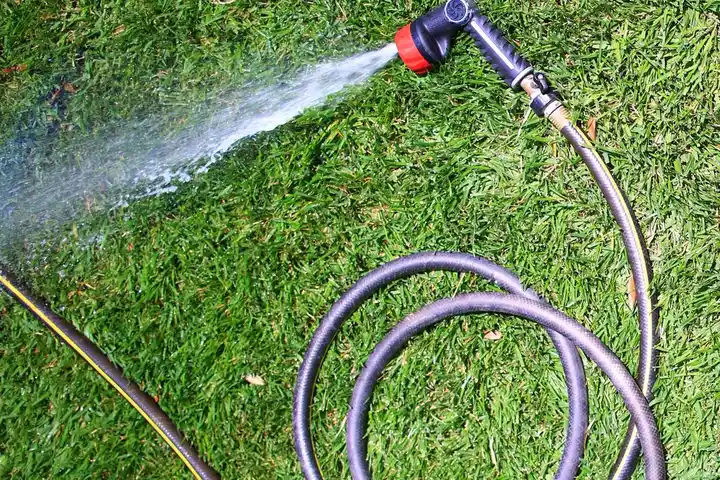
Neither habit replaces a full flush. They slow the buildup between flushes, and they give you a regular look at what is coming out of the tank, which is information in itself. If the monthly gallon starts coming out sandy, bring the full flush forward.
Tankless Heaters Are a Different Job
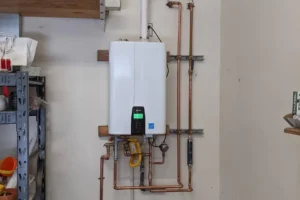
If your heater has no tank, there is nothing to drain. Scale still forms, but it coats the inside of the heat exchanger instead of settling on a tank floor, and the fix is descaling, not draining. A pump circulates a vinegar or descaling solution through the unit for about an hour, using the service valves.
For a tankless unit, how often should you drain your water heater is the wrong question, since there is no tank to drain.
The City of Anaheim recommends descaling once a year in its high mineral area. Navien calls for a flush once a year wherever the water runs 4 grains per gallon or harder with no softener on the line. Some warranties exclude scale damage altogether, so the descaling schedule is worth keeping for the same reason the flush schedule is, it protects the unit and the warranty together.
If you are not sure which type you own, look at the unit. A tank is a tall cylinder, usually in a basement, garage, or utility closet.
A tankless unit is a flat box on the wall, about the size of a suitcase. The guides on this site cover each type separately, so follow the one that matches your heater.
When a Flush Is the Wrong Move
There is one situation where the right answer is not to flush at all, and it matters more than the schedule. If your tank is ten years old or more and has never been flushed, draining it can do more harm than good.
Sediment can be sitting against a corroded spot in the tank, plugging a leak that you cannot see. Drain the tank and the plug goes with the water, and the leak appears.
Angi puts it plainly, flushing the unit could activate a leak that debris was blocking if it has been several years since you flushed it. Plumbers who work on older tanks say the same thing, and they say it about tanks as young as eight years old.
A tank that is already weeping, or showing rust at the base, should be looked at by a professional before anyone opens the drain valve. The same goes for a plastic drain valve that has grit stuck in it, since it may not close again once you open it. In these cases the question is not how often should you drain your water heater, it is whether draining is safe at all, and a plumber can answer that in one visit.
When to Hire a Pro, and What It Costs
A flush is a job most homeowners can do themselves in about an hour, with a garden hose and a bucket and no special plumbing tools. Angi puts the cost of hiring a professional at about $200, and its own FAQ gives a range of $75 to $200 depending on where you live. Skipping the maintenance can lead to replacement costs averaging $1,255, which is the number that makes the $200 look small.
A pro visit once a year can settle how often should you drain your water heater for your exact tank and water, and check the parts a flush cannot reach.
Hire a pro when the tank is old and never flushed, when the drain valve is clogged with sediment, or when you are not comfortable working around gas or electricity. Ask them to check the anode rod and test the temperature and pressure relief valve at the same visit, since A. O. Smith has its technicians test the valve at each annual service. A valve that sticks or leaks needs replacing, and that is a job for the same visit.
Fall is a popular time for a professional flush, so Angi notes you might save money doing it another time. Late fall still makes sense as a habit, since cold incoming water makes the heater work harder in winter, and a clean tank is a good start to the season.
Put It on the Calendar
A schedule only works if it survives the year. The flush that stays on a list in your head gets done never. The one on the calendar gets done once a year, which is all it needs.
Pick a month and tie the flush to a job you already do every year, like changing the smoke alarm batteries or servicing the furnace. Write the flush on the calendar for that month, and write the next one twelve months after it. If you flush every six months, put both dates on at once, six months apart, so the second one is already there when the first is done.
Once the dates are set, how often should you drain your water heater is settled for the year, and the only job left is the quarterly quart.
How often should you drain your water heater is a question you should answer once, with your hardness number and the table above, and then stop asking. Set the two dates, keep the quarterly quart going between them, and let the water coming out of the hose tell you if the interval needs adjusting. That is the whole job, and a tank kept to that rhythm will run quieter, heat faster, and last longer than one that only gets attention when the shower goes cold.
Related guides
- How to Drain a Water Heater
- How to Flush a Water Heater
- How Long Does It Take to Drain a Water Heater
- How to Flush a Tankless Water Heater
Frequently asked questions
How often should you drain your water heater?
Once a year for most homes on city water. If your water is hard, above about 7 grains per gallon, or comes from a well, flush it every six months. Very hard water, above 10.5 grains per gallon, calls for a flush every three to four months.
How often should you flush your water heater if it is tankless?
Tankless heaters need descaling instead of draining, about once a year in hard water areas. Navien calls for a flush once a year wherever the water runs 4 grains per gallon or harder with no softener on the line.
What happens if you never drain your water heater?
Sediment builds up on the bottom of the tank. Rheem lists rumbling noises, less hot water, slower recovery, and higher energy bills as the result. Left long enough, the layer can corrode the tank and shorten its life, and a replacement averages $1,255 according to Angi.
Can I drain my water heater myself?
Yes, in most cases. It takes about an hour with a garden hose and a bucket, and no special plumbing tools. If you are asking how often should i drain my water heater as a first timer, once a year is the place to start, and let the water cool for 20 to 30 minutes first, then never turn the heat back on until the tank is completely full again.
Should I drain a water heater that has never been flushed in 10 years?
Be careful. Sediment may be plugging a leak in an old tank, and draining it can expose the leak. Have a plumber look at the tank first if it is ten years old or more and has never been flushed, or if it is already weeping or rusty at the base.
How do I know if my water is hard enough to need twice yearly flushing?
Check your annual water supply report, which your supplier sends out by July 1, or use a test strip kit from a hardware store. Above about 7 grains per gallon, or 120 milligrams per litre, counts as hard, and that is the line where twice yearly flushing starts. That number is the line where how often should you drain your water heater moves from once a year to twice a year.
Safety note: water in the tank can be very hot. Let it cool for 20 to 30 minutes before you open the drain valve, keep hands and pets clear of the hose outlet, and never restore power or gas until the tank is completely full again, or you will burn out the elements. If you are unsure about gas or electrical parts, call a professional.