How Does a Tankless Water Heater Work in 2027
The plain answer to “how does a tankless water heater work” is that nothing heats until you open a tap. Cold water runs into a wall mounted box, a sensor feels it move, a burner or electric elements fire, and the water leaves hot a few seconds later. Close the tap and the fire stops.
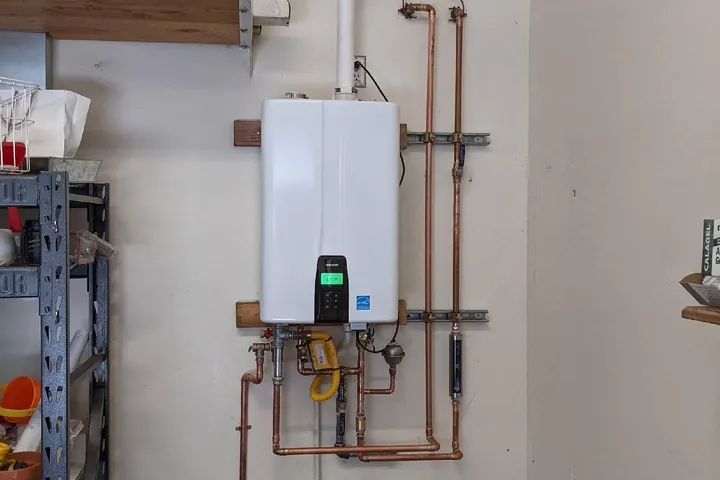
Stand in the garage on a cold morning while someone upstairs turns on the shower. You hear a click, then a fan, then a low whoosh, like a furnace waking up. Thirty seconds later the shower upstairs runs hot, and the box on the wall has done its whole job without holding a single gallon of hot water in reserve.
Most people picture a water heater as a tank that sits there staying hot all day. A tankless unit works the other way around. It waits, cold and quiet, until moving water tells it to start, and it stops the moment the water stops.
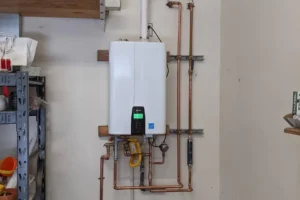
A tankless unit is a wall mounted box with no storage tank inside, and what a tankless water heater is in plain terms is a heater that makes hot water only while the water moves. People also call it an on demand heater, since it only works when hot water is asked for. The rest of the story is the order those parts fire in, and the order is the same in every model.
How does a tankless water heater work, second by second
Open a hot tap anywhere in the house and cold water starts moving through the pipes toward the unit. The water enters through the inlet at the bottom, passes a small filter that catches grit, and reaches the flow sensor. That sensor is the switch for the whole machine, and nothing else happens until it feels enough water moving.
How does a tankless water heater work in the first second? It listens.
The flow sensor measures how fast the water moves and sends that number to the control board, a small computer that runs the unit. Most units need about 0.5 gallons per minute before they fire at all, according to the Department of Energy, so a tap opened to a thin trickle may not wake the heater up.
Once the flow is strong enough, the control board opens the gas valve and lights the burner, or it sends power to the heating elements in an electric unit. A fan clears the combustion chamber first on a gas model, then a spark or a hot surface igniter lights the flame. The whole lighting sequence takes about one to two seconds, and a flame sensor watches the burner to confirm the fire caught.
The burning gas or the glowing elements heat a heat exchanger, a bundle of copper coils and thin fins that the water flows through. Copper moves heat fast, and the fins give the flame a huge surface to work on, so the water picks up heat during the few seconds it spends inside. By the time the water leaves the outlet, it has reached the temperature set on the display, usually 120 degrees Fahrenheit.
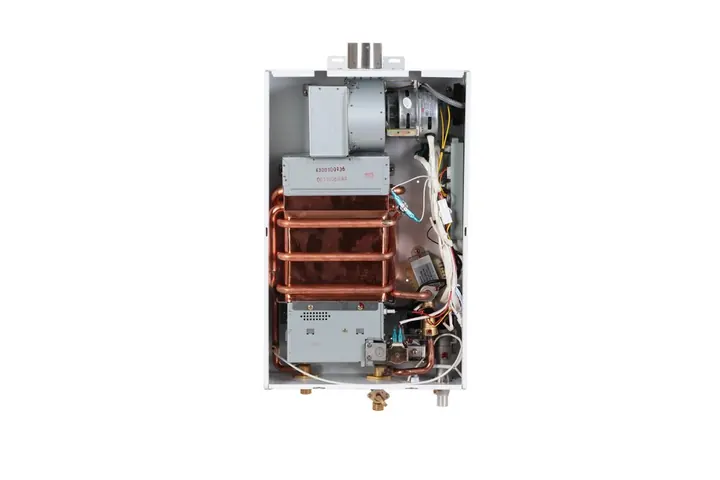
Sensors at the outlet watch the water leaving the unit and tell the control board to turn the flame up or down many times a second. If the incoming water gets colder, the burner fires harder. If you open the tap wider, it fires harder still.
The unit keeps adjusting until the water holds steady at the set temperature, as long as the demand stays inside what the burner can deliver.
Close the tap and the flow stops. The sensor feels it at once, the control board shuts the gas valve or cuts power to the elements, and the unit goes back to waiting. A tank water heater keeps 40 or 50 gallons hot all day and all night, losing heat through its walls the whole time, while a tankless unit keeps nothing hot and loses nothing to standing water.
That loop is the answer to “how does a tankless water heater work” in every model on the market, gas or electric, big or small. The parts change size, the fuel changes, and the order never does.
Gas fire or electric elements: two ways to light the heat
How does a tankless water heater work on gas? It burns fuel in a sealed chamber under the coils.
The fan pulls in fresh air, the igniter lights the gas, and the flame heats the copper from below while exhaust gases leave through a vent pipe. A condensing gas unit squeezes extra heat out of those exhaust gases with a second set of coils, which pushes its efficiency up and leaves the exhaust cool enough for plastic vent pipe.
An electric unit has no flame, no vent, and no exhaust at all. It runs current through thick heating elements that sit in the water path, and it switches the elements on in stages as the flow rises. A whole house electric unit can demand more power than an older panel can spare, so an electrician often has to check the panel before the unit goes on the wall.
Gas heats more water at once, which is why big households usually pick it. Electric is quieter, simpler to install, and it fits a single bathroom or a kitchen sink where the demand is small. The fuel you already have at the house usually picks the winner, and the burner or the elements only change how the heat gets made, not the cycle itself.
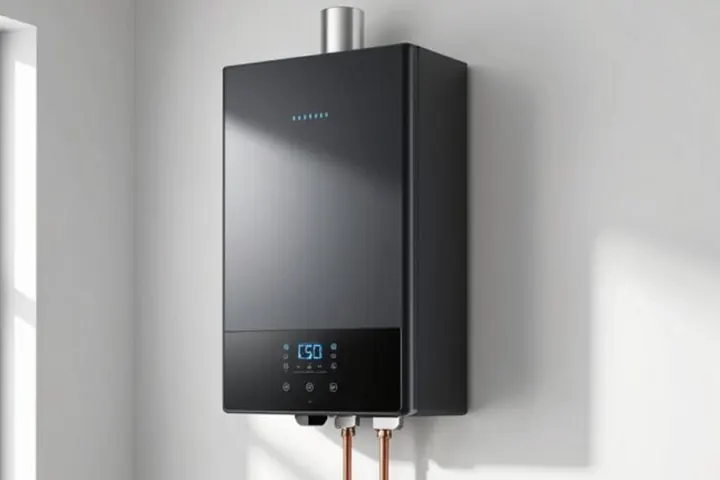
How it holds 120 degrees when the house gets busy
How does a tankless water heater work to hold 120 degrees with two taps open? It cannot make heat out of thin air, so it trades flow for temperature. The control board watches the outlet sensor and opens the gas valve wider or switches on another element, but every burner has a top output, and once the demand passes it, the temperature has to fall.
Take a winter morning in Chicago, where the water coming into the house can arrive near 40 degrees. A shower needs that water at 120 degrees, so the heater must add 80 degrees to every gallon that passes through. That 80 degree gap is the temperature rise, and it is the number that decides how much hot water the unit can make at once.
At 2 gallons per minute, that is a heavy lift. A unit that handled the same shower easily in July can struggle in January, because the incoming water is 30 degrees colder.
The Department of Energy puts a number on the flow a tankless unit can deliver: about 2 to 5 gallons per minute (GPM), with gas models at the higher end. According to This Old House, a showerhead runs about 1.25 to 2.5 gallons per minute, so one shower is easy and two showers plus a dishwasher can push a smaller unit past its limit. When that happens, the water does not stop, it just arrives cooler than you set, and the fix is a bigger burner, not a higher setting.
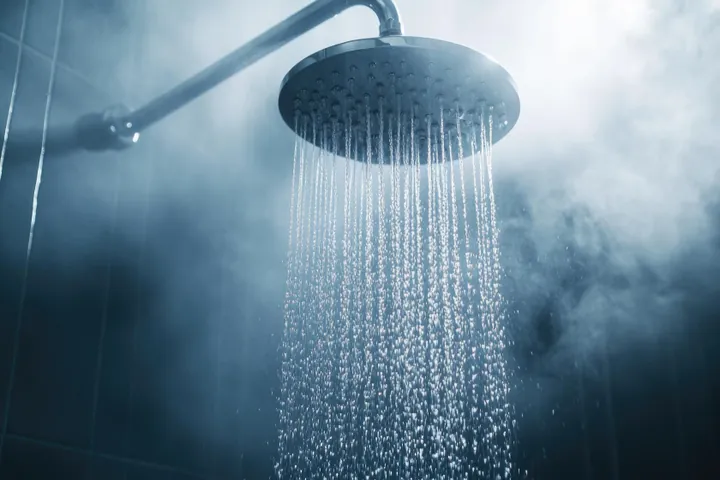
The minimum flow trap catches people the other way. Open a tap to a thin trickle and the flow drops below the minimum activation flow, about 0.5 gallons per minute, that the unit needs to fire, so the water stays cold even though the heater is fine.
Open the tap wider and the burner lights. If your shower goes cold every time you turn the handle down low, the flow is the cause, not the heater.
Why the hot water still takes a while to reach you
The heater does its part in seconds, but the water still has to travel through the pipes from the unit to your tap. In a house where the heater sits in the garage and the bathroom sits upstairs, that trip can take 30 seconds or more, and every gallon of cold water already sitting in the pipe has to leave before the hot water arrives.
The Department of Energy notes a tankless unit can take about 5 to 15 seconds longer than a tank to deliver hot water to a faraway tap, because a tank keeps hot water waiting in the pipe while a tankless unit starts cold.
People blame the heater for the wait, but the question “how does a tankless water heater work” has nothing to do with the length of your pipes. The heater finishes in seconds. The pipes take the rest of the time.
The cold water sandwich is the stranger version of the same wait. Turn the shower off for a minute to soap up, and the heater shuts down.
Turn it back on and the unit fires again, but the slug of water that sat in the heat exchanger while it was off has gone cold, so you get a burst of cold water between two stretches of hot. It is not a fault, it is the cycle restarting, and a recirculation pump is the usual fix.
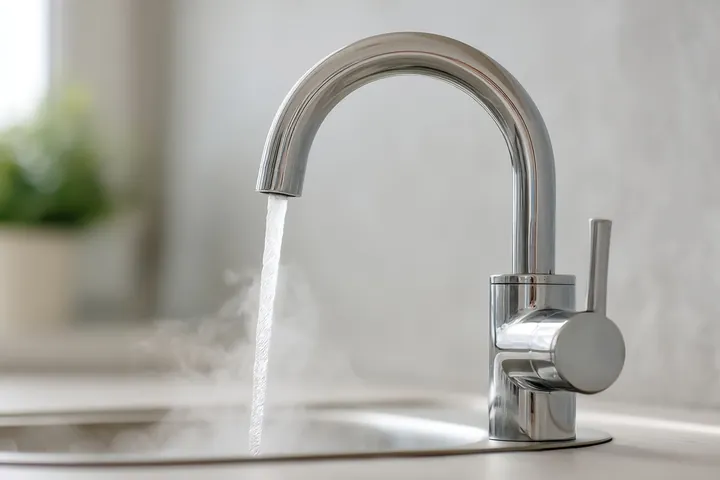
A recirculation pump keeps a loop of hot water moving through the pipes, so hot water waits near the tap instead of at the heater. Some systems run on a timer or a button, and some learn your morning routine. The pump does not make the heater stronger, it only shortens the trip, and it uses a little energy to keep the loop warm.
Whole house or point of use: the same cycle, closer to the tap
How does a tankless water heater work in a point of use unit? The same cycle, a few feet from the tap.
A small electric unit under a kitchen sink or beside a single shower heats water for that fixture alone, so the trip through the pipes is short and the wait nearly disappears. A whole house unit sits in one place and serves every tap, so it must be big enough for the taps that run together.
Ask a plumber “how does a tankless water heater work” and the answer starts at the tap, not the tank. That is the whole difference in one line.
Neither layout changes the cycle itself. The difference is distance and size: a point of use unit is small, cheap, and quick, while a whole house unit is big, powerful, and worth sizing with care. Some houses use both, a whole house unit for the showers and a small point of use unit for a faraway sink that always runs cold first.
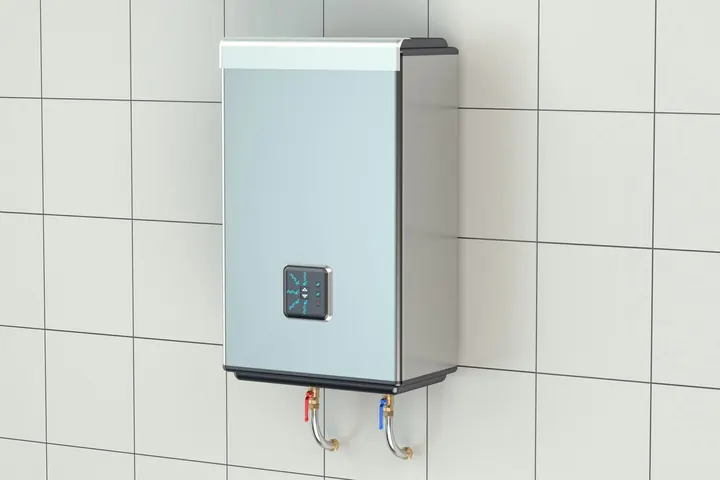
When the cycle breaks: four ways it goes wrong
How does a tankless water heater work when scale coats the coils? Badly, and then not at all.
Hard water leaves mineral deposits inside the narrow copper passages every time the water heats, and the coating acts like insulation, so the burner works harder for less hot water. Our guide to how to flush tankless water heater units walks through the vinegar pump loop that clears it out, and in hard water areas the flush belongs on the calendar once a year.
A dirty inlet filter is the quieter failure. Grit and sand collect on the small screen where the cold water enters, the flow drops, and the unit may refuse to fire because the flow never reaches its minimum. Cleaning the filter takes minutes, and it is the first thing to check when a unit that worked yesterday gives cold water today.
Low water pressure can starve the cycle the same way, and a failing flow sensor can misread the water moving past it. Both show up as a heater that works some days and not others, or one that fires and then cuts out. Error codes on the display point at the cause, and the manual for your exact model lists what each code means, so read the code before you call anyone.
Gas and vent problems are the ones to leave alone. A blocked vent, a weak gas supply, or a burner that lights and dies can spill carbon monoxide into the house, and that risk is not a do it yourself job. If the unit smells of gas, shows a vent error, or soots up the casing, shut it off and call a licensed plumber.
Does it ever rest? Standby, freeze protection, and power cuts
How does a tankless water heater work during a power cut? For most modern units, it does not.
The control board, the flow sensor, the fan, and the igniter all need electricity, so a gas unit with no power gives no hot water, even though the gas still flows. A few older gas models with a standing pilot can run without power, but they are rare now, and most houses should plan on cold showers until the lights come back.
Between uses, the unit draws only a small amount of power for its controls and its freeze protection. In cold weather, a built in heater keeps the water inside the unit from freezing, which matters for outdoor units and for units in an unheated garage. That trickle of power is the only energy the unit uses while it waits, and it is tiny next to the standby loss of a tank that reheats 50 gallons all night.
The Department of Energy says a tankless unit can last more than 20 years, against 10 to 15 years for a storage tank, and the long life comes from the same cycle. The unit only works when water moves, so it spends most of its life resting, and the parts that wear out are the ones that fire, not the ones that store. How long a water heater lasts in your house still depends on the water and the maintenance, and a unit that never gets descaled will not see 20 years.
The efficiency gain is real, and the Department of Energy puts numbers on it. In a home that uses 41 gallons of hot water a day or less, a tankless unit runs 24 percent to 34 percent more efficiently than a storage tank, and in a home that uses about 86 gallons a day, the gain shrinks to 8 percent to 14 percent. ENERGY STAR estimates a typical family saves $100 or more a year with a tankless water heater, which is why the savings are biggest in homes that use little hot water.
Related guides
These guides pick up where this one leaves off, from the tank version of the same job to the flush that keeps the cycle working.
- What Is a Tankless Water Heater in 2027
- How to Flush Tankless Water Heater Units in 2027
- How Does a Water Heater Work? Inside the Tank in 2027
- How Long Does a Water Heater Last in 2027
- How Much Is a Tankless Water Heater in 2027
Frequently Asked Questions
How does a tankless water heater work?
Cold water enters the unit when you open a hot tap, a flow sensor feels it move, and a gas burner or electric elements fire to heat a copper heat exchanger. The water warms as it passes through the exchanger and leaves at the set temperature, usually 120 degrees Fahrenheit, and the unit is also called an on demand or instantaneous water heater. Close the tap and the burner shuts off, so nothing stays hot between uses.
Why does my tankless water heater take so long to give hot water?
The heater warms the water in seconds, but the water still has to travel through the pipes from the unit to your tap. A faraway bathroom can wait 30 seconds or more while the cold water already in the pipe clears out. A point of use unit or a recirculation pump shortens that trip.
Does a tankless water heater need electricity?
Yes, almost every modern unit does, gas or electric. The control board, the flow sensor, the fan, and the igniter all run on power, so most gas models stop making hot water in a power cut. Only older gas models with a standing pilot can run without electricity.
How does a tankless water heater work with a recirculation pump?
The pump keeps a loop of hot water moving through the pipes, so hot water waits near the tap instead of at the heater. When you open the tap, the hot water is already there, and the heater only tops up the temperature. The pump does not raise the flow rate or the heating power of the unit.
What is the cold water sandwich?
It is a burst of cold water in the middle of a hot shower, and it happens when you turn the tap off and on again. The heater shuts down while the tap is closed, the water sitting in the heat exchanger cools, and that slug of cold water reaches you first when the tap opens again. A recirculation pump usually fixes it.
How does tankless water heater work with hard water?
It works, but scale builds up faster. Hard water leaves mineral deposits inside the copper coils every time the water heats, and the coating makes the unit work harder for less hot water. Flush the unit once a year in hard water areas, or fit a water softener, and the heater keeps its full flow.
Hot water, gas, and electricity share one small box, so treat every step with care. Set the temperature to 120 degrees Fahrenheit to cut the risk of scalding, and never set it higher in a house with children or older people.
If you smell gas near the heater, get everyone out of the house first, then call the gas company once you are outside. Never work on a gas line, a vent, or the wiring yourself, and never run a gas unit with a blocked or disconnected vent.
Keep that loop in mind and the box on the wall makes sense. It is not magic, it is a sensor, a flame, and a coil, and the answer to how does a tankless water heater work is just that loop, running every time you open a tap.
If I had to sum the machine up in one line, it would be this: water moves, fire follows, hot water arrives. The next time you hear the click and the whoosh from the garage, you will know exactly what the machine is doing, and why the shower runs hot a few seconds later.
Sources: U.S. Department of Energy Energy Saver, Tankless or Demand Type Water Heaters; ENERGY STAR, Water Heaters; Eccotemp, How Does a Tankless Water Heater Work; Wikipedia, Tankless Water Heating. Treat every figure above as a national planning figure from the sources named, not a price for your own home. Prices vary by house and by town, so get a written quote from a licensed plumber near you before you book anything.