How Long Does a Gas Water Heater Last in 2027
A gas tank water heater lasts 8 to 12 years, according to makers A.O. Smith and Rheem, and the U.S. Department of Energy puts storage tanks at 10 to 15 years. So how long does a gas water heater last? It depends on your water, your maintenance, and whether yours is a tank or a tankless unit.
Half of all gas tank water heaters are gone by 13 years and 4 months. That is the midpoint of the U.S. Department of Energy survival curve for gas tanks, which puts the average at 14.5 years. The other half live longer, some much longer, and the difference between the two halves is mostly water and maintenance, not luck.
A gas tank and a gas tankless unit die in different ways, and the fixes that stretch one do nothing for the other. It pays to know which one you own before you spend a dollar on it.
How long does a gas tank water heater last
The real answer to how long does a gas water heater last is a range, not a date. The table below lines up the main sources side by side, so you can see the spread instead of taking one number on trust.
| Type | Department of Energy range | Average life in national data | What the makers say |
|---|---|---|---|
| Gas tank | 10 to 15 years | 14.5 years | 8 to 12 years |
| Gas tankless | About 20 years | 20.0 years | 15 to 20 years |
| Electric tank | 10 to 15 years | 15.1 years | 8 to 12 years |
Those ranges come from the Department of Energy Energy Saver guide. The average life figures come from the Department of Energy technical support document behind its water heater standards, which built a survival curve from national survey data covering 1990 to 2020.
The 2007 NAHB and Bank of America study of home component life gives a single number for each type, 10 years for a gas tank and 11 years for an electric tank. It is older data, but it is still the only national study that splits gas from electric, and its gas figure sits at the bottom of the maker range.
The home inspector group InterNACHI is the most cautious of all, putting a conventional tank at 6 to 12 years. It adds that minerals in the water can cut that life short. Read the table as a planning window, not a promise.
Why a gas tank wears out sooner than an electric tank
A gas tank and an electric tank hold the same water in the same steel, but they heat it in different ways, and that difference costs the gas tank about a year. Our guide to how a water heater works explains the burner, the flue, and the anode rod in plain terms. The burner is the reason the gas figure trails the electric figure by about a year in every source, and it is the first thing to understand about how long does a gas water heater last compared with an electric one.
A gas tank burns fuel in a burner under the tank, so the bottom of the tank runs hotter than the rest of it. Every time the burner fires, the steel at the bottom expands, and every time it shuts off, it contracts. That heat cycling fatigues the steel over thousands of cycles, and it bakes sediment onto the tank floor faster than an electric element does.
The flue is the second weak point. A gas tank vents its exhaust gases up a flue that runs through the middle of the tank, and that flue is another steel surface that can corrode from the inside. An electric tank has no burner and no flue, so it has one less path for corrosion to start.
None of this means a gas tank is a bad buy. Gas heats water faster than electricity, it recovers quickly after heavy use, and it keeps working in a power cut where an electric tank goes cold. The shorter life is a trade for faster hot water, not a flaw in the design.
What decides whether yours reaches 8 years or 15
Five factors decide how long does a gas water heater last in a real house. The first two are about your water, not your heater, and they matter more than the brand on the label.
Hard water. The Environmental Protection Agency calls water hard when it carries more than 120 milligrams of dissolved calcium and magnesium per liter, which works out to about 7 grains per gallon. When water is heated, those minerals fall out of it and settle as sediment on the tank floor and over the burner area.
Industry data compiled from inspection records puts the effect in stark terms: hard water can cut a gas tank from about 11 years to about 5.5 years. A kettle that furs up and a shower head that clogs are the signs of hard water, and a heater in that water lives on the short end of its range. It is the first thing to check when you wonder how long does a gas water heater last in your house.
Sediment. Even in soft water, a tank gathers sediment over the years, and the layer at the bottom insulates the water from the burner. The heater has to work harder, the bottom of the tank runs hotter, and the steel wears out sooner.
Rheem says a tank full of sediment will not live as long, and it recommends a flush once a year. Skip the flush for five years and the answer to how long does a gas water heater last drops fast.
Our guide to how often you should drain your water heater sets the schedule by water hardness, and the Department of Energy suggests a small drain of one quart every 3 months between full flushes.
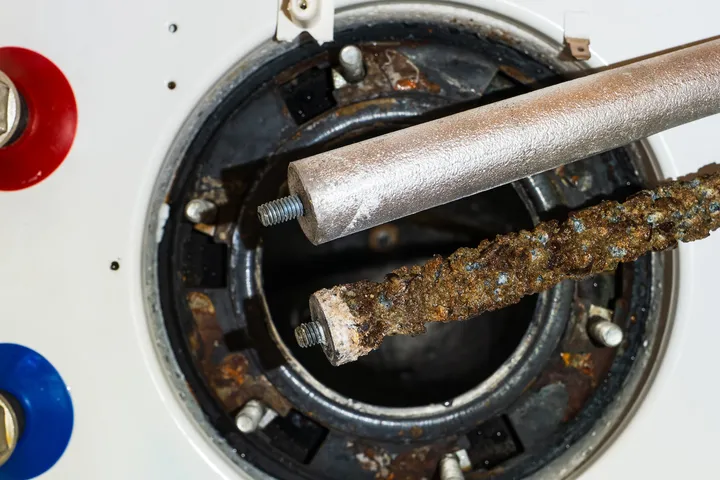
The anode rod. Every tank hides a metal rod inside it, and the rod corrodes so the steel tank does not have to. It gives itself up so the steel does not have to, and once it is gone, the tank starts to rust in its place.
A.O. Smith says to inspect the rod once a year and replace it if it shows several inches of bare core wire, and Rheem says to replace it every 3 to 4 years.
Venting and the burner. A gas heater needs a clear vent to carry exhaust gases out of the house, and a blocked or corroded vent can spill carbon monoxide into the room. Check the vent pipe once a year for rust, gaps, or soot stains where it meets the draft hood, and keep a carbon monoxide detector in the same room as the heater.
A vent that cannot breathe shortens how long does a gas water heater last and puts carbon monoxide in the room, so it is a safety check first and a lifespan check second.
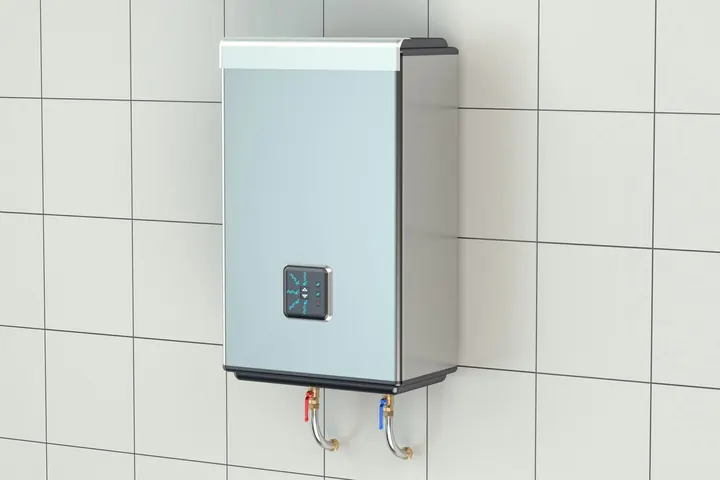
Temperature and pressure. Rheem puts home water pressure at about 40 to 60 psi, and anything much higher strains every joint and the tank itself. The Department of Energy suggests 120 degrees Fahrenheit for most homes: hot enough for a shower and the dishes, cool enough to slow scale and hold the energy bill down.
Where you live. A master plumber who has replaced thousands of tanks puts it plainly: two identical tanks installed on the same day can be four or five years apart at replacement, and the difference is usually the water where they live. In much of the Southwest, Texas, and the Midwest, the water runs hard enough to push a gas tank toward 8 years unless the house has a softener, while in softer water regions, including much of the Pacific Northwest and parts of the Northeast, the same yearly flush and fresh rod push tanks to 12 years and beyond.
How to find the age of your gas water heater
Once you know the year, the question of how long does a gas water heater last stops being a guess and becomes simple subtraction. Look for the rating plate, the sticker or label on the side of the tank, and find the serial number.
Most brands code the build date into the serial number, though the format changes over time, so call the maker with the serial number in hand if yours does not fit the table below.
| Brand | Where the date hides | Example |
|---|---|---|
| Bradford White | First letter is the year, second letter is the month, A is January through M is December, with no I | WC9876553 means March 2000 |
| Rheem and Ruud | First four digits are the month, then the year | 0189 means January 1989 |
The year on the plate plus the ranges above give you the answer to how long does a gas water heater last for your unit, give or take a few years for water and maintenance.
Photograph the whole rating plate before you call anyone about it. The photo keeps the model and serial numbers in front of you, and it saves a second trip to the basement when the maker asks for a digit you did not write down.
Bradford White tells owners to look at how many digits follow the two letters: seven digits points to a build date before December 2007, and eight digits points to after.
Seven signs your gas water heater is near the end
Age sets the scene, it does not settle the question. A 12 year old tank with clear water and a steady blue flame can keep going, while an 8 year old tank in hard water can be done. Watch for two of these signs together.
Two signs together are the pattern that matters, and they are worth more than any number in a table when you judge how long does a gas water heater last in your own basement.
One sign on its own can mean a cheap part, but two together usually mean the tank itself is wearing out, and that is when the question of how long does a gas water heater last gets a short answer.
Age past 10 years. Rheem says year 10 is when to start planning a replacement. A.O. Smith says a unit over 10 years old that leaks at the base or runs erratically is probably due, and ENERGY STAR advises replacing a heater over 10 years old before it fails, rather than waiting for the leak to pick the date.
That is the age where the question of how long does a gas water heater last turns into a savings plan.
A puddle under the tank. Rheem says a pool under the tank often means the inside is corroding. A leak from the tank body itself usually means replacement, because a corroded tank wall cannot be patched, while leaks at a valve or fitting can often be fixed.
Rusty or brown hot water. Brown or rusty water from the hot tap means the inside of the tank is corroding, or the anode rod is worn out. Brown water from the hot tap alone, with the cold tap running clear, points straight at the heater.
Rumbling or popping. That sound usually means sediment sitting on the tank floor, with steam bubbles forcing their way through it each time the burner fires. A.O. Smith says flushing is the fix, but if the noise continues after a flush, the tank may be cracked.
A pilot flame that burns yellow. A healthy pilot flame burns blue and steady. A yellow, lazy, or flickering flame points to a dirty burner or a combustion problem, and soot stains around the draft hood mean the same thing.
Call a plumber or a gas technician instead of adjusting the burner yourself.
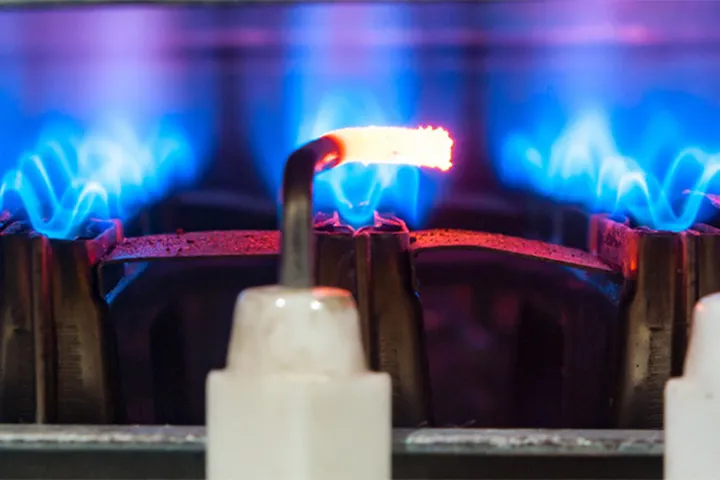
A pilot that keeps going out. A pilot that will not stay lit usually means a worn thermocouple, the small sensor that tells the gas valve the flame is burning. A thermocouple is a cheap part, but a pilot that goes out again and again on an old tank is often the first sign of a burner that is wearing out.
Showers that run short. When a shower that used to stay hot now goes cold halfway through, and nobody in the house has changed their habits, the tank has lost capacity to sediment or a part that is giving up. Rheem ties this to sediment, worn parts, or a failing thermostat, and a heater coated in sediment also works harder for the same hot water, which shows up on the gas bill.
A real decision: the 2015 tank in hard water
Take a 40 gallon gas tank installed in June 2015 in a home with hard water, never flushed, and with an anode rod that has never been checked. It is now 11 years old, past the maker range of 8 to 12 years at its far end, and close to the Department of Energy average life of 14.5 years for a gas tank.
The showers still run hot, but the tank rumbles when the burner fires, and the hot water runs brown for a few seconds each morning. The plumber quotes $350 to replace the thermocouple and flush the tank, and the quote is an example to show how the decision works, not a price list.
A new 50 gallon gas tank, installed, costs $1,600 to $2,400, according to Home Depot published national ranges, with an average of $1,950. Rheem’s 50 percent rule says a repair is worth doing when it costs less than half the price of a new unit, and $350 is well under half of $1,950. Judged on the numbers alone, the repair is the better deal.
The numbers alone leave out the age, though. The tank is 11, the water is hard, the anode rod has never been changed, and the rumbling says sediment has been baking on for years. A repair keeps the hot water running for now, but the tank is the next part in line to fail.
Eleven years old, hard water, a rod never changed. That is the whole story in one line, and it is why the answer to how long does a gas water heater last matters more than the repair quote. The smart move is the repair plus a plan: fix the thermocouple, flush the tank, check the anode rod, and start saving for a replacement within two years, before the tank picks the date itself with a leak.
Six habits that add years to a gas water heater
None of these jobs is hard, and none of them costs much. Together they are the difference between a tank that quits at 8 years and one that is still going at 14, which is the whole point of asking how long does a gas water heater last in the first place.
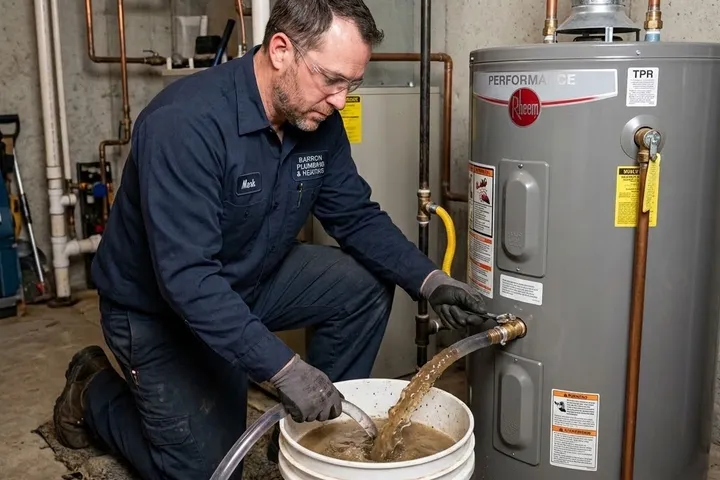
Flush it once a year. Flushing every year gets the sediment out while it is still soft enough to drain away. Rheem recommends it, A.O. Smith recommends yearly servicing, and our guide to how to flush a gas water heater walks through the steps in order, including the shutdown order for a gas tank.
Check the rod every 3 to 4 years. Put a fresh rod in once the old one is mostly gone, and the tank keeps the protection that stops rust.
With hard water, look at it sooner, because the same minerals that attack the tank eat the rod faster as well. A replacement rod costs about $40, and it is the cheapest life extension a tank has.
Look at the flame once a year. Lift the access panel and look at the pilot flame with the burner running. It should burn blue and steady, with no soot on the metal around it, and a yellow flame or heavy soot means it is time to call a technician.
Check the vent and fit a carbon monoxide detector. Make sure the vent pipe is seated on the draft hood with no gaps, and put a carbon monoxide detector in the room with the heater. Test the detector when you test your smoke detectors, and replace it on the schedule printed on the back.
Set the dial to 120 degrees. A lower setting slows scale, trims the energy bill, and makes scalds less likely. Test it with a kitchen thermometer at the tap farthest from the heater, and turn the dial down if it reads higher.
Hotter water does not clean better, it just shortens how long does a gas water heater last and raises the scald risk.
Descale a tankless unit yearly where the water is hard. Running a vinegar solution through the heat exchanger with a small pump stops scale from choking the unit. Our guide to how to flush tankless water heater units covers the pump loop and the schedule by water hardness, and our guide to how to drain a gas water heater covers the tank side of the same job.
Repair or replace: the call by age and problem
Rheem publishes a simple test. Take the price of a new heater, cut it in half, and compare the repair quote against that number. If the repair costs more than half, buy the new heater.
The test works best on young tanks with sound steel, and it falls apart on old ones, because an old tank can swallow a repair and leak the next month anyway. Four situations, one test, and the question behind every row is how long does a gas water heater last once it reaches that age.
| Heater age | Problem | Example repair quote | Verdict |
|---|---|---|---|
| 5 years | Pilot keeps going out | $250 | Repair |
| 9 years | Gas control valve failing | $600 | Repair, but start saving |
| 12 years | Leaking temperature and pressure valve | $350 | Repair is under the line, but the heater is past 10 years |
| Any age | Tank itself leaking | Not repairable | Replace |
The table uses a $1,950 replacement as the yardstick, which is the Home Depot average for a tank installed, so half is $975. The quotes are examples to show how the test works, not a price list, and your own quote is the one that counts.
Once a heater passes 10 years, a new one is often the smarter buy even while the old one still runs, because older units tend to break down again soon after a repair. A leak from the tank body itself leaves nothing to decide. The tank is finished, and the only question left is how soon a new one can go in.
What a new gas water heater costs
A tankless unit costs about twice what a tank costs, installed, and lasts about twice as long. Whether that trade pays depends on your water, your gas line, and how many years you plan to stay, which is why the question of how long does a gas water heater last belongs in the price talk, not after it.
Home Depot publishes national ranges for a complete replacement by its contracted plumbers, including the heater, permit, materials, labor, and removal of the old unit. A gas or electric tank runs $1,600 to $2,400 installed, with an average of $1,950, and a gas tankless unit runs $2,400 to $5,400 installed, with an average of $4,300.
A 2026 installed price guide puts a 50 gallon gas tank at about $2,300 for a simple same spot replacement, with a typical range of $1,500 to $3,350. That covers a $700 to $1,400 unit, $600 to $1,300 in labor, plus the permit and haul away.
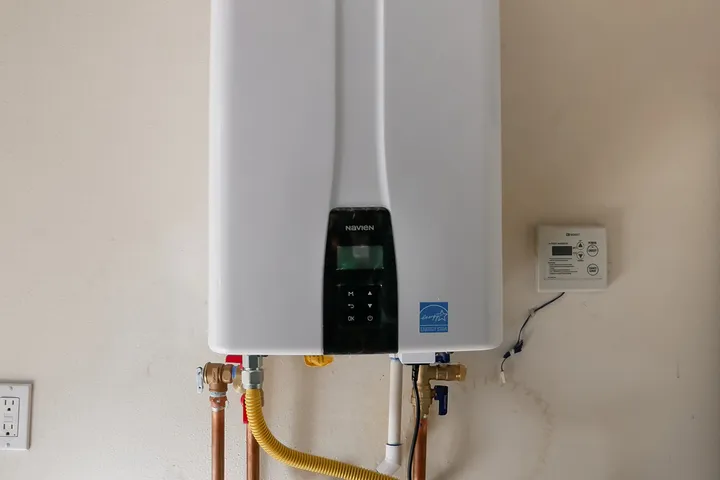
A tankless unit only pays if it lives long enough to earn back the extra $2,350 it costs over a tank on the Home Depot averages, and that payback is exactly what the question of how long does a gas water heater last is for.
Warranties tell you how long the maker will cover a defect, not how long the heater will run. Bradford White covers its tanks for 6, 8, or 10 years depending on the model, with parts covered for 6 years, and its tankless heat exchanger for 12 years.
Read the warranty years on the label before you buy, because they are the closest thing to a promise about how long does a gas water heater last that any maker will put in writing. A 10 year warranty tank does not magically last 10 years without maintenance, and warranties exclude damage from sediment or lime buildup.
Changing type, fuel, or location is what moves the bill. A tankless swap often needs a larger gas line, new venting, and a condensate drain, and those extras are where a $4,300 average can climb past $5,000.
One more thing to know before you budget: the federal 25C credit, 30 percent up to $2,000 for heat pump water heaters, ended for equipment placed in service after December 31, 2025. A unit installed in 2026 gets no federal credit, so the price you are quoted is the price you pay.
Related guides
These four guides cover the jobs this one mentions, from how the tank works to the drain schedule.
- How Does a Water Heater Work? Inside the Tank in 2027
- How to Drain a Gas Water Heater in 2027
- How to Flush a Gas Water Heater in 2027
- How Often Should You Drain Your Water Heater in 2027
- What Is a Tankless Water Heater in 2027
Frequently Asked Questions
How long does a gas water heater last?
A gas tank lasts 8 to 12 years, according to A.O. Smith and Rheem, and the Department of Energy puts storage tanks at 10 to 15 years. Its survival curve puts the average gas tank at 14.5 years, with half gone by 13.3 years. A gas tankless unit lasts about 20 years with regular descaling.
How long does a gas tankless water heater last?
About 20 years, according to the Department of Energy, and Rheem says well kept units can reach 25 to 30 years. Hard water is the main threat, because scale builds up inside the heat exchanger, so a tankless unit in a hard water home needs descaling every year.
Does a gas water heater last longer than an electric one?
No, slightly shorter. The 2007 NAHB study puts a gas tank at 10 years and an electric tank at 11 years, and the Department of Energy survival curve puts the gas average at 14.5 years against 15.1 for electric. The burner heats the bottom of a gas tank harder, which is the main reason for the gap.
What makes a gas water heater fail early?
Hard water, sediment, a spent anode rod, and a blocked or corroded vent. Rheem names hard water, heavy household demand, and skipped maintenance as the three big accelerators. A yearly flush and an anode rod check every 3 to 4 years are the two habits that fight back.
Should I replace my 10 year old gas water heater?
No, not while it works well and stays dry, but start planning. Rheem says replacement is often the right choice past 10 years, and a tank that leaks at the base is done at any age. ENERGY STAR advises replacing a heater over 10 years old before it fails, rather than waiting for the leak to pick the date.
How do I tell how old my gas water heater is?
Find the rating plate on the side of the tank and read the serial number. Most brands code the build date into it: Bradford White uses letters for the year and month, and Rheem uses the first four digits for the month and year. If your number does not fit either pattern, call the maker with the serial number in hand.
A water heater holds scalding water, gas, and pressure, all in one steel tank, so give every step your full attention. If you smell gas near the heater, get everyone out of the house first, then call the gas company from outside. Never try to relight a pilot when you can smell gas.
The sticker on the side of the tank already knows the answer. Read the year, count forward, and you will know whether to save for a new heater or stop worrying about the old one. Either way, the next cold shower will not catch you by surprise.
Sources: Roof and Router, How long does a water heater last; Get Me A Plumber, How Long Do Water Heaters Last; Ember and Tank, Water Heater Replacement Cost; HomeMathLab, Water Heater Replacement Cost; NR Tech Studio, Water Heater Installation Cost Calculator. Treat every figure above as a national planning range from the sources named, not as a quote for your home. Get a written quote from a licensed local plumber before you budget or touch a gas appliance.