Best Paint for Living Room Walls: Types and Finishes for 2027
The best paint for living room walls is usually a washable latex paint in eggshell or satin, in a color you test on your own walls first. Eggshell suits calm rooms with smooth walls, while satin suits busy family rooms that need frequent cleaning. Test large patches in daylight and lamplight before you buy gallons.
Paint choice matters more in a living room than in most rooms because the walls are large, the light changes through the day, and everyone sees the result. A color that looks perfect on a small chart can look cold, dark, or washed out once it covers a full wall. A finish that looks elegant in a quiet formal room can scuff fast in a room where children play, pets sleep on the sofa, and guests lean against the walls.
Here are the paint types, the finishes, and the colors that suit a living room, with real prices and a worked example for paint amounts. If you want the full painting process, our interior painting guide walks through prep, cutting in, and rolling from start to finish.
Buy the best paint for living room walls once, in the right finish, and the test patches are what save you a full repaint later.
What types of paint work on living room walls?
Most living room walls today are painted with latex paint, also called acrylic latex paint or water based paint. It dries fast, cleans up with soap and water, and stays flexible enough to resist cracking as a house moves slightly with the seasons. For most homes, the best paint for living room walls is a quality latex paint, because it gives a good balance of easy application, low odor, and lasting color.
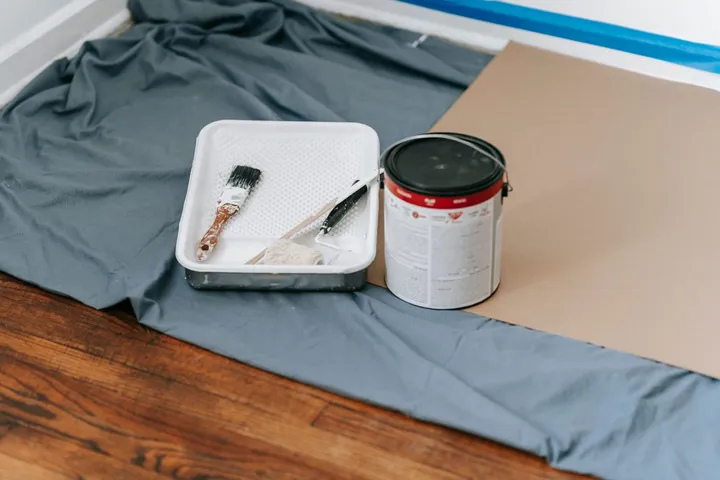
Alkyd paint, often called oil based paint, is the older alternative. It dries to a hard, smooth coat and it levels well, which means brush marks show less. It also smells stronger, takes much longer to dry, and needs mineral spirits for cleanup.
Alkyd paint still has a place on trim, doors, and cabinets, but it is rarely the right pick for large living room walls.
Primer is a separate product, and it matters more than many buyers expect. Primer seals bare drywall, covers stains, and gives the topcoat an even surface to grip. Use primer on new drywall, on patched areas, and when you change from a dark color to a light color.
You can skip a full primer coat when you repaint a clean wall in a similar color, but spot prime every repair so it does not show through the finish.
If anyone in the home has breathing sensitivities, the best paint for living room walls is a low VOC latex paint. VOC stands for volatile organic compounds, which are chemicals that evaporate from paint as it dries and can irritate eyes, nose, and lungs. Low VOC and zero VOC paints release far less of these chemicals, and they are now widely sold at major paint retailers.
Open windows and run a fan while you paint, even with a low VOC product, until the smell fades.
| Paint type | Best for | Watch out for |
|---|---|---|
| Latex, also called acrylic latex | Almost every living room wall | Needs a clean, primed surface for best grip |
| Alkyd, also called oil based | Trim, doors, and cabinets | Strong smell, slow drying, solvent cleanup |
| Low VOC or zero VOC latex | Living rooms, nurseries, and sensitive noses | Costs a little more per gallon |
| Primer | New drywall, patches, and big color changes | Not a finish coat on its own |
Which paint finish is best for a living room?
For most living rooms, the best paint for living room walls comes in eggshell or satin, and finish is how much light the dried paint reflects, from flat with almost no shine to gloss with a bright shine. Sheen changes how a room feels, how easy the walls are to clean, and how much every dent and patch shows. In general, eggshell is the best paint for living room walls in a quiet adult home, while satin takes the same role in a busy family home.
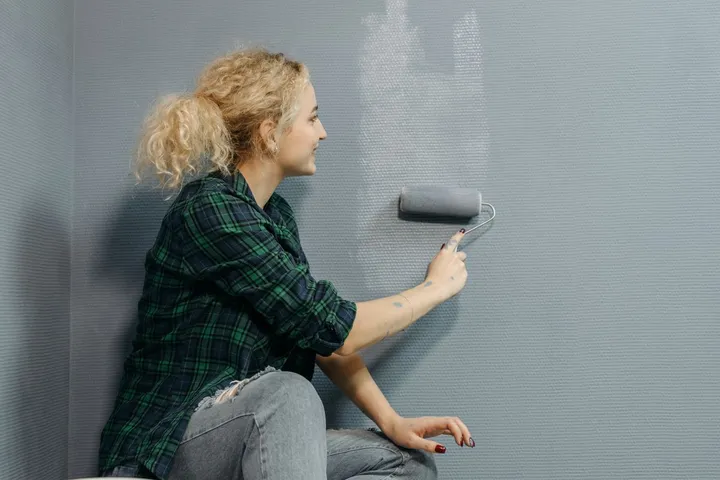
Flat paint has almost no shine, so it hides wall flaws well and gives a soft, rich color. It scuffs easily and it does not like scrubbing, so it suits ceilings and formal living rooms that see little wear. Matte paint is very close to flat, with just a touch more durability in many brands, and it suits the same calm rooms.
Eggshell has a soft, low shine like the shell of an egg. It hides small flaws better than satin, it wipes clean with a damp cloth for normal marks, and it looks elegant in most light. That balance is why painters often call eggshell the safe default for living rooms, dining rooms, and adult bedrooms.
Satin has a little more shine and it stands up better to washing, sticky fingers, and pet contact. It shows wall flaws more than eggshell, so walls should be smooth and well prepared before you choose satin.
Semi gloss and gloss are rarely right for large living room walls. They are very washable, but they show every dent, drip, and patch, and they can look harsh across a big wall. Save semi gloss for trim, doors, and built in shelves, where its hard, wipeable surface earns its keep.
Use the same finish on all four living room walls, and use semi gloss on the trim, for a clean designer look.
| Finish | Shine | Best living room use | Cleaning |
|---|---|---|---|
| Flat | None | Ceilings and quiet formal rooms | Light dusting only |
| Matte | Very low | Calm rooms with imperfect walls | Gentle wiping |
| Eggshell | Low, soft glow | Most living rooms | Damp cloth wiping |
| Satin | Soft sheen | Busy family rooms, kids, pets | Regular washing |
| Semi gloss | Noticeable shine | Trim and doors, not large walls | Easy scrubbing |
| Gloss | Bright shine | Trim and cabinets only | Easy scrubbing |
If your walls have dents or patches, the best paint for living room walls is usually eggshell or matte, since higher shine makes flaws stand out.
How do you pick a color that works in your living room?
Test the color in your own light before you buy, because light decides how a color actually looks in your room. A north facing room gets cooler, bluer light, so warm whites, warm grays, and soft greens stop it feeling cold. A south facing room gets warm, strong light, so cooler whites and muted blues keep it from feeling yellow.
Test the best paint for living room walls in your own light, not only under store lights, because the same color can shift a lot between morning, afternoon, and lamplight.
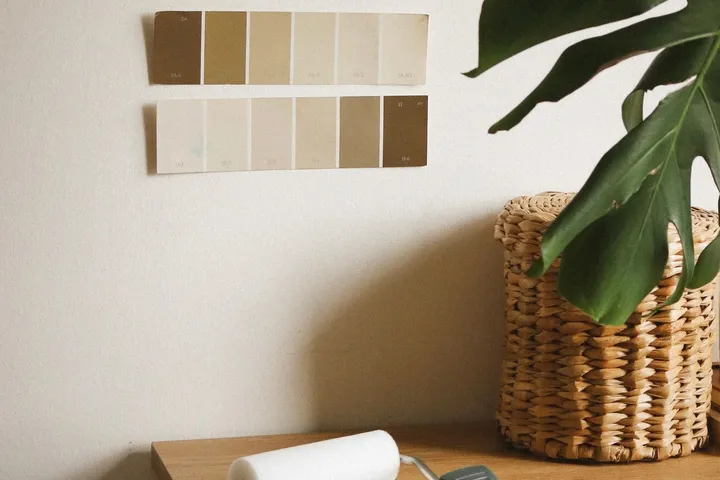
Buy sample quarts or small sample pots of your top two or three colors and paint large patches, at least two feet square, on two walls. Live with the patches for two full days and look at them in morning light, afternoon light, and evening lamplight. A patch that looks gray in the morning can look warm beige at night, and a patch that looks perfect alone can clash with your sofa or rug.
This small test costs little and it prevents the most common repaint regret.
Consider your fixed features before you fall in love with a chart color. Flooring, brick fireplaces, wood trim, and large furniture all add their own color to the room. A cool gray wall can fight with warm oak floors, while a warm greige, a mix of gray and beige, often ties warm floors and cool furniture together.
If your room is small or dark, a lighter color with a higher light reflectance value, a number on the paint chart that shows how much light the color reflects, will make it feel larger and brighter.
One specific example shows how this works in practice. A family with a north facing living room, oak floors, and a dark green sofa tested three colors: a cool gray, a warm white, and a warm greige. The cool gray made the room feel cold and the oak floors looked orange beside it.
The warm white looked clean but a little flat on its own. The warm greige tied the floors and the sofa together, looked good in morning and evening light, and became their final pick in eggshell. Four neutrals earn their place on living room walls again and again. Agreeable Gray, Sherwin Williams SW 7029, carries a light reflectance value of 60. Edgecomb Gray, Benjamin Moore HC-173, sits at 63. White Dove, Benjamin Moore OC-17, is a soft white that stays warm in lamplight. Pale Oak, Benjamin Moore OC-20, is a pale greige for rooms that run dark. PaintDeck lists all four in its room by room neutral guide, and each one takes eggshell well. Pick one of these four if you want the best paint for living room walls without gambling on an untried shade.
How much paint does a living room need?
Most interior latex paint covers about 350 to 400 square feet per gallon for one coat on smooth, primed walls, according to the Sherwin Williams SuperPaint technical data sheet. Textured walls and unpainted drywall drink more paint, so coverage can drop to about 250 to 300 square feet per gallon on those surfaces. Two coats are standard for full, even color, and one coat rarely hides the old color completely.
That is why you buy the best paint for living room walls by the room size and the number of coats, not by guesswork.
Here is a worked example for a typical living room that measures 16 feet by 12 feet with 9 foot ceilings. The perimeter is 56 feet, and 56 feet times 9 feet gives 504 square feet of gross wall area. Subtract about 66 square feet for one door and three windows, and the paintable area is about 438 square feet.
At 350 square feet per gallon, one coat needs about one and a quarter gallons, and two coats need about two and a half gallons. Buy 3 gallons so you have paint left for touch ups.
| Room size | Paintable walls, about | Two coats, about | Buy |
|---|---|---|---|
| 12 feet by 12 feet, 8 foot ceilings | 320 square feet | 2 gallons | 2 gallons |
| 16 feet by 12 feet, 9 foot ceilings | 438 square feet | 2 and a half gallons | 3 gallons |
| 20 feet by 15 feet, 9 foot ceilings | 560 square feet | 3 and a quarter gallons | 4 gallons |
Measure your own room before you shop, because open plan rooms and rooms with tall ceilings need far more paint than the table suggests. Measure the perimeter, multiply by the ceiling height, subtract about 20 square feet for each door and about 15 square feet for each average window, then divide by 350 and multiply by two coats. Round up to whole gallons, since paint is sold in whole cans, and keep the leftover can for future touch ups.
What does living room wall paint cost?
Paint prices vary by brand and quality tier, and the best paint for living room walls is not always the most expensive can on the shelf. A September 2026 price check by SimplyWise, a cost guide publisher, found Sherwin Williams SuperPaint interior latex at $54.27 per gallon, Sherwin Williams Emerald interior latex in satin at $67.27 per gallon, Benjamin Moore Regal Select interior in eggshell at $68.94 per gallon, and Benjamin Moore Aura interior in matte at $108.99 per gallon.
Those are the prices SimplyWise captured from the makers direct channels and one independent dealer on 5 September 2026, not retail list prices. PaintDeck checked the same lines as retail list prices in October 2026 and found Regal Select at $79 to $85 per gallon and Emerald at $101 to $106 per gallon, with Benjamin Moore listing Regal Select at $84.99 direct.
The gap comes down to list price against dealer and sale pricing. Sherwin Williams runs frequent sales below list, so the price you actually pay is often lower than the list. Prices change by store and region, so check your local retailer before you budget.
Four cans cover nearly every living room job. The table puts the best paint for living room walls side by side, so price, finish, and best use are easy to compare.
| Product | SimplyWise capture, Sept 2026 | PaintDeck list, Oct 2026 | Sheens | Best living room use |
|---|---|---|---|---|
| Sherwin Williams SuperPaint | $54.27 | $83 to $88 | All sheens | Contractors, volume jobs |
| Sherwin Williams Emerald | $67.27, satin | $101 to $106 | Flat to semi gloss | Busy family living rooms, kids and pets |
| Benjamin Moore Regal Select | $68.94, eggshell | $79 to $85 | All sheens | Living rooms, bedrooms |
| Benjamin Moore Aura | $108.99, matte | About $109 | Matte to semi gloss | Deep, saturated colors |
The SimplyWise prices are what dealers charged in September 2026, while the PaintDeck prices are retail list. Watch for a Sherwin Williams sale before you buy the best paint for living room walls, since the sale price often beats both columns.
For the worked example room above, three gallons of a mid tier paint at about $55 to $70 per gallon cost about $165 to $210 for paint alone. Add primer if you need it, plus rollers, brushes, tape, drop cloths, and a tray, and a do it yourself job often adds about $40 to $80 in supplies. Hiring a painter costs far more, because labor is most of the bill.
SimplyWise puts a living room paint job at $530 to $2,000 in total, depending on room size, wall condition, and whether trim and ceilings are included.
Our guide to the cost to paint a room breaks down labor, materials, and room sizes in more detail. If you plan to hire the work out, get at least two written quotes that state the paint brand, the finish, the number of coats, and whether primer and wall repairs are included. A cheap quote that uses one thin coat of builder grade paint is not a bargain if you repaint in two years.
Ask each painter which product they will use. A quote that names the best paint for living room walls, the finish, and the coats beats a vague one.
How do you apply living room wall paint for a lasting finish?
Prepare the wall first, then cut in, roll two coats, and let each coat dry. The best paint for living room walls lasts longest on a clean, smooth, primed surface with two full coats and proper drying time between coats. If you want the full process, read how to paint living room walls like a professional, which covers furniture, windows, and light in a living room specifically.

Follow this practical checklist before you open a can. Clear the walls, remove outlet covers and switch plates, and move furniture to the center of the room under drop cloths. Fill nail holes and small dents, sand the repairs smooth, and wipe dust off the walls with a damp cloth.
Tape trim, windows, and ceilings only where you need a sharp edge, and press the tape down firmly so paint cannot bleed under it. Prime bare drywall and every repair, and let the primer dry fully.
Cut in the edges with a brush first, then roll the large areas while the brushed edges are still wet, so the two blend into one even coat. Roll in a W pattern, then fill the W with straight, overlapping passes, and keep a wet edge as you move across the wall. Let the first coat dry for the time on the can, usually about four hours for latex paint, then apply the second coat the same way.
Do not rush the second coat, since rolling over tacky paint pulls the first coat off the wall.
Stay safe while you paint. Ventilate the room, wear a mask if you sand old paint, and never sand or scrape paint in a home built before 1978 without checking for lead paint first. Lead paint is a serious health hazard, and homes built before 1978 often contain it.
If a lead test is positive, stop and get advice from a certified lead professional before you disturb the paint. Use a stable step ladder on a flat floor, never climb on furniture, and keep paint and solvents away from children and pets.
When the second coat dries, remove the tape slowly at an angle while the paint is still slightly tacky or fully dry, depending on the tape instructions. Touch up small flaws with a small brush, then step back and check the walls in daylight and lamplight. Keep the leftover paint, labeled with the brand, color, and finish, for future touch ups.
A labeled can saves a second color matching trip later.
Common mistakes to avoid
The most common mistake is buying gallons before testing the color on the wall. The second is skipping primer on patches and new drywall, which leaves dull spots that show through even two topcoats. The third is choosing a high shine finish to get washability, then finding that every wall flaw now stands out in daylight.
The fourth is buying exactly the calculated amount with nothing left for touch ups, so a later scuff means a new color matching problem.
Choose the finish for your real life, not for a showroom. A calm adult living room does well with eggshell, and a busy family room does better with satin. Test the color large, buy one extra gallon for touch ups, and keep the label.
Those three habits do more for the final result than any premium brand name alone.
Pick the paint that fits your traffic, your light, and your budget. The best paint for living room walls is the one you test on your own walls first.
Related guides
- Interior Painting Guide From Prep to Final Coat for 2027
- How Much Does It Cost to Paint a Room? 2027 Price Guide
- How to Paint Living Room Walls Like a Professional for 2027
- How Much Paint for Living Room Walls in 2027
- Living Room Walls Painting Mistakes to Avoid in 2027
- Paint Drying Time Living Room Walls Explained for 2027
- Best Paint for Bedroom Walls: Types and Finishes Explained
Frequently asked questions
What is the best paint finish for living room walls?
Eggshell is the best all round finish for most living rooms, because it looks soft, hides small flaws, and wipes clean. Satin is better for busy family rooms with children or pets, because it washes more easily. Flat and matte suit quiet formal rooms, but they scuff faster and they do not like scrubbing.
Is latex or oil based paint better for living room walls?
Latex paint is better for almost every living room wall, because it dries fast, cleans up with soap and water, and has lower odor. Oil based alkyd paint gives a hard, smooth coat, but it smells stronger, dries slowly, and needs solvent cleanup. Save alkyd paint for trim, doors, and cabinets.
What is the best paint for living room walls with kids and pets?
The best paint for living room walls with kids and pets is a washable latex paint in satin, from a quality brand, applied in two coats over primer. Satin stands up to wiping, sticky marks, and light scrubbing far better than flat or matte. Keep a labeled leftover can for touch ups, since busy rooms need them more often.
How many gallons of paint do I need for a living room?
A 16 foot by 12 foot living room with 9 foot ceilings needs about two and a half gallons for two coats, so buy 3 gallons. Measure your own room, subtract doors and windows, divide by about 350 square feet per gallon, and multiply by two coats. Round up to whole gallons and keep the extra for touch ups.
Should I use primer on living room walls?
Use primer on new drywall, patched areas, stains, and big color changes, since it seals the surface and gives an even finish. You can often skip full priming when you repaint a clean wall in a similar color. Spot prime every repair either way, or the patches may show through the topcoat.
Sources: SimplyWise interior painting cost guide, September 2026 price captures for Sherwin Williams and Benjamin Moore paints and living room job totals; Bobby Berk paint finish guide for finish recommendations by room; paint maker label guidance for coverage of about 350 to 400 square feet per gallon and latex recoat times. External links in this article are nofollow.