How to Save Money Painting a Room
Do the labor yourself, buy only the paint you need, prep the walls, and pick the right finish the first time. That is how to save money painting a room, and it works because labor is the biggest line on a pro quote. A professional room job averages about $1,100, while a do it yourself job costs $100 to $300.
How much does painting a room cost before you save anything?
I painted my first room with a borrowed roller and a gallon of mistinted paint, and the finish was better than the quote I had turned down. Before you cut costs, it helps to know what a normal paint job costs. Angi data updated 28 October 2026 puts the average cost to paint a room at about $1,100. Small rooms land near $200 to $600, while larger rooms run $500 to $1,500. Those are the numbers every tip on how to save money painting a room below is measured against.
Professional painters usually charge $2 to $6 per square foot of wall space.
Labor is the biggest part of that bill. Angi notes that painters charge $2 to $6 per square foot, and Angi puts labor at 60 to 90 percent of a professional job for a single room. Paint itself is a smaller share.
A gallon of quality interior paint costs $25 to $60, and most rooms need one to two gallons for two coats. That gap between labor and materials is exactly where your savings live.
Should you do the work yourself and keep the labor money?
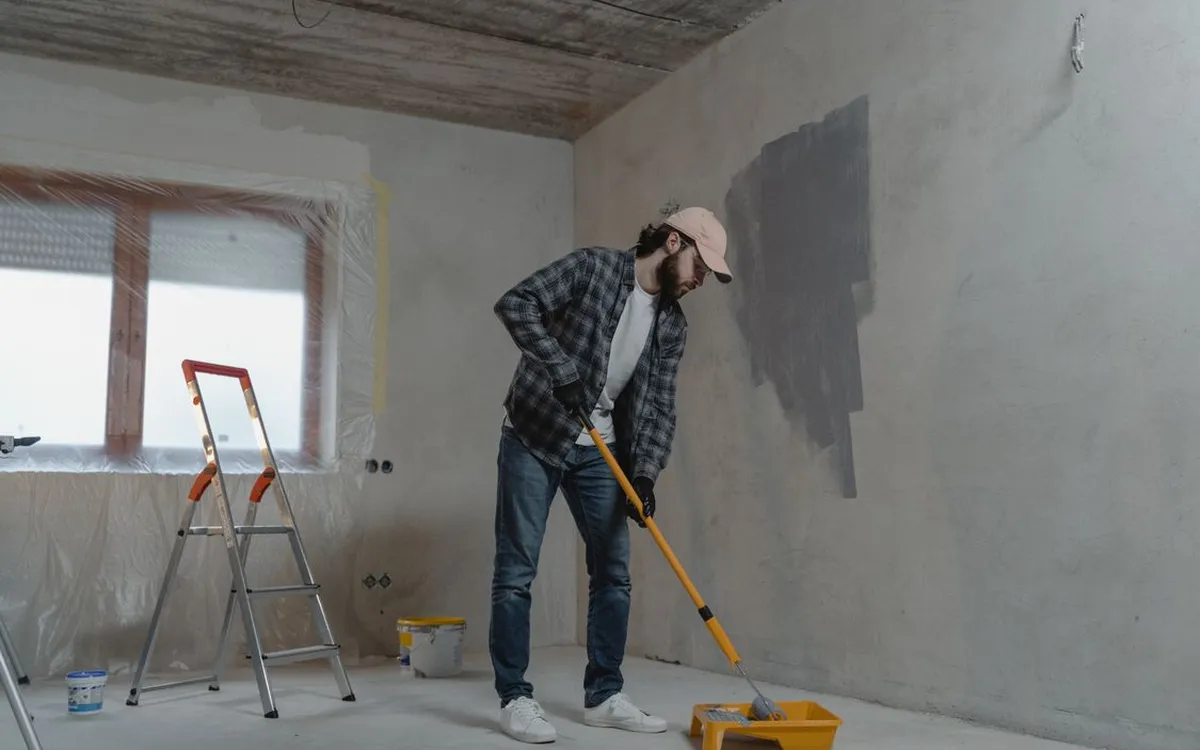
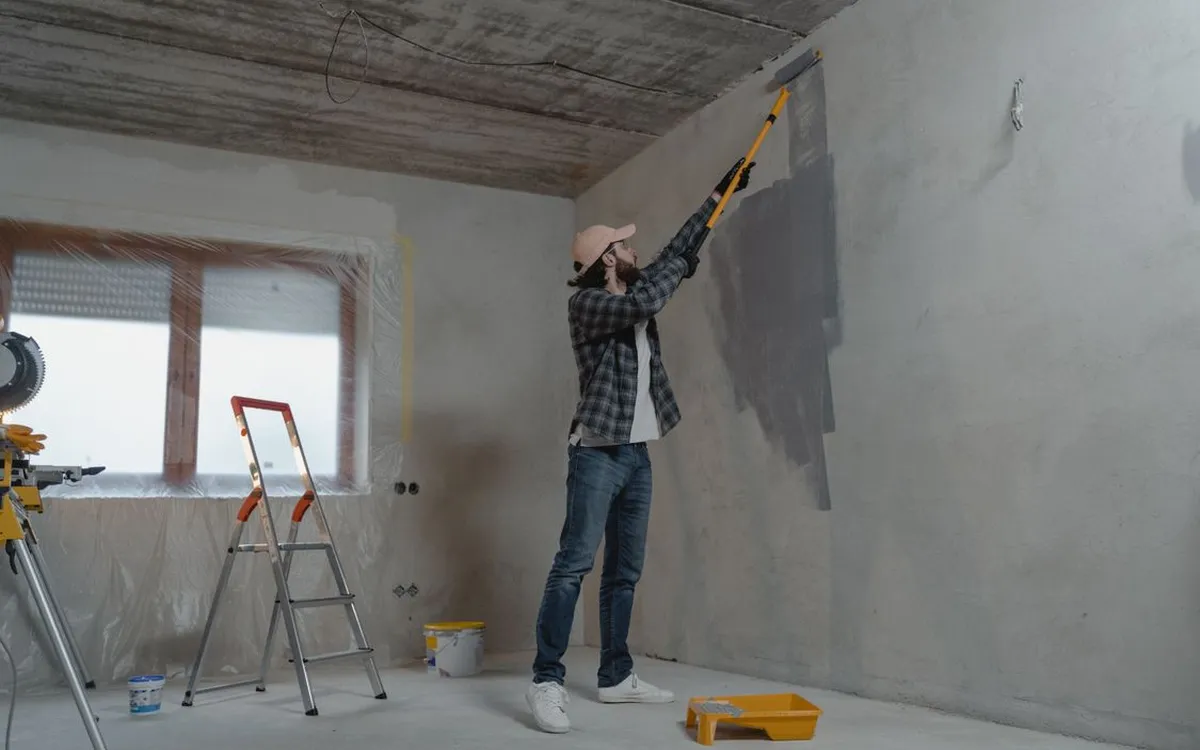
The single biggest saving is doing the painting yourself. When you skip the pro, you skip the labor charge, which is most of the bill. A room that costs $1,100 professionally can often be done for $100 to $300 in paint, primer, rollers, brushes, tape and drop cloths.
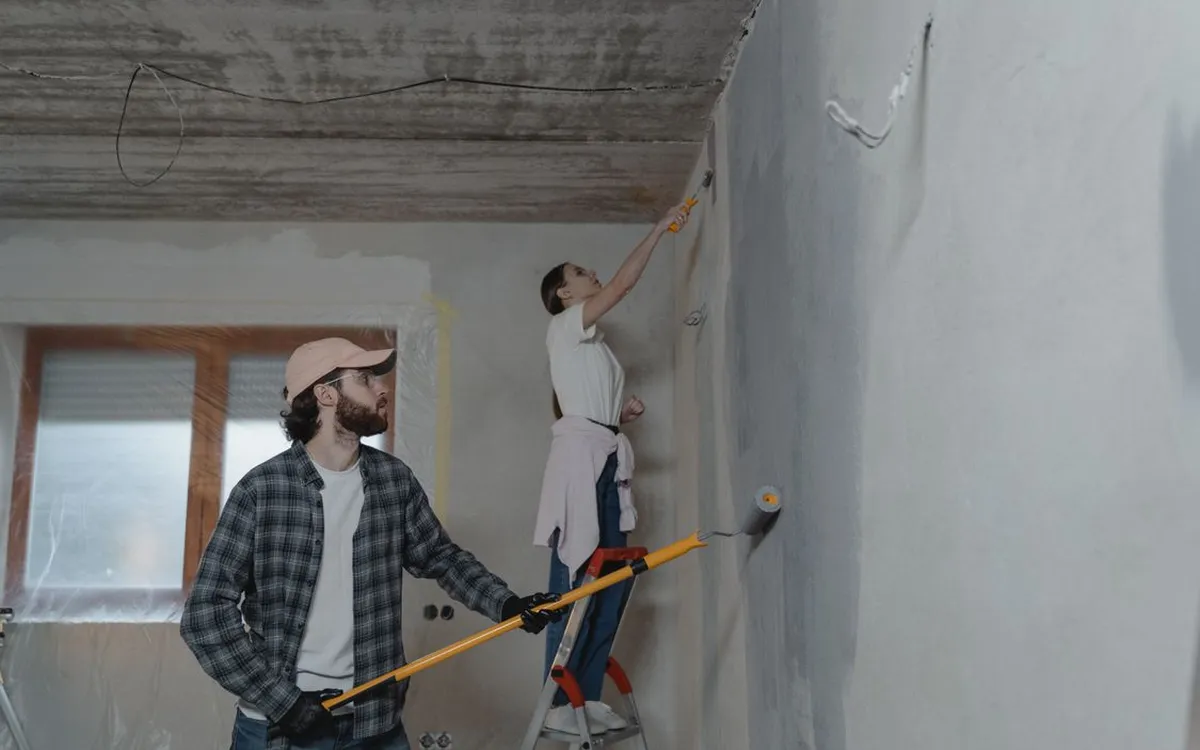
Labor is the cost, so labor is the saving.
Painting a room is one of the most beginner friendly home projects. That is why doing the work yourself tops every list of how to save money painting a room. It needs patience and care, not special training.
Watch a short tutorial from a paint brand such as Sherwin Williams or Behr before you start, and practice your cutting in technique on a hidden corner first. If you can hold a brush steady and follow a straight line, you can paint a wall.
Be honest about your limits, though. Tall stairwells, vaulted ceilings and rooms with damaged plaster may still be worth hiring out. A bad job that needs repainting costs more than hiring right the first time.
Save the pro budget for the hard rooms and paint the easy ones yourself.
How do you buy paint smart and never pay full price twice?
Paint is where most beginners overspend, and it is also where the easiest savings hide. Each tip below is a proven part of how to save money painting a room without ending up with a patchy finish. Start by measuring your walls and using a free paint calculator from Sherwin Williams, Behr or Benjamin Moore.
Enter your room size and it tells you how many gallons you need. Buying one gallon too many wastes $25 to $60, and buying too little means a second trip and a possible color mismatch.
Ask about mistinted paint, often called oops paint, at Home Depot or Lowes. These are gallons mixed to the wrong color for another customer and sold at a deep discount, sometimes 50 percent off or more. If you are flexible on color, oops paint is the cheapest quality paint you will ever buy.
The paint is the same product, only the shade was a mistake.
Watch for holiday sales. Paint brands and home improvement stores run big discounts around Memorial Day, Labor Day and Black Friday. Buying during a sale can cut $10 to $20 off every gallon.
If you plan to paint several rooms over the year, buying during one sale and storing the cans properly saves real money.
Buy the five gallon bucket when you paint several rooms in one color. Angi lists a five gallon bucket at $200 to $400, which works out cheaper per gallon than single gallons. One color across several rooms also means one brush, one roller sleeve and one tray, instead of a fresh set for every shade.
How do you prep the walls so one good job lasts?

Good prep is free except for your time, and it is the difference between a paint job that lasts ten years and one that peels in two. Good prep is also a core part of how to save money painting a room, because paint sticks better to a clean wall and lasts longer. Wash the walls with warm water and a mild cleaner to remove dust and grease.
Fill nail holes and small cracks with spackle, let it dry, then sand it smooth. A $10 tub of spackle and a sanding sponge fix most wall flaws.
Use primer where it matters and skip it where it does not. New drywall, patched areas and drastic color changes need primer, because bare drywall drinks paint and a dark old color bleeds through light new paint. Walls already painted in a similar color in good condition often need no primer at all.
Primer costs $15 to $30 per gallon, so priming only where needed saves money and time.
Tape only the edges that need it. Painter’s tape costs $5 to $10 a roll, and beginners often tape every edge in the room. With a steady hand and an angled brush, you can cut in freehand along ceilings and trim after a little practice.
Tape the edges next to floors and windows you cannot risk, and cut in the rest by hand.
How do you use the right tools without buying them all?
You do not need a professional tool kit to paint one room. A quality angled brush for cutting in, a nine inch roller frame with two covers, a tray, a drop cloth and a sturdy extension pole cover nearly every room. Expect to spend $40 to $80 on a basic brush and roller kit that lasts for many rooms, and budget $150 to $300 in total for brushes, rollers, drop cloths, and tape, as Angi advises.
Spend on the brush and save on the rest. A $15 to $20 angled brush holds more paint and leaves fewer brush marks than a $5 brush, which means fewer coats and a better finish. Roller covers are cheaper, so buy a fresh one for each room or each color.
A worn roller cover leaves lint and texture on the wall.
Borrow or rent what you only need once. Borrowing tools is another simple saving, since a sprayer you use once should never be a purchase. A tall ladder, a paint sprayer and a long extension pole are worth borrowing from a neighbor or renting for a day.
Buying a sprayer for one room rarely pays off, since cleaning a sprayer takes longer than rolling the room. Old bedsheets work as drop cloths just as well as store bought ones, and they are free.
Clean your tools the same day. Water based latex paint washes out of brushes and rollers with warm water and a little soap. A brush cleaned well lasts for years, while a brush left overnight in paint is ruined.
Clean tools are free tools for your next room.
How do you pick the right paint and finish the first time?
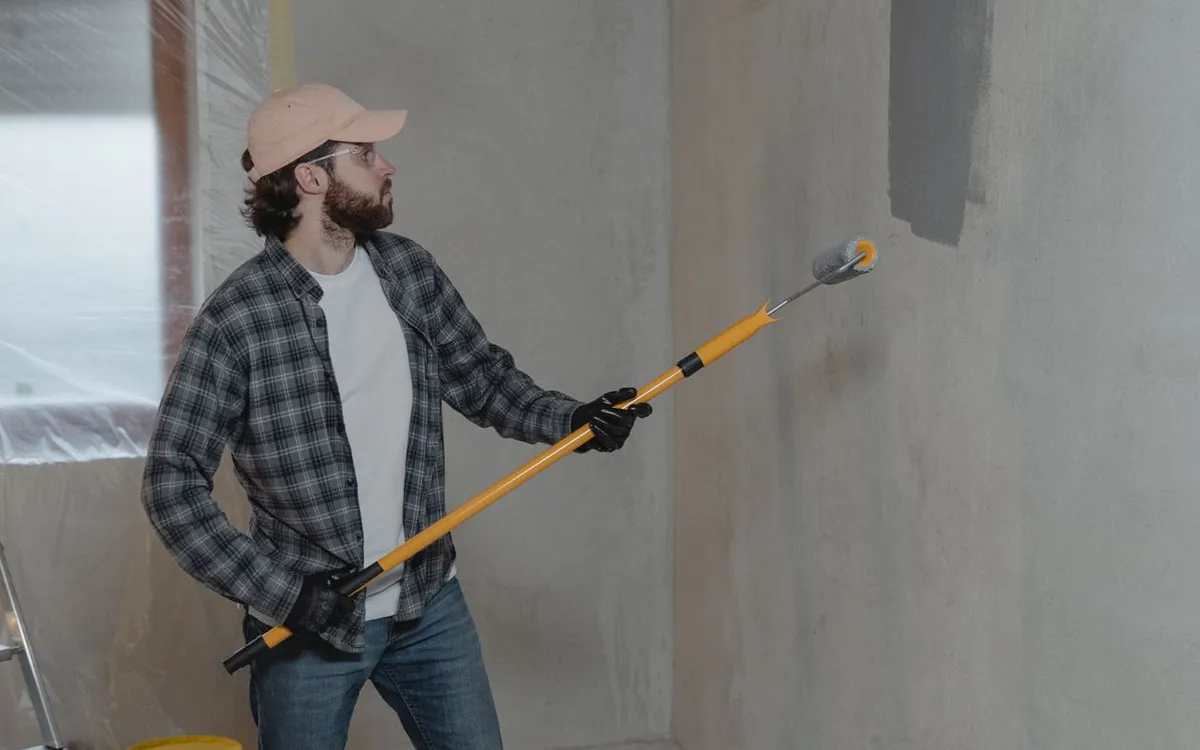
Cheap paint is one of the most expensive mistakes a beginner can make. Choosing well the first time is central to how to save money painting a room, because a repaint doubles your cost. Bargain paint often needs three coats to cover, while quality paint covers in two.
Three coats of cheap paint cost more in paint and time than two coats of good paint. Mid range paint at $30 to $50 a gallon is the sweet spot for most rooms.
Choose the finish for the room, not just the color. Flat finish hides wall flaws and suits bedrooms and ceilings. Eggshell is washable and works well in living rooms.
Satin stands up to scrubbing and fits kitchens, bathrooms and hallways. Semi gloss is best for trim and doors. The wrong finish means repainting sooner, which erases your savings.
Test the color before you commit. Buy a small sample pot or a peel and stick sample sheet for a few dollars and live with the color for two days. Check it in daylight and at night, because paint looks different under lamps than in sunlight.
A wrong color choice means buying all the paint again and doing all the work twice.
Keep the number of colors low. Every extra color needs its own brush, roller cover and tray, and it adds cutting in time around every edge. One color for the whole room is the cheapest and fastest job.
If you want an accent wall, paint it last with the leftover paint from another project or a single sample gallon.
When should you time your project and bundle your rooms?
Painting in the off season can lower a pro quote if you do hire help. Timing is an overlooked part of how to save money painting a room when you hire help. Parnell Painting notes that winter months from November through February are slower for painting contractors, and some offer discounts to fill their schedules.
If you hire out a hard room, ask for a winter quote and compare it with a spring quote.
Bundle rooms when you hire a pro. Having a painter come once for three rooms costs less per room than three separate visits, because travel and setup time are shared. If you paint some rooms yourself and hire out others, schedule the pro rooms together in one visit.
Paint before you move in when you can. An empty room needs no furniture moving, no masking of sofas and no careful dance around rugs. Painters charge for the time spent moving and protecting furniture, so an empty room quote is lower.
New homeowners who paint before moving day save both money and stress.
What should you skip, and what should you never skip when you learn how to save money painting a room?
Skip painting the ceiling if it is already white and in good shape. Knowing what to skip is the final piece of how to save money painting a room without cutting corners on safety. Ceilings need ladders, neck strain and extra paint, and a clean white ceiling rarely needs a fresh coat.
Skip painting inside closets unless they are visible, and skip trim that is already clean and glossy. Every surface you skip saves paint and hours.
Never skip safety steps to save money. If your home was built before 1978, assume the old paint may contain lead. The Environmental Protection Agency Renovation, Repair and Painting Rule requires lead safe work practices in pre 1978 homes, and disturbing lead paint without precautions can poison children and adults.
Test for lead with a home test kit for about $10, and hire a certified lead safe contractor if lead is present. Saving money is never worth a health risk.
Never skip ventilation. Open windows, run a fan and keep fresh air moving while you paint and for a few hours after. Low VOC and zero VOC paints release fewer fumes and cost only a little more than standard paint.
Keep children and pets out of the room until the paint is dry and the air is clear.
Never skip ladder safety. Most painting falls happen from short ladders used carelessly. Set the ladder on flat ground, keep your hips inside the rails, and never stand on the top step.
An extension pole reaches most ceilings without a ladder at all, and it is cheaper than a hospital visit.
A worked example in how to save money painting a room: one 12 by 12 bedroom, done two ways
Take a 12 by 12 bedroom with 8 foot ceilings. The walls come to about 384 square feet, and at 350 to 400 square feet per gallon, two gallons cover two coats with paint left for touch ups. Here is how learning how to save money painting a room adds up on that one room.
| Line | Do it yourself | Hire a pro |
|---|---|---|
| Paint, 2 gallons mid range at $30 to $50 a gallon | $60 to $100 | Included in the quote |
| Primer, 1 gallon | $20 to $30 | Included in the quote |
| Roller, tray, brush, tape, drop cloth | $40 to $60 if bought new, $0 if borrowed | Included in the quote |
| Labor | $0, about a weekend of your time | $300 to $500 |
| Total for the room | $120 to $190 | $400 to $600 |
That is a saving of roughly $285 to $485 on one room, and the DIY total lines up with Everyday Cheapskate, which works the same 12 by 12 room at $115 do it yourself against $400 to $600 pro. Ask about mistinted paint, often called oops paint, at Home Depot or Lowes, and the paint line can drop further, sometimes by half. One warning belongs here too, and it is the rule most guides on how to save money painting a room forget to mention. In a home built before 1978, the EPA Renovation, Repair and Painting Rule applies when a paid contractor disturbs more than 6 square feet of painted surface inside a room: the firm must be EPA certified, and firm certification costs $300 and lasts 5 years. A homeowner doing their own work is exempt, but a hired painter is not, so check the certificate before you hire for an old house.
How much can you really save?
Add it up for a typical 12 by 12 bedroom. A professional job runs $400 to $600 for a room that size, and a do it yourself job lands near $115, the same figures Everyday Cheapskate uses for the same room. One gallon of mid range paint, primer only where needed, a brush and roller kit, tape and drop cloths, and a sample pot make up that $115.
That is a saving of roughly $285 to $485 on one room. That math is why so many guides start with labor.
Paint three rooms yourself and the savings reach $500 to $2,000, enough to fund your next home project. The real secret of how to save money painting a room is that the savings stack. Every room you paint yourself makes the next one cheaper, because your tools are already bought, your skills are already learned, and your leftover paint covers touch ups for free.
Related guides
- Home Improvement Costs in 2027: The Complete Price Guide
- FHA 203k Renovation Loans Explained: Costs and Requirements
- How Much Does It Cost to Paint a Room? 2027 Price Guide
- Cost to Paint a Room: What Homeowners Actually Pay in 2027
- Interior Painting Guide From Prep to Final Coat for 2027
- How to Paint Living Room Walls Like a Professional for 2027
Frequently asked questions
What is the cheapest way to paint a room?
The cheapest way is to do it yourself with mid range paint bought on sale, one color for the whole room, and tools you already own or borrow. A typical bedroom can be painted for $100 to $300 this way, compared with $300 to $800 for a professional job.
How much paint do I need for one room?
One gallon covers about 350 to 400 square feet with one coat. A 12 by 12 bedroom has about 400 square feet of wall space, so plan on one gallon per coat, or two gallons for two coats. Use a free paint calculator from Sherwin Williams or Behr to measure exactly.
Is cheap paint worth it when you are trying to learn how to save money painting a room?
Usually not. Cheap paint often needs three coats to cover well, while quality paint covers in two. Mid range paint at $30 to $50 a gallon gives the best balance of price and coverage for most rooms.
Do I need primer before painting?
You need primer on new drywall, patched areas, stained walls and drastic color changes. Walls already painted in a similar color and in good condition often need no primer. Skipping unneeded primer saves $15 to $30 per gallon.
When is the cheapest time to hire a painter?
Winter is usually cheapest, because November through February are slower months for painting contractors. Some offer discounts to fill their schedules, so ask for an off season quote and compare it with a spring price.
Safety disclaimer
Painting is a beginner friendly project, but it still carries real risks. Test for lead paint in homes built before 1978 and follow the Environmental Protection Agency lead safe rules if lead is present. Work in a well ventilated space, keep children and pets away until paint is dry, and use ladders safely.
If a job involves high ceilings, damaged plaster or lead paint, hire a qualified professional. Prices in this guide are national averages from the sources below and will vary by room size, region and paint choice.
Sources
- Angi, How Much Does It Cost to Paint a Room, updated 28 October 2026. Read the Angi guide
- NerdWallet, Cost to Paint a House in 2026, updated February 2026. Read the NerdWallet guide
- Parnell Painting, Expert Tips for Reducing Painting Expenses
- Environmental Protection Agency, Renovation, Repair and Painting Program, firm certification. Read the EPA firm certification page. The EPA rule is the safety baseline for any guide to how to save money painting a room in a home built before 1978.
- Sherwin Williams and Behr paint calculators and coverage guides