Most radon jobs cost $800 to $2,500, and Angi reports an average of $1,043 while the Environmental Protection Agency puts the average near $1,200. So how much does radon mitigation cost for a typical home? The final price depends on the size of your home, the system it needs, and local labor rates.
A standard sub slab system suits a typical single family home, while larger or trickier homes need more suction points and cost more.
Foundation type, home size, system type and local labor rates set your final price, and testing and permits can add to the total.
Radon is a radioactive gas you cannot see, smell, or taste, and it forms as uranium in soil and rock breaks down over time. It enters through foundation cracks, gaps around pipes, sump pits, and joints where walls meet floors, so a test is the only way to know whether your home has a problem.
The US Environmental Protection Agency, known as the EPA, estimates that nearly 1 in 15 homes has radon at or above its action level of 4 picocuries per liter, written as 4 pCi/L. The EPA also links radon exposure to about 21,000 lung cancer deaths each year in the US, making radon the second leading cause of lung cancer overall and the number one cause among people who have never smoked. That risk is why so many homeowners ask how much does radon mitigation cost before they book a test.
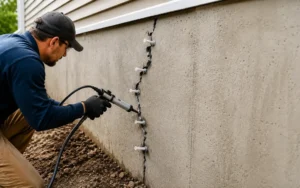
A mitigation system does not remove radon from the soil. It collects the gas from below your home and vents it outside above the roofline, where it disperses safely. The most common method is active soil depressurization, where a radon fan draws gas through a vent pipe from a suction point below the slab or membrane and pushes it outside.
The system works quietly in the background once it is installed, and a small pressure gauge on the pipe shows that the fan is creating suction. Radon work is a mid range job in home improvement terms, well below the price of a kitchen remodel or a roof replacement, but it is work that protects the air your family breathes every day.
How much does radon mitigation cost on average?
Three major cost guides agree closely on the center of the range, even though their exact averages differ because they use different samples, dates, and methods. Angi, using data updated in September 2026, reports an average of $1,043, with a typical range of $805 to $1,326, a minimum of $400, and a maximum of $1,800. The EPA Consumer’s Guide to Radon Reduction puts a typical system at $800 to $2,500, with an average near $1,200.
HomeAdvisor reports an average of about $1,028, with most homeowners spending $786 to $1,274. Taken together, these guides point to a realistic budget near $1,000 to $1,200 for a standard home, with simpler jobs below that and complex jobs above it.
| Source | Average | Typical range |
|---|---|---|
| Angi, updated September 2026 | $1,043 | $805 to $1,326 |
| EPA Consumer’s Guide to Radon Reduction | about $1,200 | $800 to $2,500 |
| HomeAdvisor | about $1,028 | $786 to $1,274 |
Every home is different, so get three itemized quotes and compare the same lines on each one. One contractor may quote a low headline price and leave testing, permits, sealing, or electrical work out of it.
Another may quote a higher price that already includes those items. Always ask for an itemized quote that lists the fan, pipe, sealing, labor, testing, permit fee, and warranty separately, so you compare the same work on every quote.
How much does radon mitigation cost by system type?
Active soil depressurization is the most common method, according to Angi, and it suits most basement and slab homes. A contractor drills a suction point through the slab, often at a sump pit, and connects a vent pipe to a radon fan. The fan pulls gas from the soil below the home and vents it above the roofline.
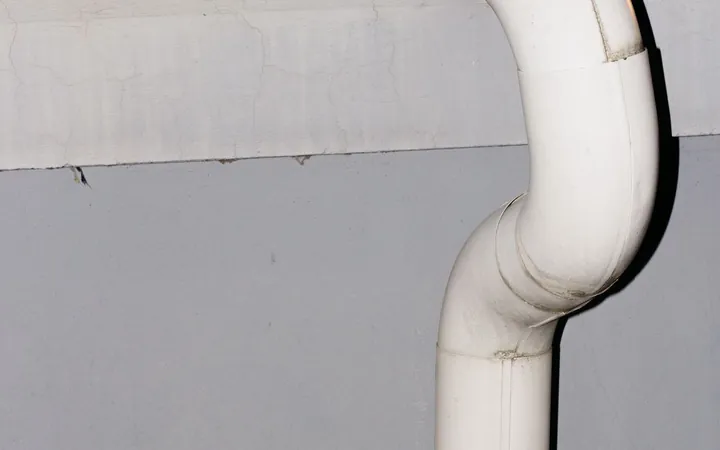
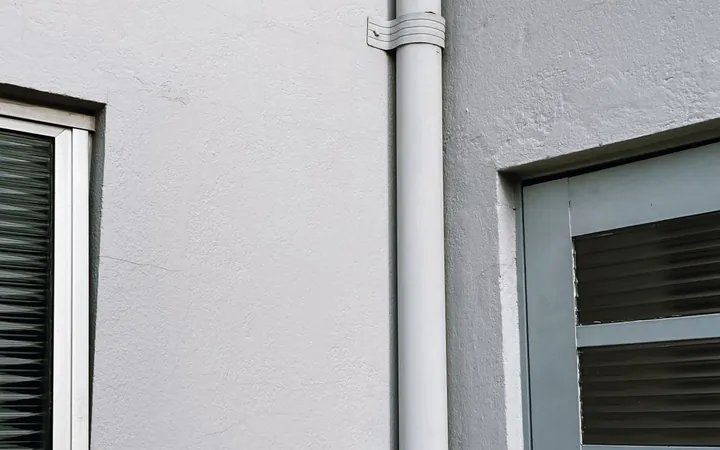
Sub slab depressurization is the same idea described by its location: the suction point sits below the concrete slab, and the fan keeps the soil under negative pressure so gas moves into the pipe instead of into your living space. The pipe route matters. A short straight run up an outside wall is simpler than a long run through finished rooms and an attic, and that difference shows up in labor time.
Homeowners with a crawl space often ask how much does radon mitigation cost, and the answer is usually higher than for a basement home because sealing and membrane work come first. A dirt floor crawl space must be covered with a sealed membrane before venting works well, and vents and access points must be sealed too. That extra labor and material is why crawl space jobs sit at the higher end of the national range.
A home with two foundation types, such as a basement plus a crawl space addition, may need more than one suction point, which also raises the price.
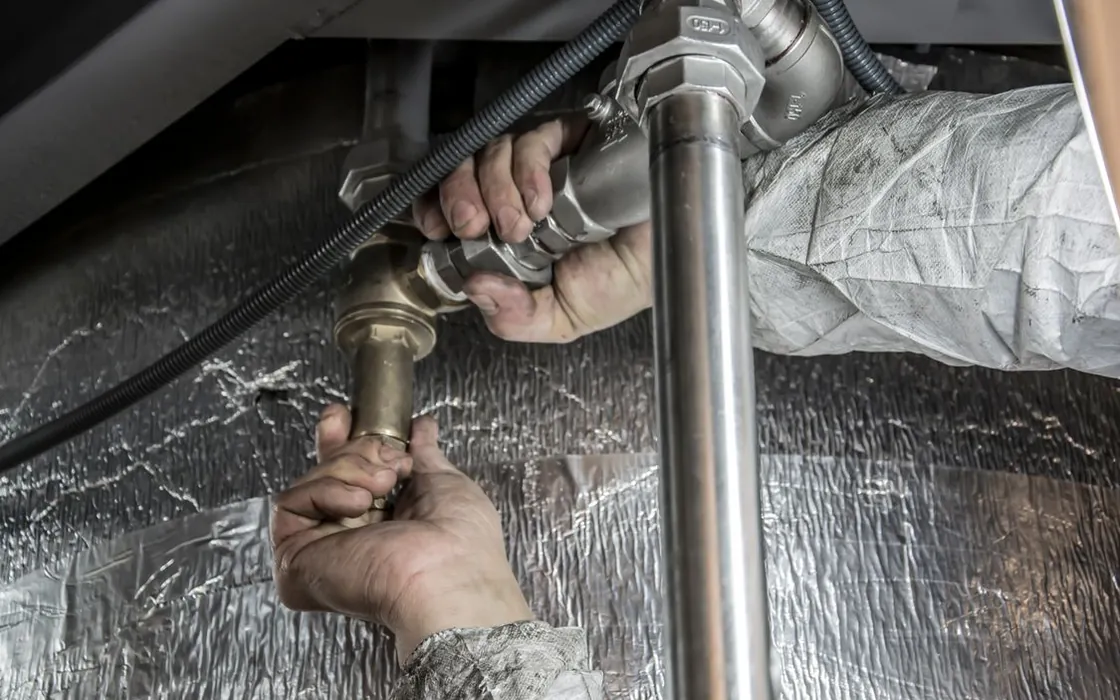
How do the six methods compare?
Two houses on the same street can get quotes $2,000 apart for the same job, and the difference is usually what is under the floor, not who quoted it. Angi lists six methods, updated 28 September 2026, and the table below is theirs.
| Method | Typical cost | What it means for your house |
|---|---|---|
| Sealing the basement | $400 to $4,600 | Cheapest, and only half as effective as the other methods. Expect to reseal. |
| Active suction soil depressurization | $1,000 to $3,000 | The most common method. A fan and PVC pipe pull gas from under the slab and vent it above the roofline. |
| Passive depressurization | $500 to $2,500 | Pipes and air pressure, no fan. Weak on high readings. |
| Wall based systems | $500 to $3,000 | For block walls, with an exhaust pipe venting the space behind them. |
| Ventilation systems | $1,300 to $2,500 | Two fans move air out of the lower level. |
| Water mitigation | $1,200 to $5,000 | For radon in well water, not in air. Carbon or aeration cleans the water. |
Two running costs belong in the same budget. Angi puts the fan electricity at $100 to $300 a year, and most fans last 5 to 10 years. A crawl space without a slab can add $1,500 to $15,000 for encapsulation, according to Angi, which is why crawl space jobs sit at the top of the range. Those running cost figures come from Angi, updated 28 September 2026.
What factors change your quote?
Foundation type is the biggest price driver, followed by home size and the number of suction points. Larger homes and homes with additions need more pipe and more sealing. The radon reading itself matters too, because a very high reading may call for a stronger fan or an extra suction point.
Pipe routing, soil conditions, and local labor rates add the final variation. Permit rules vary by town, and building permit costs should appear on an itemized quote rather than arriving later as a surprise. That is why the answer to how much does radon mitigation cost is always a range.
Only a visit and a test can say how much does radon mitigation cost for your home.
What extra costs should you budget for?
Testing and permits are the two extras most often left out of a headline price. Angi notes testing costs of $150 to $700 and permit fees of $25 to $150 where a permit is required.
A post installation test is not optional paperwork. A short term test kit after installation proves the system worked, and it belongs in any honest answer to how much does radon mitigation cost, because an untested system is a guess, not a result.
It is the proof that the system worked, and most certified installers include it or recommend it as a separate step. When you compare quotes, ask how much does radon mitigation cost with testing and permits included, so nothing is hidden in a later invoice. Plan too for the future.
Contractor guides put fan replacement at $300 to $600 when the fan wears out, so set that cost aside in your mind as a later expense, not a surprise. Retest after installation and again from time to time, especially after major changes to the home, so you know the system is still doing its job.
How to compare quotes step by step
First, test and keep the result, because a quote without a reading is a guess. Second, invite certified installers to visit, and ask each one to explain the suction point location, the pipe route, the fan model, and the vent termination point above the roofline. Third, compare the itemized lines, not just the totals.
A lower total that excludes testing, permits, and sealing is not cheaper than a higher total that includes them. Fourth, ask about the warranty in plain terms. Does it cover the fan only, or does it cover the radon level result as well, and for how long?
Fifth, ask what happens if the first retest still shows a level at or above 4 pCi/L. A good installer will explain the follow up step, such as adding a suction point or upgrading the fan, and whether that step is included in the original price. For the wider picture, our earlier guide breaks down radon mitigation costs by home type and method.
A quote without a test result cannot tell you how much does radon mitigation cost for your home with confidence, so never accept a firm price from a contractor who has not tested or visited. Be cautious with any quote that promises a fixed price before testing, that vents radon into an attic, garage, or crawl space instead of above the roofline, or that relies on sealing cracks alone. Sealing alone does not fix a high reading, because new cracks form as a home settles and because radon finds openings too small to see.
Be cautious too with a quote that is far below every other quote. It may use a fan that is too weak for your home, skip sealing, or leave out the retest that proves the job worked.
How to keep the bill down without cutting safety corners
You can save money on radon mitigation by testing first, comparing itemized quotes, and doing safe prep work yourself, such as clearing access to the sump pit and the planned pipe route before the crew arrives. Get quotes from more than one certified installer and ask each one what is included, so you are not comparing a bare price with a complete price. Ask whether testing and the post installation retest are included, and ask about the warranty on the fan and on the radon result.
Booking ahead and avoiding rush scheduling gives you room to compare, and a calm comparison is where real savings come from. Never save money by skipping the test, by venting into an attic or garage, or by accepting a system with no retest, because those shortcuts leave the health risk in place.
Safety disclaimer
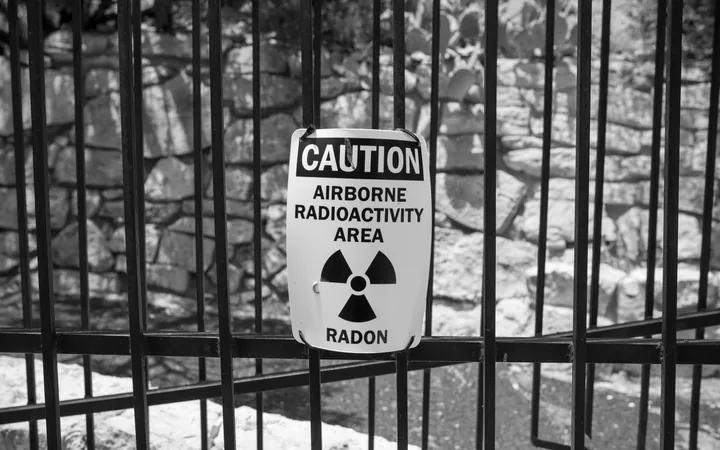
Radon mitigation involves drilling through concrete, working in crawl spaces, sealing sump pits, and connecting electrical equipment. Do not drill, cut, or seal a system yourself unless you are trained and your state allows it, and never vent radon gas into an attic, garage, basement, or living space. Radon exposure carries a serious long term health risk, and the EPA links it to about 21,000 lung cancer deaths each year in the US.
Hire a certified professional credentialed through the National Radon Proficiency Program, known as NRPP, or the National Radon Safety Board, known as NRSB, or licensed under your state radon program. Retest after installation to confirm the system worked, and treat this guide as general price information only, not a substitute for a site visit, a radon test, or advice from a certified radon professional in your state.
Related guides
- Radon Mitigation Cost in 2026: What Homeowners Actually Pay
- How to Save Money on Radon Mitigation in 2026
- Building Permit Cost: What Homeowners Actually Pay
Frequently asked questions
What does a typical job include?
A typical job includes a suction point, PVC pipe, an inline fan, sealing, a vent to above the roofline, an electrical connection, and a pressure gauge. Testing, permits, and crawl space membrane work are sometimes separate, so check the itemized quote.
How much does radon mitigation cost if my reading is just above the action level?
The price does not depend on how far above the action level your reading sits. It depends on your foundation type, home size, system type, and pipe route. A reading just above 4 pCi/L and a much higher reading often need the same system, so expect a quote in the same range as other standard jobs.
Do I need to fix radon below 4 pCi/L?
The EPA says to fix your home at 4 pCi/L or higher. There is no fully safe level, since risk falls as levels fall, so a result below 4 after mitigation is a good outcome.
Does a system use much electricity?
No. The fan runs around the clock, but Angi puts fan electricity and upkeep at $100 to $300 a year, which is small compared with the installation price.
Will a system hurt my home value?
A documented system with a post installation test below 4 pCi/L usually helps at sale time, because buyers see proof the problem was fixed by a certified professional. An untreated high reading, by contrast, can worry buyers and delay a sale.
How often should I retest after installation?
Retest after installation, and again from time to time, especially after major changes such as finishing a basement, adding an extension, or changing the heating system. A continuous monitor can also give ongoing readings between formal retests.
Budget near $1,000 to $1,200 for a standard home, allow more for a crawl space or a complex layout, and let testing and itemized quotes guide the final decision. How much does radon mitigation cost in your case will always come down to your foundation, your reading, and your local rates, so good quotes and a retest after the work are the best money you can spend on this job.