Radon Mitigation Cost in 2026: What Homeowners Actually Pay
For most homes, radon mitigation cost falls between $800 and $2,500, with a typical job near $1,000 to $1,200. The final price depends on foundation type, home size, and suction points needed. Testing and permit fees are usually separate, so ask for an itemized quote before you agree to the work.
Key takeaways
- Radon mitigation cost for most standard jobs lands near $1,000 to $1,200, while complex jobs can reach $2,500 or more.
- Test first. A short term kit costs $15 to $30, and the Environmental Protection Agency says to fix your home at 4 pCi/L or higher.
- Foundation type is the biggest price driver. Crawl space work costs more than a simple basement job.
- I would get three quotes on paper before choosing, because two homes on the same street can be quoted a thousand dollars apart for the same system. Get at least two itemized quotes from certified professionals and compare them line by line.
- Budget for retesting after installation and for a replacement fan every 5 to 10 years.
Radon is a colorless and odorless radioactive gas that comes from the natural decay of uranium in soil and rock. It seeps into homes through cracks in foundations, gaps around pipes, sump pits, and joints between walls and floors. You cannot see it, smell it, or taste it, so testing is the only way to know whether your home has a problem.
The Environmental Protection Agency, known as the EPA, estimates that about 1 in 15 homes has radon at or above its action level of 4 pCi/L. The EPA also links radon exposure to about 21,000 lung cancer deaths each year, making radon the second leading cause of lung cancer overall and the leading cause among people who never smoked.
Those health facts explain why a mitigation system is worth pricing properly rather than putting off. A mitigation system does not remove radon from the soil. It collects the gas from below your home and vents it outside, above the roofline, where it disperses safely.
The most common method is active soil depressurization, where a fan draws gas through a pipe from a suction point below the slab or membrane and pushes it out through a vent. When the system is sized and sealed correctly, it often cuts indoor radon levels by 90 percent or more, and a post installation test proves the result in your home. Radon work is one of many items inside a whole house budget, and it is usually a mid range job, far below a kitchen remodel or a roof replacement.
What does radon mitigation cost on average?
Angi puts the average radon mitigation cost at $1,043, based on 1,184 verified projects in its cost data updated in September 2026, with most jobs falling between $805 and $1,326. HomeAdvisor data tells a similar story, with an average near $1,028 and most homeowners spending between $786 and $1,274, while small homes can cost as little as $395 and large or complex jobs can reach about $2,453. The EPA Citizen’s Guide to Radon gives a wider planning range, with an average near $1,200 and typical jobs between $800 and $2,500.
Take two homes as an example. A single story home on a concrete slab may need one suction point and a short vent run, while a larger home with a basement and a crawl space may need two suction points and a longer pipe run. The first job may land near $1,000, while the second may pass $1,800, even though both fix the same problem.
Radon is measured in picocuries per liter, written as pCi/L, and both homes need a reading below 4 pCi/L after the work. This range is why every radon mitigation cost quote should be itemized so you can see exactly what you are paying for.
The three sources differ because they cover different years, job mixes, and home types, so treat $1,000 to $1,200 as the center of the range and the wider $800 to $2,500 band as the realistic span for most homes.
| Job type | Typical installed price | What drives the price |
|---|---|---|
| Standard basement or slab on grade | $800 to $1,700 | One suction point and a short pipe run |
| Larger home or complex layout | $1,200 to $2,500 | Extra suction points and longer pipe runs |
| Crawl space with membrane sealing | $1,500 to $3,500 | Membrane labor and sealing work |
| Radon in water treatment | $3,000 to $5,000 or more | A separate water system, not part of an air system |
The table shows why a single national average can mislead. A small home on a simple slab can sit at the low end, while a home that combines a basement and a crawl space, or a home with radon in its well water as well as in its indoor air, can sit far above the average. Radon in water is a separate problem with its own treatment, usually aeration or carbon filtration, and its price is not included in a standard air mitigation quote.
If your water comes from a private well, ask whether a water test is needed before you accept an air only quote.
What is included in the price?
The radon mitigation cost in a standard quote covers labor plus the main parts of the system. The inline fan is the heart of the job, and it runs around the clock. PVC vent pipe carries gas from the suction point to a discharge point above the roof.
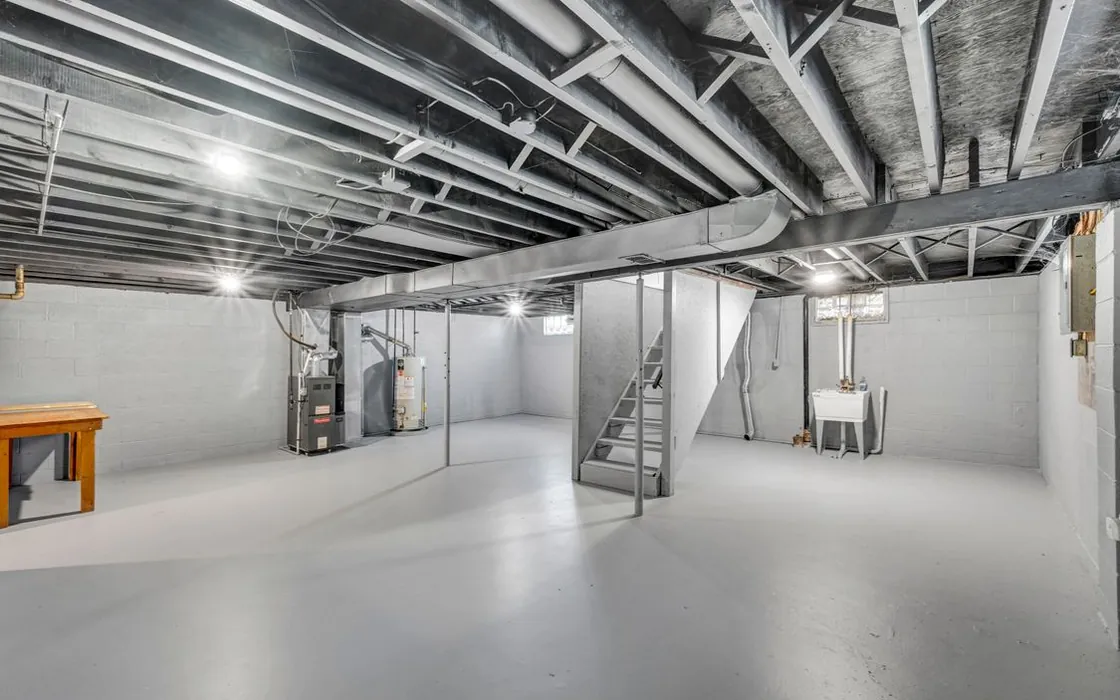
The suction point itself is a hole cored through the slab or a connection into a sump pit, sealed so that soil gas is drawn into the pipe rather than leaking into the room. Sealing cracks, floor wall joints, and sump pit covers improves suction and keeps conditioned air from being pulled out of the house. A manometer, which is a small U shaped gauge on the pipe, shows at a glance whether the fan is pulling a vacuum.
Electrical work for the fan, exterior pipe and brackets, and warranty paperwork complete the package. Ask for each of these lines to be priced separately, so the cost you compare is the same scope on every quote.
What is often not included matters just as much. Testing before the job, a permit where one is required, and a post installation test are sometimes billed separately, so a low headline quote can hide extra lines. Ask the installer to state in writing whether the post installation test is included, which fan model is being fitted, how long the fan warranty lasts, and what happens if the retest still reads above 4 pCi/L.
Why do quotes for the same house differ so much?
That mix explains why one radon mitigation cost can be double another for houses on the same street. Foundation type comes first. A basement or slab on grade job usually needs one suction point through concrete, which is straightforward work.
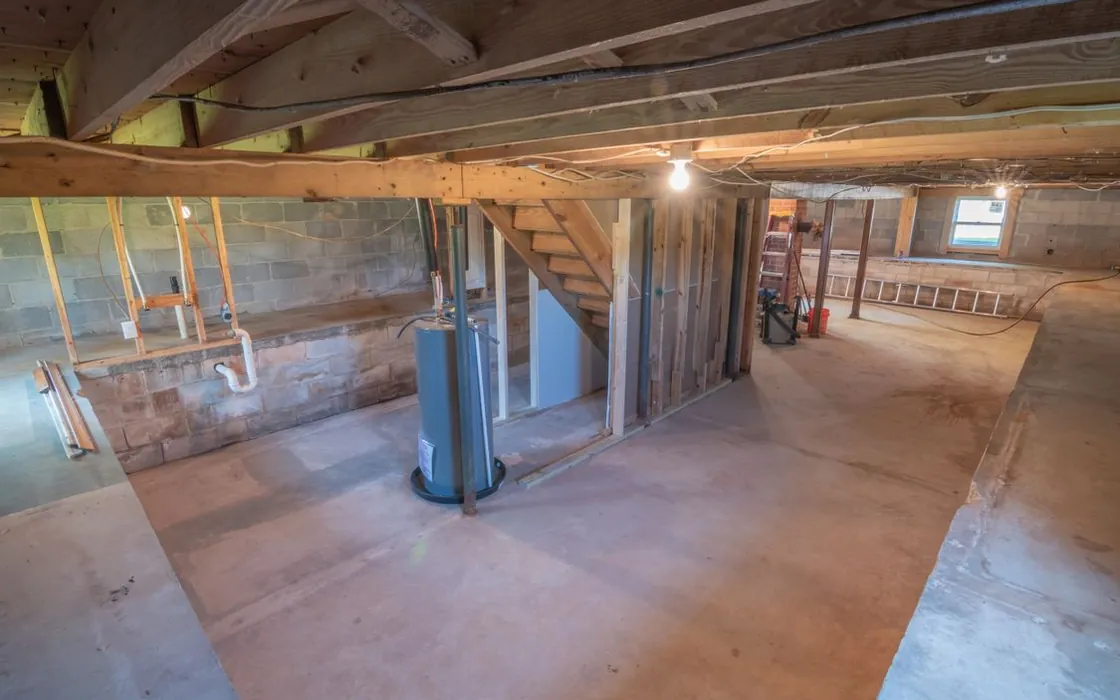
A crawl space job needs a sealed membrane across the ground, plus a suction point below that membrane, which adds labor and materials. A home with block walls may need block wall suction, where air is drawn from inside the hollow block cores, and a home with two foundation types may need a combined system.
Home size and layout come next. A larger footprint, a second story, or a long pipe route to a safe discharge point all add pipe, brackets, and labor. Each extra suction point adds drilling, sealing, and sometimes a stronger fan.
A very high starting radon level can also push the price up, because the installer may choose a higher capacity fan or plan a second suction point to bring levels down reliably. Local labor rates vary too, so the same job costs more in a high wage market than in a lower wage market. A local permit is sometimes required.
Angi budgets $25 to $150 for permits, and the building permit cost for a small job is usually at the low end of that range, but it still belongs in your budget.
What does radon mitigation cost by method?
One average hides six different jobs. The method your house needs depends on the foundation, the radon level, and where the gas enters, and that is why radon mitigation cost is a range, not a number. Angi puts the figures this way, and the $800 to $2,500 range in the first paragraph sits inside them.
| Method | Typical cost | Best for |
|---|---|---|
| Sealing cracks and openings | $400 to $4,600 | Small gaps, as part of a larger system |
| Active soil depressurization, fan and suction point | $1,000 to $3,000 | Most homes, the standard system |
| Passive soil depressurization, no fan | $500 to $2,500 | New builds and low readings |
| Wall based depressurization | $500 to $3,000 | Block walls that leak at the joints |
| Ventilation, heat recovery or added air changes | $1,300 to $2,500 | Homes where suction alone is not enough |
| Radon in water treatment | $1,200 to $5,000 | Well water with high radon |
Running costs sit on top of the install price. Angi puts the fan electricity and upkeep at $100 to $300 a year, and a fan usually lasts 5 to 10 years before it needs replacing. Each extra suction point adds roughly $300 to $500 to the job, which is why the two home example earlier in this page lands near $1,000 for one point and past $1,800 for two. Those running cost figures come from Angi, How Much Does a Radon Mitigation System Cost, updated 28 September 2026.
What does testing cost before and after the job?
Testing is separate from the cost in most quotes, so confirm it before you sign. A short term do it yourself kit costs $15 to $30, including lab analysis in many kits, and it measures radon over 2 to 7 days with the house kept in closed house conditions, meaning windows and exterior doors kept shut except for normal entry and exit. A professional short term test usually costs $150 to $300, and Angi budgets $150 to $700 for testing overall, which covers continuous radon monitors that record hour by hour readings over 48 hours or more.
A long term test over 90 days or more gives a better picture of your yearly average, because radon levels shift with seasons, weather, and how you use the house.
Testing after installation is how you prove the system works. A good installer tests after the fan has run long enough to stabilize levels, then shares the written result with you. If the result is still above 4 pCi/L, the installer should explain the next step, such as adding a suction point or fitting a stronger fan, and should say who pays for that step before work starts.
After that, retest every two years, and retest sooner if you change the foundation or alter ventilation. A retest kit costs the same $15 to $30 as a first test.
What are the running costs after installation?
After installation, radon mitigation cost does not end, but the yearly burden is modest next to the install price. The fan runs all day, every day, so allow a small amount each month for electricity. Fan motors wear out, and most guides put fan replacement every 5 to 10 years at a few hundred dollars including labor.
Retesting every two years adds a kit fee or a professional test fee. Checking the manometer takes seconds and costs nothing, and it tells you at once if the fan has failed or the pipe has lost suction. Over the life of the system, those small yearly items are part of the total radon mitigation cost picture.
Keep the system switched on at all times. Switching it off to save a small amount of electricity lets radon build up again, which defeats the whole job. A system that is switched off still leaves you with the radon mitigation cost and none of the protection.
How do you compare quotes and choose a certified professional?
When you compare radon mitigation cost quotes, compare the same scope on each one. Ask every installer the same questions and write the answers down. Is the installer certified by the National Radon Proficiency Program, known as NRPP, or the National Radon Safety Board, known as NRSB?
Does your state license mitigators, and can you check the license number with your state radon program? Does the quote include the post installation test, the permit fee, and sealing work, or are those extra? Which fan model is specified, and what warranty covers it?
Does the installer give a written performance guarantee stated as a number, such as a target below 4 pCi/L, rather than a vague promise to get levels down? Where will the suction point go, will the pipe run inside or outside, and where will it discharge above the roof?
Watch for warning signs. Be cautious with a quote given without any test result, a price that seems far below every other quote for the same scope, or a plan to vent radon into an attic, a garage, or a crawl space instead of above the roofline. Sealing cracks alone is rarely enough on its own, and a contractor who sells sealing as a complete fix should explain how levels will be verified afterwards.
If a permit is part of the job, the steps that help you save money on a building permit, such as a complete application and one combined filing, can also keep this job simple. Get two or three quotes where possible, and choose the installer whose scope, guarantee, and paperwork are clearest, not simply the cheapest headline price.
Can you install a system yourself to save money?
A do it yourself job can lower radon mitigation cost, but a mistake can leave levels high while looking fixed. The work involves coring concrete, sealing the suction point, sizing the fan to the foundation and soil, routing pipe to a safe discharge point, and wiring the fan safely. A fan that is too weak will not pull enough soil gas.
A pipe that discharges too low can push radon back against the house or into a window. Poor sealing can pull conditioned air from the home and raise heating and cooling bills. Some states require a licensed mitigator for paid work, and a buyer or home inspector may question a system with no professional paperwork when you sell.
For most homeowners, a certified professional is the safer choice, and the price difference buys a written guarantee, a post installation test, and a warranty you can enforce. If you do take the do it yourself route, follow EPA guidance, use a fan rated for radon work, discharge above the roofline and away from windows, and test after installation with a lab analyzed kit. If the retest is still high, stop and call a certified mitigator rather than adding parts by guesswork.
Does a mitigation system help when you sell your home?
Buyers in many markets test for radon during inspection, and a high result can delay a sale while the buyer asks for mitigation or a price reduction. A home with a working system and a recent low retest result gives buyers a clear answer instead of an open question. Keep the paperwork in one file: the original test result, the installer certificate, the fan model and warranty, the post installation test result, and any retest results.
That file also helps you, because it proves the system was installed by a certified professional and shows the levels it achieved. When buyers ask what the radon mitigation cost was for the home, that file gives the answer.
Do not expect a promised payback figure. No reliable national figure says a mitigation system adds a set dollar amount to a sale price, and any source that quotes one is guessing. The honest value is health protection for the people living in the home, plus a smoother sale when a buyer tests.
Safety note
This guide is general information, not medical, legal, or building advice for a specific property. Radon levels, licensing rules, permit requirements, and building codes differ by state and locality, and they change over time, so check current rules with your state radon program and local building department before work starts. Risk from radon is much higher for people who smoke, and the EPA risk tables show that stopping smoking cuts lung cancer risk far more than any other single step.
The Agency for Toxic Substances and Disease Registry notes that children may face almost twice the risk of adults at the same exposure, so a high result in a family home deserves prompt action. Never vent radon into an attic, garage, or crawl space, never rely on sealing alone without testing afterwards, and hire a certified professional for work beyond your skill level.
Quote comparison checklist
Use this checklist to compare every radon mitigation cost quote on the same basis.
- Ask whether testing before and after the job is included.
- Confirm the system type, for example a sub slab system, and the number of suction points.
- Ask whether a continuous monitor is included or costs extra.
- Check that the fan, vent pipe, sealing, and electrical work are all listed.
- Confirm the warranty on parts and labor in writing.
Related guides
- Home Improvement Costs in 2027: The Complete Price Guide
- Building Permit Cost: What Homeowners Actually Pay
- How to Save Money on a Building Permit in 2027
- How to Save Money on Radon Mitigation in 2026
- How Much Does Radon Mitigation Cost? 2027 Price Guide
Frequently asked questions
How much does a typical radon system cost?
Most standard jobs fall between $800 and $2,500 installed, with a typical job near $1,000 to $1,200. Angi reports an average of $1,043, and HomeAdvisor reports an average near $1,028.
Is testing included in the installation price?
Often it is not. A do it yourself kit costs $15 to $30, and a professional test usually costs $150 to $300. Ask whether the quote includes the post installation test, and get that answer in writing before work starts.
How long does installation take?
A standard basement or slab job is usually finished in a single visit. Crawl space membrane work takes longer, because sealing the membrane and setting the suction point below it is labor intensive. Your installer should give a time estimate with the quote.
Do I need to fix radon below 4 pCi/L?
The EPA says to fix your home at 4 pCi/L or higher, and to consider fixing between 2 and 4 pCi/L. There is no fully safe level, since risk falls as levels fall, but getting below 2 pCi/L is difficult in many homes, so a result below 4 after mitigation is a good outcome.
How often should I retest after mitigation?
Retest every two years, and retest sooner if you change the foundation, add an extension, or alter ventilation. Check the manometer gauge regularly, keep the fan running at all times, and replace the fan every 5 to 10 years when it wears out.