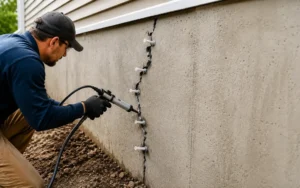

Gutters Maintenance: How Often and How to Do It in 2027
Good gutters maintenance means cleaning, inspecting, and repairing your gutters twice a year, in late spring and in late fall, so rainwater flows away from the roof and foundation. Angi puts a professional clean at $168 on average, and a five minute watch during heavy rain shows whether yours need it sooner.
Your gutters do one simple job, and they do it every time it rains. They catch water from the roof, carry it along the edge of the house, and send it down a downspout to a safe spot away from the foundati That steady flow is the whole point of gutters maintenance.
When leaves, twigs, seed pods, and roof grit fill the channel, that simple job stops. Water spills over the edge, soaks the fascia board behind the gutter, stains the siding, and pools next to the foundation. Left alone for a season or two, that overflow can lead to rot, mold, basement leaks, and a repair bill far larger than the cost of a ladder and an afternoon of work.
This guide is built for a typical single family house with a pitched roof, metal or vinyl gutters, and at least one downspout on each side. If you live in a condo or a townhouse, check what your association covers before you climb a ladder, and keep the indoor warning signs in this guide for your own checks. A clear gutter care routine makes those checks easier to follow.
Why gutters maintenance matters for the whole house
A clogged gutter can rot fascia, stain siding, and leak into the basement, all from one blocked channel. It starts with a small spill in one corner during a heavy storm, then a dark stain on the siding, then a damp patch in a basement corner months later. Spotting those early signs is a key part of gutter care.
Water that backs up under the shingles can rot the edge of the roof. Water that falls next to the foundation can leak into a basement or a crawl space. Water that sits in a clogged channel adds weight, pulls brackets loose, and bends the gutter out of shape.
Angi reports that a full gutter replacement costs around $1,900 on average, which is why a routine clean is cheap protection. That figure belongs in your wider home improvement costs planning, because a neglected gutter can turn into roof, siding, and foundation work at the same time.
Take one roof as an example. A two level house with mature oak trees over the roof, a 150 foot gutter run, and four downspouts will fill far faster than a one level house on an open lot with no trees nearby. The first house may need three or four cleans a year, while the second house may stay clear with two.
How often should you do gutters maintenance?
For most homes, the baseline for gutter care is at least twice a year. Angi advises cleaning at least once or twice a year, ideally in spring and in early fall, and cleaning more often when tall trees hang over the roof.
The spring clean clears winter debris, seed pods, and pollen before summer storms. The fall clean clears leaves after most trees have dropped them, but before winter freezes standing water into ice. If you do only one clean, make it the fall clean, because frozen water in a clogged gutter can tear brackets loose and help ice dams form at the roof edge.
Tree type changes the schedule more than any other factor. Oak trees over the roof usually mean at least two cleans a year. Pine trees shed needles all year and often push the schedule to four cleans a year, because needles pack tight and block flow faster than broad leaves.
Use this table as a starting point, then adjust it after your first year of checks. Keep that note with your gutter care records for next year.
| Your situation | How often to clean | Best timing |
|---|---|---|
| Few or no trees near the roof | Twice a year | Late spring and late fall |
| Some trees near the roof | Two to three times a year | Spring, summer check, and fall |
| Heavy tree cover or pine trees | Three to four times a year | Spring, summer, early fall, and late fall |
| Gutter guards fitted | Once every one to two years for a full clean, plus surface checks | Fall surface check each year |
Gutter guards reduce the work, but they do not remove it. Angi notes that a gutter protection system can let you clean once every one to two years, yet regular checks are still needed to catch debris sitting on top of the guard and small buildup at the downspout opening.
What are the signs your gutters need attention?
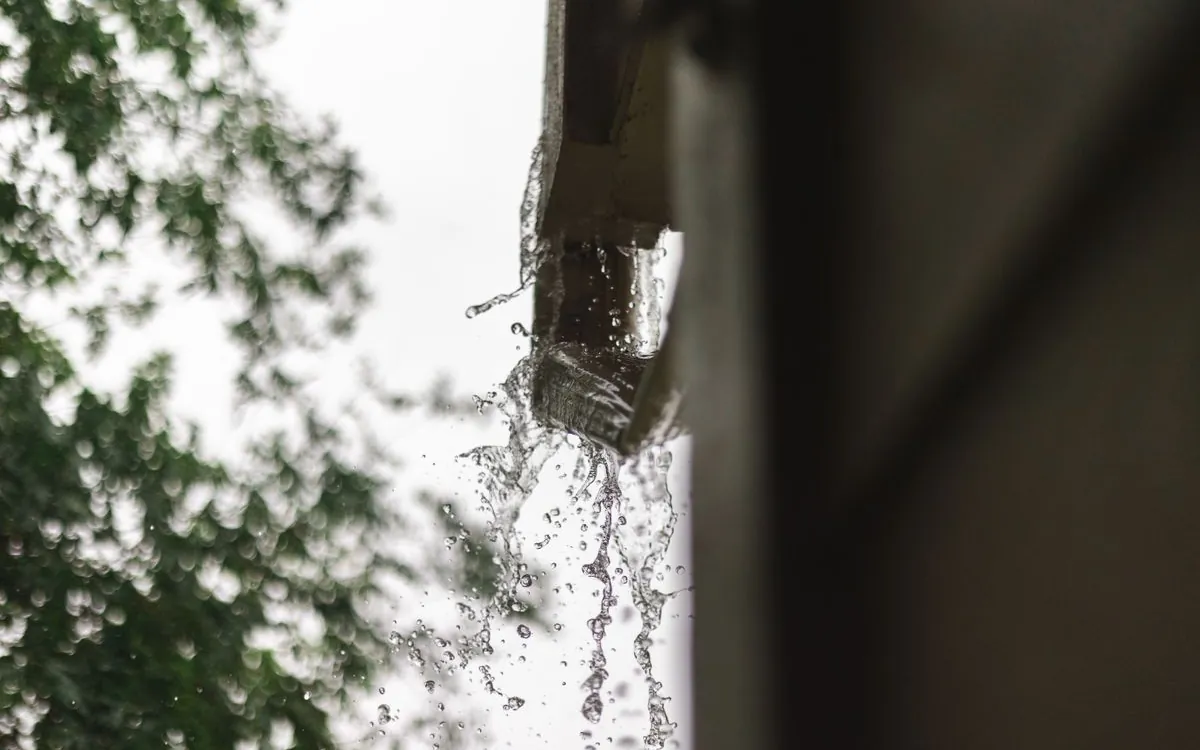
Clean as soon as you see overflow, sagging, or water pooling at the foundation, even between scheduled cleans. Walk around the house during the next heavy rain and watch where the water goes.
Water spilling over the side of the gutter during rain is the clearest sign of a blockage. Sagging sections, gutters pulling away from the fascia, and streaks or stains on the siding below the gutter line all point to the same problem.
Other signs are easy to miss from the ground. Plants or seedlings growing out of the gutter mean soil and seeds have sat there long enough to take root. Peeling paint near the roofline, a damp basement wall after rain, and birds or insects nesting near the roof edge can all trace back to standing water in the channel.
If you see any of these signs, clean the affected section promptly and check the downspout as well. When the downspout blocks, the gutter still fills and spills, because the water cannot leave the channel.
Read the symptom before you climb the ladder
Stand outside in the next heavy rain and just watch. Five minutes at ground level tells you more than an hour of guessing from the top of a ladder, and you stay dry doing it. Match what you see to the rows below, then fix the cause, not the symptom, because that is the cheapest part of gutters maintenance.
| What you see | Likely cause | First check | What to do next |
|---|---|---|---|
| Water spilling over the edge in rain | Blocked channel or downspout | Look in the channel above the spill | Scoop it out and flush the downspout with a hose |
| Drips running down the fascia behind the gutter | Gutter pulling away, or no fall to the outlet | Push the gutter gently and check the hangers | Refasten loose hangers and reset the fall |
| A section sagging in the middle | Failed hangers, or water weight from a blockage | Count the hangers and look for bent ones | Replace the failed hangers and clear the blockage |
| Water standing in the channel after rain | No fall toward the downspout | Pour a jug of water in and watch where it sits | Rehang the run with a fall to the outlet |
| Shingle granules piling up in the channel | Roof surface wearing thin | Check how much grit each clean brings out | Ask a roofer to look at the roof, not just the gutter |
| Plants growing out of the gutter | Soil and seed sitting there for months | Lift the plants and look at the metal underneath | Scoop it clean and check for rust and rot |
| Rust spots or small holes | Metal corroding, usually at seams and joints | Press around the spot to find soft metal | Patch small holes, plan replacement for wide rust |
| Damp basement wall after rain | Downspout dumping at the foundation | Follow the downspout to where the water lands | Extend it at least 4 feet from the wall |
One row deserves a second look. Granules in the gutter are not gutter trouble at all, they are roof trouble showing up in the gutter, and a roofer needs to see the roof before the next storm, not after it.
How to do gutters maintenance step by step
Work on a dry, calm day if you can. Wet leaves are heavy and slippery, and wind makes ladder work less steady. Tell someone you are working on a ladder, and keep your phone in a pocket, not in a hand.
Start at the downspout end and work away from it, so you push debris toward the outlet last, not into it. Scoop leaves and sludge into a bucket with a hook, rather than dropping debris on the lawn below.
- Stand the ladder on firm, level ground, with its feet one foot out from the wall for every four feet up to the gutter.
- Wear thick work gloves, safety glasses, and closed shoes, and carry a scoop or small trowel plus a bucket with a hook.
- Scoop out leaves, twigs, and sludge by hand, working in short sections and moving the ladder often instead of leaning out.
- Brush out leftover grit, then flush the gutter with a garden hose from the high end toward the downspout.
- Watch the water flow at the downspout outlet, and clear the outlet by hand or with a hose from below if water backs up.
- Check each bracket and seam as you go, tighten loose hangers, and note rust spots, cracks, and sagging sections for repair.
- Make sure each downspout discharges at least four to six feet from the foundation, using a splash block or an extension where needed.
- Take a photo of the clean gutter, so you can compare it at the next check and see how fast debris builds up.

Never rest the ladder against the gutter itself, because the weight can bend or crush it. Use a ladder stabilizer, also called a standoff, that rests against the wall or the roof, and keep three points of contact at all times.
Stay well clear of overhead power lines, and never work on a wet roof or in high wind. If the gutter is above a second story, over a steep slope, or near power lines, that section is a job for a professional with the right equipment.
Tools and safety for gutters maintenance
Most of the job needs simple tools you may already own. A sturdy extension ladder, thick gloves, safety glasses, a scoop, a bucket, and a garden hose cover a single level house in most cases. Those simple tools cover most gutter care jobs at home.
A leaf blower with a gutter attachment and a wet or dry vacuum with a long nozzle can clear light, dry debris from the ground. These tools help on a one level house, but they do not let you inspect brackets, seams, and downspout outlets as well as a hands on clean.
Safety deserves the same attention as the clean itself. Ladder falls are a leading cause of home maintenance injuries, and most happen when someone overreaches, works alone on a tall ladder, or sets the ladder on soft ground.
Do not climb if you feel dizzy, if the ground is soft after rain, or if you cannot keep three points of contact while scooping. Hire a professional for that section and note it for next time, rather than risking a fall to save one visit.
What does professional gutters maintenance cost?
Angi reports professional gutter cleaning at $168 on average in its October 2026 update, with most homeowners paying $119 to $234 per visit, based on 37,376 verified projects. Use the $168 average and the $119 to $234 range as the current numbers.
The price moves with home size, gutter length, height, and access. A single level house with easy ladder access costs less than a two level house with gutters high off the ground and reachable only by ladder on a steep roof. Height and access often decide the price of gutter care.
Budget for the year, not for one visit, because gutters maintenance is a yearly habit, not a single job. Two cleans a year at $168 each comes to $336 for the year, while four cleans a year at the same rate comes to $672. Compare that with the Angi average of around $1,900 for a full gutter replacement, and the value of routine care becomes clear.
Gutter guards cost extra, and Angi puts installed gutter guards at $8 to $20 per linear foot, with an average of $15 per linear foot. For a 150 foot gutter run, that average means about $2,250 installed, so guards are a long term investment, not a cheap add on.

Do gutter guards change your gutters maintenance schedule?
Gutter guards block leaves and larger debris before they reach the channel, so the inside of the gutter stays clearer for longer. Mesh screens, foam inserts, and helmet style covers all work on that same idea, with different trade offs in price and cleaning effort.
Guards do not make gutter care free. Fine grit, pine needles, and pollen can still slip through or sit on top of the guard, and a guard can hide a small leak or a loose bracket until it grows. Plan a surface check each fall, and a full clean once every one to two years, even with guards fitted.
Guards make the most sense under heavy tree cover, where cleaning four times a year is costly or risky. They make less sense on an open lot with few trees, where two simple cleans a year already keep the system clear.
Before you buy guards, get quotes per linear foot for your exact gutter length, and ask what cleaning the guard itself needs. A guard that needs frequent surface cleaning may save less time than the sales pitch suggests.
Downspouts, drainage, and the ground around your house
Clean gutters fail when the water leaving them has nowhere safe to go. Check every downspout during your clean, not just the gutter channel above it. A blocked outlet can undo otherwise good gutter care.
Flush each downspout with a hose and watch the outlet. If water backs up, clear the blockage from below with a hose, or call a professional if the blockage sits deep in an underground drain. Never disconnect a downspout and leave it dumping water at the base of the house.
Extend each downspout so water discharges at least four to six feet from the foundation. A splash block, a flexible extension, or a hinged extender that flips up for mowing all do this job for a small cost, and buried drain lines that carry water farther cost far more to install.
Finally, check the ground where the water lands. Soil should slope away from the house, not back toward it, and mulch or soil should not bury the downspout outlet. A clear outlet and a gentle slope away from the wall protect the foundation far better than any single gutter clean.

When to hire a professional instead of doing it yourself
A single level house with firm ground, a stable ladder, and no power lines nearby is a reasonable do it yourself job for a fit homeowner. A two level house, a steep roof, or a gutter above a conservatory or a glass roof is a different job.
Hire a professional when you see sagging sections, gutters pulling away from the fascia, rust holes, or water damage inside the house. A professional can also spot roof, fascia, and drainage problems during the clean, and carry liability insurance for the work.
Ask for a quote that lists gutter length, number of downspouts, and any repair work separately. That way you can compare like with like, and you can see whether a repair quote is fair before the work starts.
If cost is tight, hire a professional for the high or risky sections and do the low, easy sections yourself. That split keeps you safe and keeps the whole system on schedule, which matters more than who holds the scoop.
Your gutters maintenance plan for the year
Put the schedule on your home maintenance checklist and treat it like any other seasonal job. A plan you can see is a plan you will follow, and gutters reward steady attention more than one heroic clean. That habit is what turns gutter care into routine care.
Start with a fall clean this year, then add a spring clean next year, and a summer check if trees hang over the roof. Note the date, the debris you found, and any repairs you made, so next year you can judge whether the schedule needs more or fewer visits. A photo like this helps track gutters maintenance over time.
For a typical house, the yearly plan looks like this. Late spring brings a full clean and a downspout flush. Summer brings a quick ground level check after storms.
Late fall brings a full clean after most leaves have dropped. Winter brings a ground level check for ice, sagging, and overflow, with no ladder work in icy conditions.
That rhythm, repeated each year, is the heart of good gutters maintenance. It costs far less than a replacement, it protects the roof and the foundation, and it takes less time once the first full clean shows you exactly what your house needs.
Sources for this guide
The numbers in this gutters maintenance guide come from three places that are not selling gutters. The University of Minnesota Extension puts the scale of the job in plain numbers, the United States Environmental Protection Agency sets the moisture rules, and the Occupational Safety and Health Administration sets the ladder rules.
University of Minnesota Extension, Moisture in basements: causes and solutions. One inch of rain drops about 1,250 gallons of water on a 2,000 square foot roof, so place at least one downspout per 50 linear feet of roof eave, discharge extensions at least 4 feet beyond the wall, and slope the ground away at least 1 inch per foot for 6 feet. Read the Extension guide.
US Environmental Protection Agency, Moisture Control Guidance for Building Design, Construction and Maintenance (EPA 402-F-13053, December 2013). Controlling liquid water comes first, so check gutters and downspouts for loose or missing fasteners, loose joints, corrosion and debris, and do not rest ladders against gutters. Read the EPA guidance.
Occupational Safety and Health Administration, ladder standard 29 CFR 1926.1053. A non self supporting ladder sits at a 4 to 1 angle, one foot out for every four feet of height, and the side rails extend at least 3 feet above the roof edge. That is the rule behind the ladder setup in the step by step section above.
Related guides
- The Ultimate Home Maintenance Checklist for 2027
- Home Improvement Costs in 2027: The Complete Price Guide
- How to Clean Gutters the Right Way in 2027
- When to Replace Gutters in 2027: Signs, Costs, and the Repair or Replace Call
- Gutters Maintenance Checklist for 2027: A Season by Season Guide
- How Much Does Gutter Cleaning Cost in 2027
- What Are the Best Home Maintenance Apps in 2027
Frequently asked questions about gutters maintenance
How often should I clean my gutters?
Plan two full cleans a year, one in late spring and one in late fall, and add a third or fourth clean where pine trees or heavy cover hang over the roof.
What is the best time of year for gutters maintenance?
Late fall is the most important clean, because it clears leaves before winter freezes standing water into ice. Late spring is the second key clean, because it clears seed pods and pollen before summer storms.
How much does professional gutter cleaning cost?
Angi reports professional gutter cleaning at $168 on average in its October 2026 update, with most homeowners paying $119 to $234 per visit. Simple houses fall at the low end of that range.
Do gutter guards mean I never need to clean my gutters?
No, gutter guards reduce cleaning but do not remove it. Plan a surface check each fall and a full clean once every one to two years, even with guards fitted.
Can I clean my gutters without a ladder?
Yes, on a one level house you can use a leaf blower attachment, a wet or dry vacuum nozzle, or a garden hose tool from the ground. These tools clear light debris, but they do not replace a hands on inspection of brackets, seams, and downspout outlets.
When should I call a professional for gutters maintenance?
Call a professional for high, steep, or risky sections, and for sagging gutters, rust holes, or water damage inside the house. A professional can also spot roof and drainage problems during the clean.
Safety note: ladder work carries a real risk of falls. Stay off the ladder in wind, on wet or icy ground, or near overhead power lines, and hire a professional for high or risky sections.