
Gutters Maintenance Checklist for 2027: A Season by Season Guide
Use this gutters maintenance checklist through spring and fall, with short checks after big storms, and most gutter problems stay small and cheap to fix. Clean twice a year, watch the downspouts after every big storm, and book the autumn clean before contractors fill up.
Clean gutters at least twice a year, once in spring and once in fall, according to Southern Living, quoting gutter expert David Flax. Homes with heavy tree cover, pine trees nearby, or frequent storms need three or four cleanings a year. This guide turns that advice into a clear plan for every season, with the checks that matter most and the warning signs that mean you should act now.
Why a Gutters Maintenance Checklist Saves Money
Gutters do one job, and it matters more than it looks. They catch rainwater from the roof and carry it to downspouts that send it away from the house. When leaves, twigs, and roof grit block that path, water spills over the edge instead.
It soaks the fascia board, stains the siding, and pools next to the foundation. That spill is the first sign to check on a gutter care checklist. A gutter care checklist helps you spot that pooling early.
Left alone, a blocked gutter can lead to rotted fascia, damp basement walls, and damaged landscaping. Those repairs cost far more than a routine cleaning. Angi reports a professional gutter cleaning at a national average near $168 in 2026, with most jobs falling in the range of $119 to $234.
A fascia repair or a foundation moisture problem can run into thousands of dollars, so prevention is the cheap option here.
A written gutter care checklist also stops guesswork. You check the same points every season, so a loose hanger or a small leak gets caught while it is still a ten minute fix. If you want the basics first, read our guide to gutters maintenance for how often each job should happen.
What This Gutters Maintenance Checklist Covers All Year
Every season has a different job. Spring is for repair and testing after winter. Summer is for storm checks and trimming.
Fall is the big cleaning, and it matters most. Winter is for watching from the ground, not climbing a ladder in ice and snow.
| Season | Main jobs | Watch for |
|---|---|---|
| Spring | Full clean out, leak check, flow test | Winter damage, loose hangers, sagging runs |
| Summer | Storm checks, branch trimming, spot cleaning | Overflow marks, new debris, pest nests |
| Fall | Deep clean after leaf drop, downspout flush | Clogged downspouts, heavy wet leaves, seam leaks |
| Winter | Ground level watching only | Icicles, ice dams, new sagging after snow |
What does the spring gutters maintenance checklist cover?
Look for what winter did to your gutters: ice, snow load, and freeze and thaw cycles loosen hangers, open seams, and crack sealant. Do this check after the last hard freeze, on a dry and calm day, and book the autumn clean in July or August, before contractors fill up for October to December, and put that booking on your gutters maintenance checklist.

Start by clearing winter debris by hand. Scoop out leaves, twigs, seed pods, and roof granules, working from the downspout end toward the middle of each run. Bag the debris as you go so it does not wash back into a clean section.
Then flush each run with a garden hose and watch the water reach the downspout without pooling. Note that result on your gutter care checklist for next time.
Check every seam and end cap for drips while the water is running. A drip at a joint usually means failed sealant or a loose connector, and both are cheap to fix now. Look for sagging runs, hangers that have pulled away from the fascia, and rust spots on metal gutters.
Tighten loose screws, replace missing hangers, and reseal small leaks with gutter sealant made for your gutter material. Those small fixes belong on a gutter care checklist too.
Finish the spring check at ground level. Confirm each downspout sends water at least 5 feet from the foundation, and that splash blocks or extensions sit in place. Check the fascia board for soft spots or paint that is peeling, since both can signal water getting behind the gutter.
If you find rot, get it checked before the next heavy rain, because rot spreads fast once water keeps reaching it.
What does the summer gutters maintenance checklist cover?
After any major storm, take ten minutes to walk around the house and look up. Thunderstorms dump a lot of water in a short time, and a partly clogged gutter fails exactly when you need it most.
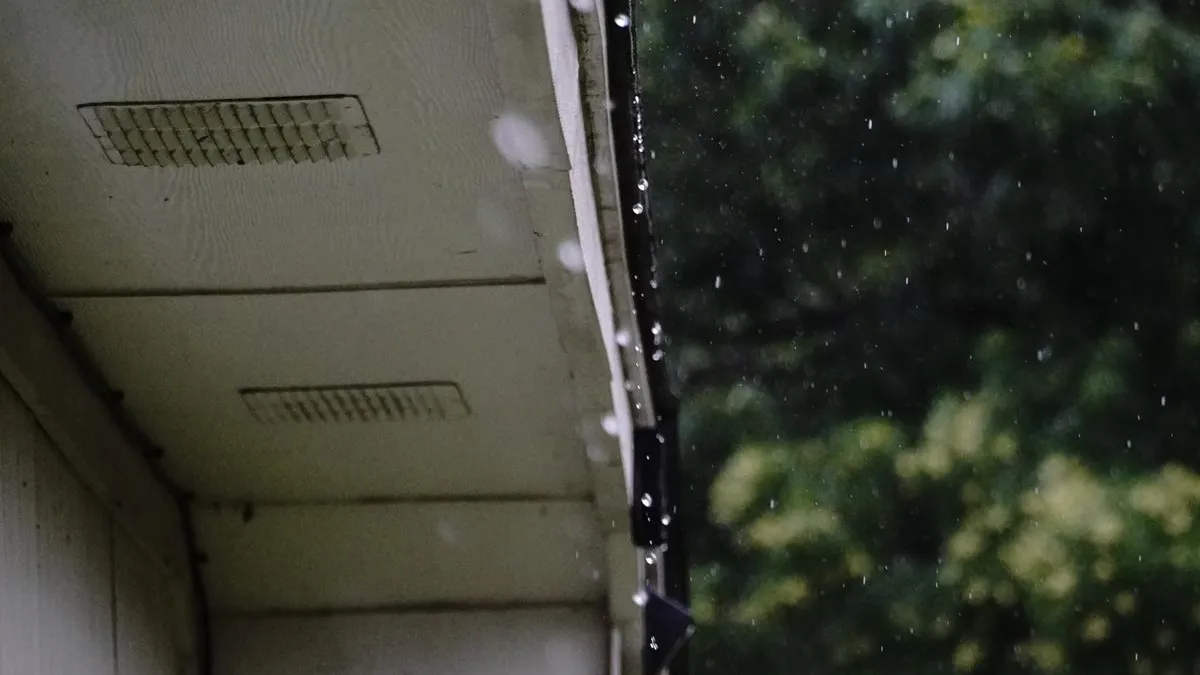
Look for overflow marks on the siding, water stains under the gutter line, and debris washed into the gutter by wind. Clear any fresh buildup you can reach safely from a ladder, and flush a downspout that drains slowly. Trim branches that hang over the roofline, since they drop leaves and twigs straight into the gutter and give pests a path to the roof.
Check for birds nests and insect activity in the gutter and around downspout openings. Nests block flow and can hold moisture against the fascia for weeks. Remove a nest only when it is empty and local rules allow it, and wear gloves while you work.
If wasps have moved in, leave that section alone and call a pest control professional rather than risking a fall from a ladder. Leave that section on your gutters maintenance checklist for a professional.
Summer is also a good time to think about gutter guards. Mesh and screen guards cut down on large debris, but they are not maintenance free. Fine debris still gets through, and guards need an annual flush and inspection.
If you install guards, add that flush to this gutters maintenance checklist so it does not get forgotten.
What does the fall gutters maintenance checklist cover?
Fall is the most important cleaning of the year. Wait until most leaves have dropped, then clean before the first freeze. Cleaning too early means a second wave of leaves fills the gutter again, while cleaning too late risks trapped water freezing in place over winter.

Clear all leaves and organic debris from every run, including the roof valleys that feed into the gutter. Valleys collect leaves first, and a blocked valley sends water over the gutter edge during the next rain. Scoop the heavy material out by hand, then flush the whole system with a hose until water runs clear from each downspout.
Pay close attention to downspouts in fall. A gutter can look clean while its downspout stays blocked, and the blockage will back water up into the gutter during the first winter rain. If water backs up during the flush, try a plumbers snake or a hose from the bottom end to clear it.
For the hands on method, our guide on how to clean gutters walks through each step in order.
Inspect hangers, seams, and end caps once more before winter, since wet leaves add serious weight to a gutter run. A run that sags under that weight pulls away from the fascia and changes its slope, so water starts pooling instead of draining. Tighten what you can, note anything that needs a part replaced, and fix it before freezing weather arrives.
What does the winter gutters maintenance checklist cover?
Winter is for watching, not repairing: do not climb a ladder onto an icy roof or work on gutters during snow, ice, or high wind. Observe from the ground during thaws and after storms, and write down what you see for spring.

Watch for icicles that form in the same spot again and again, since they can signal trapped water and poor drainage at that section. Look for new sagging after heavy snow, and for water spilling over the edge during a thaw. Check the ground near the foundation for pooling after melting snow, because a downspout that ends too close to the house sends meltwater right back toward the walls.
If an ice dam forms, do not chip at it with a tool from a ladder. Chipping can damage shingles and gutters, and it puts you at risk on an icy surface. Use a roof rake from the ground to ease snow load if you can do so safely, keep gutters clear of fresh snow where you can reach them from the ground, and call a roofing professional if water starts leaking inside the house.
What gutter guards cost, and what ice and pests do to the schedule
Guards change the cleaning schedule and the budget. This Old House surveyed 1,284 customers who had guards installed, and the installed cost per linear foot came out at $11.17 for mesh screen caps, $10.90 for foam inserts, and $11.57 for reverse curve guards, all inside the Angi $6 to $13 per linear foot range. On a 150 foot run, that is roughly $1,635 to $1,735 installed, and about 30 percent of guard owners in their survey said they never clean after install, though guards do not end maintenance: fine grit and pine needles still get through, and a guard that has never been lifted can hide a blocked channel for a year.
Ice dams are the winter version of the same problem. Warm air leaking into the attic melts snow on the roof, the water runs down to the cold eave and refreezes, and the ice backs water under the shingles and into the gutter. The fix is insulation and ventilation in the attic, not a hotter gutter, and heated cables are a band aid, as contractor Tom Silva puts it in This Old House.
Pests are the summer version: leaves bring insects, insects bring nests, and a gutter full of damp debris is a nursery. A 2025 This Old House survey of 1,000 homeowners found leaves in about 85 percent of gutters, dirt or dust in about 44 percent, and insect debris in about 41 percent. Clean the gutter and you remove the nest along with the leaves.
On discharge distance, this page says 5 feet from the foundation, and that stays the advice here. The sourced figures behind it are a 4 foot minimum from the University of Minnesota Extension and a 10 foot goal from North Carolina State, so 5 feet sits inside the safe band, and further is better on flat ground.
How Often Should You Adjust This Schedule
The twice a year baseline fits many homes, but not every home. Adjust the schedule to your trees, your roof, and your weather, and this gutters maintenance checklist stays realistic instead of turning into a chore you skip. Set the spring clean for March or April, before nesting season, and the main fall clean for November or December.
Homes under pine trees need more frequent checks, because pine needles mat together and block downspout openings fast. Homes near large deciduous trees need an extra fall visit in heavy leaf years, sometimes every two to four weeks while leaves are falling. Homes in storm prone areas need a ground level check after every major storm, even between scheduled cleanings.
What tools and safety checks belong on the list?
Most seasonal gutter work needs only basic tools. Gather them before you climb, so you are not tempted to stretch or improvise at height. A sturdy ladder, work gloves, safety glasses, a gutter scoop or small trowel, a bucket, a garden hose, and a sealant tube cover most jobs.
Set the ladder on firm and level ground, and follow the four to one rule. For every 4 feet of height where the ladder rests, set the feet 1 foot out from the wall. Use a ladder stabilizer that rests against the wall or roof, never on the gutter itself, so you do not crush or bend it.
Keep three points of contact, move the ladder often instead of leaning out, and ask someone to hold the base. That rule is a simple part of any gutters maintenance checklist.
Stay well clear of overhead power lines, and never work in rain, ice, or high wind. If a section needs a second story ladder, a steep roof, or work near power lines, hire a professional. Safety disclaimer: this guide describes routine homeowner maintenance only.
It is not a substitute for professional advice on roofing, structural, or electrical problems, and you should stop and call a professional if you find rot, sagging that affects the roofline, or any wiring near the gutter.
When should you hire a professional?
Some jobs belong to a professional, and knowing which ones saves both money and risk. Hire a pro for second story or three story gutters, steep roofs, gutters you cannot reach safely, persistent overflow after cleaning, and any sagging or pulling away from the fascia that suggests structural damage.
Angi reports that most homes have 125 to 200 linear feet of gutters, with cleaning priced at $0.95 to $2.25 per linear foot in 2026. One story homes typically cost $145 to $250 per visit, while two story homes typically cost $180 to $360. Get two or three quotes, confirm whether the price covers downspout flushing and debris removal, and ask what the company charges for a twice a year service plan.
A worked example makes the choice concrete. Take a two story house with 150 linear feet of gutters under two large maple trees. Two professional visits a year at the two story range of $180 to $360 each come to $360 to $720 a year.
That same house, cleaned by the owner twice a year with basic tools, costs mainly time plus sealant and replacement hangers as needed. If the owner cannot reach the second story safely, the professional price is the right spend, because a single fall costs far more than any cleaning bill.
If you do hire help, ask for before and after photos of each run and each downspout outlet. Photos prove the work was done, and they give you a record to compare at the next visit. Also ask the contractor to flag any section that may need replacement soon, so you can plan that cost instead of facing it as an emergency.
To judge that call, learn when to replace gutters before you approve repair work on an aging system.
Your Seasonal Routine in Five Steps
Turn the full gutters maintenance checklist into a habit with five steps you repeat every season. First, walk the house at ground level and note overflow marks, stains, and pooling. Second, clear debris from each run and flush it with a hose.
Third, check seams, hangers, and slope while the water is running. Fourth, confirm every downspout discharges well away from the foundation. Fifth, write down what you found and what you fixed.
That routine takes an afternoon for most single story homes, and it prevents the slow damage that blocked gutters cause. Keep the record with your other home maintenance notes, and review it each spring. Patterns in the record, like one run that always clogs first, tell you where to spend money on guards, an extra downspout, or tree trimming.
Sources: Southern Living gutter cleaning guide, clean twice a year, quoting gutter expert David Flax; Angi gutter cleaning cost guide, $168 average, $119 to $234; This Old House guard survey, 1,284 customers, $11.17 mesh screen caps, $10.90 foam inserts, $11.57 reverse curve guards per linear foot. Both links open the publisher guides directly.
Related guides
- Gutters Maintenance: How Often and How to Do It in 2027
- How to Clean Gutters the Right Way in 2027
- When to Replace Gutters in 2027: Signs, Costs, and the Repair or Replace Call
- The Ultimate Home Maintenance Checklist for 2027
Frequently Asked Questions
How often should I clean my gutters?
This gutters maintenance checklist sets cleaning at least twice a year, once in spring and once in fall. Homes with heavy tree cover, pine trees, or frequent storms need three or four cleanings a year. Check after major storms no matter what your regular schedule says.
What is the best time of year for the fall cleaning?
Clean after most leaves have dropped but before the first freeze, often late October to late November in many areas. Cleaning too early misses the last wave of leaves. Cleaning too late risks trapped water freezing in the gutter over winter.
Do gutter guards mean I never need to clean my gutters?
No, gutter guards reduce large debris but they do not end maintenance. Fine debris still gets through, and guards need an annual inspection and flush. Treat overflow with guards in place as a signal to inspect, not as a reason to wait.
How far should downspouts send water from the house?
Downspouts should direct water at least 5 feet from the foundation. Use extensions or splash blocks to carry water to a spot where it drains away from the house. Water that pools near the foundation can lead to damp walls and basement moisture.
What warning signs mean my gutters need attention now?
Water overflowing during rain, sagging runs, stains on the siding, plants growing in the gutter, and pooling near the foundation all mean attention is needed now. Persistent overflow after a cleaning, or gutters pulling away from the fascia, means you should call a professional for an inspection.