
When to Replace Gutters in 2027: Signs, Costs, and the Repair or Replace Call
Learn when to replace gutters by their signs: sagging runs, leaking seams, rusted sections, or water pooling near the foundation after rain. Most aluminum gutters last about 20 years, so age plus repeat faults is the clearest signal, and repair wins only while the damage stays local.
Stand outside in the next heavy rain and look up. A healthy gutter carries a steady stream to the downspout and the ground stays dry at the wall. A failing one spills in sheets, and that spill is the first thing this page teaches you to read.
When that path fails, water spills over the edge and soaks the fascia board, stains the siding, and pools next to the foundation. Left alone, that overflow can rot wood, feed mold, and leak into a basement, which turns a gutter problem into a repair bill many times larger than new gutters.
This guide answers when to replace gutters with a clear decision method. You will learn the lifespan of each gutter material, the 12 warning signs to check, the point where repair stops making sense, and what replacement costs in real 2026 figures.
How long do gutters usually last?
Most aluminum gutters last about 20 years, so a gutter past that age with repeat faults is due for replacement. The National Association of Home Builders life expectancy study, cited by MyHomeQuote, puts aluminum gutters at 20 years and copper gutters at more than 50 years. Angi, in a guide updated 9 July 2026, gives the same broad picture: most gutter systems need replacement every 20 years, while copper gutters last closer to 50 years with proper care.
A steady gutters maintenance routine stretches those figures. Angi recommends cleaning gutters at least twice a year, in spring and in fall, because debris holds moisture against the metal and adds weight that strains hangers and seams.
| Material | Typical lifespan | What to know |
|---|---|---|
| Vinyl | 10 to 20 years | Lowest cost, but it can warp in strong heat and turn brittle in deep cold |
| Aluminum | 20 to 30 years | The most common choice, light, rust resistant, and easy to shape on site |
| Galvanized steel | 20 to 30 years | Strong in heavy snow, but it can rust once the coating wears thin |
| Copper | 50 years or more | Premium price, premium life, and it develops a green patina over time |
| Zinc | 50 years or more | Very low maintenance, but a premium price like copper |
Downspouts often outlive the gutter channel itself. The same National Association of Home Builders figures put aluminum downspouts at about 30 years and copper downspouts at about 100 years.
That matters at quote time, because a contractor may reuse sound downspouts and replace only the failing channels. Age is often the first clue in deciding when to replace gutters, so note the install year if you know it.
What are the signs your gutters need replacing?
Sagging runs, leaking seams, rust, and water pooling at the foundation are the signs to look for, on a walk during heavy rain and again when dry. Rain shows you how water really moves, and a dry walk lets you inspect seams, hangers, and paint safely. If you spot several signs below on the same system, that pattern is how you know when to replace gutters rather than patch them again.
- Sagging sections. A low dip between hangers holds standing water, and that extra weight pulls the sag deeper over time.
- Gutters pulling away from the fascia. A visible gap at the roofline means fasteners have failed or the wood behind them has softened.
- Cracks or splits. A single hairline crack can be patched, but cracks across several sections mean the material has fatigued.
- Holes and rust spots. Rust on steel gutters eats through the metal, and holes let water pour straight onto siding and soil.
- Leaks at the seams. Seams that keep dripping after two rounds of sealant have usually moved or corroded past a simple fix.
- Peeling paint near the gutter line. Paint that bubbles or peels on siding or fascia below the gutter points to water escaping where it should not.
- Water marks on siding. Streaks and stains below the eaves show a long running overflow, not a one storm event.
- Water pooling near the foundation. Puddles or eroded soil at the base of the house mean downspouts are not carrying water far enough away.
- Basement damp or leaks after rain. Moisture on basement walls that tracks with storms often starts at a failed gutter above.
- Overflow during moderate rain. Spilling in ordinary rain, not just cloudbursts, points to wrong pitch, wrong size, or a worn out channel.
- Nails or screws on the ground. Fasteners that keep working loose and falling show the hangers or the fascia can no longer hold the load.
- Mold or mildew near the base of the house. Damp walls at ground level feed growth, and the water source is often the gutter above.
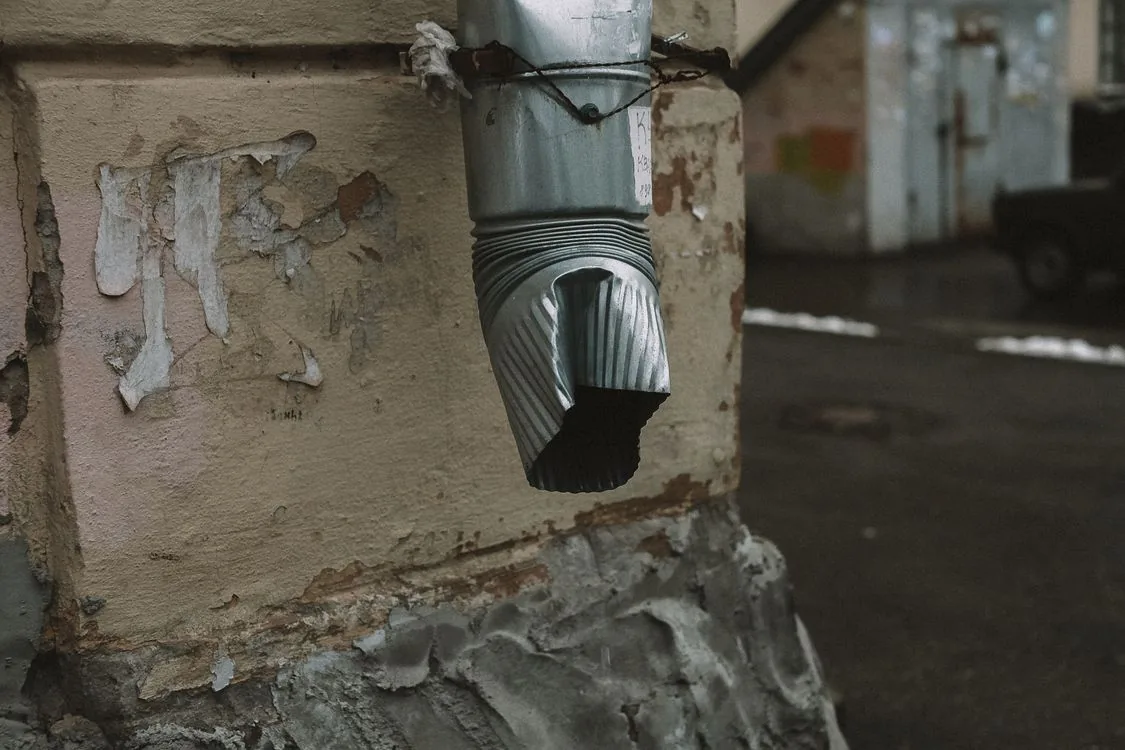
Two signs deserve urgent attention. Water pooling near the foundation can erode soil and press moisture into basement walls, and soft or rotted fascia behind a gutter means the board the whole system hangs from is failing. Both problems grow more expensive with every storm season you wait.
One sign on its own rarely means full replacement. A single loose hanger, one leaking joint, or one dented section on a young system is a repair job. Use the full list above to judge when to replace gutters for your own house, not just one symptom.
When is a repair enough instead of replacement?
Repair it when the damage is local, the rest of the system is sound, and the gutters are well inside their expected lifespan. Repairs cost less, following the GutterFX repair guide: resealing joints runs $100 to $250, replacing hangers $75 to $200, and replacing one section $150 to $400. Replace when a repair tops half the replacement price, or when three or more warning signs show at once.
If the damage is widespread, keeps returning, or the system is already past its lifespan, replace it. That rule is how you decide when to replace gutters without overspending on either side.
| Repair it | Replace it |
|---|---|
| One leaking joint or one loose hanger | Seams leaking in several places after resealing |
| One dented or punctured section | Cracks, holes, or rust across multiple sections |
| A clog causing overflow, cleared by cleaning | Overflow that returns in moderate rain after cleaning |
| Pitch slightly off on one run, fixed by rehanging | Sagging along long runs or gutters pulling from the fascia |
| System under 15 years old and otherwise solid | System past its material lifespan with several signs at once |
Consider a specific example. A two story house with 160 linear feet of 23 year old aluminum gutters, three leaking seams, and a sagging back run has passed the repair test on every count.
The owner in that case would keep paying for sealant and hangers while the fascia quietly rots behind the channel. A full replacement resets the whole system at once, including the pitch and the downspout outlets.
How urgent is each warning sign?
Not every sign means the same thing when you are deciding when to replace gutters. One leaking seam is a repair; widespread rust is a replacement. Rank your own gutters against this table before you call anyone, and start with the rows marked act now.
| Sign | Urgency | Repair or replace |
|---|---|---|
| One leaking seam | Low, fix within weeks | Repair, reseal the seam |
| Peeling paint on the gutter | Moderate, fix this season | Repair, sand and repaint, check for rust underneath |
| One loose section or sagging run | Moderate, fix this season | Repair, refasten or replace hangers |
| Water pooling near the foundation | High, fix now | Repair the fall or the downspout first, replace if the run is shot |
| Rust spots or small holes in several places | High, fix now | Replace, patching buys months, not years |
| Widespread cracks, splits, or pulling away from the fascia | High, fix now | Replace the run |
One number in this page needs a plain reading: aluminum gutters last about 20 years in the National Association of Home Builders life expectancy study, and the material table in this page gives 20 to 30 years as the typical range in service. The study figure is the planning age; the table range is what good care and a kind climate can stretch it to. At 23 years old with three leaking seams and a sagging back run, the example house in this page sits past the planning age and inside the replacement rows above, and that is why this page calls it a replacement, not a repair, when you weigh when to replace gutters.
How much does gutter replacement cost?
Angi, in a seamless gutter cost guide updated 23 October 2026, puts the national average cost of seamless gutter installation at $1,150, with most homeowners paying between $900 and $1,400. The same guide lists aluminum at $4 to $9 per linear foot and old gutter removal and debris hauling at $150 to $550.
Seamless aluminum runs $6 to $12 per linear foot and lasts 20 to 30 years, galvanized steel $8 to $15, copper $25 to $40 and 50 years or more, and vinyl $3 to $6 and 10 to 20 years, following the GutterFX material comparison.
Timing matters too, and knowing when to replace gutters before damage spreads keeps the quote to gutters alone instead of gutters plus fascia and foundation repair.
Three factors move the price most. Material sets the base rate, with vinyl cheapest and copper far above aluminum.
Total footage and story count set labor time, since a two story home needs taller ladders and more safety setup. Roofline complexity adds corners, miters, and extra downspouts, each of which adds cost.
Run the numbers for that 160 foot example house. At $4 to $9 per linear foot, the aluminum gutter portion alone lands between $640 and $1,440, and removal adds $150 to $550 on top.
A typical one level home lands near the Angi average of $1,150, while a two story home with a complex roofline lands higher. Get three written quotes that break out material, labor, removal, and downspouts, so you compare like with like.
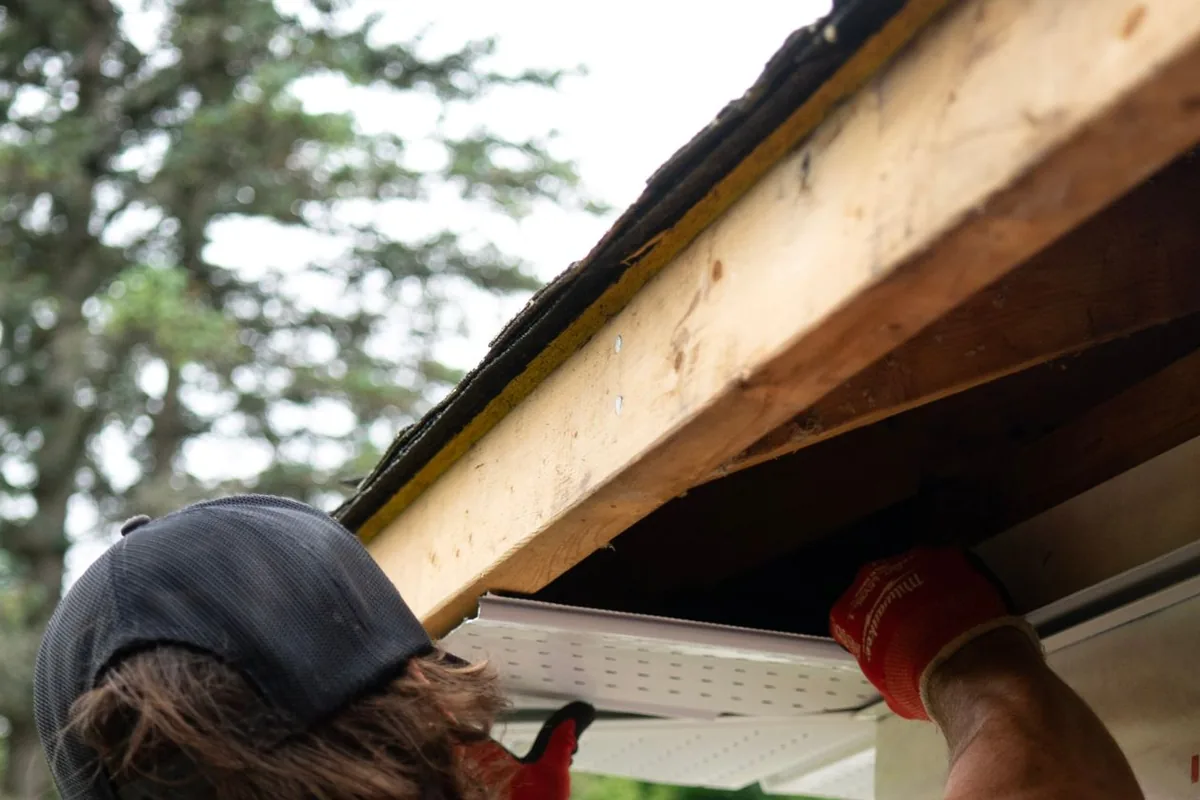
Ask each contractor about the fascia before you sign. New gutters hung on rotted fascia fail at the hangers within a season or two, so any soft board must be replaced first.
Installers usually set the slope at about a quarter inch of drop for every 10 feet of run, so water moves toward the downspouts without pooling. Ask how the downspouts will discharge, because water that exits right at the foundation defeats the whole system.
What should you check before you hire a gutter contractor?
Most gutter installations finish in one day, so the quality of the decisions before that day matters more than the speed of the crew. Use this checklist at quote time, and keep it beside you when you compare bids.
- Fascia and soffit condition. Ask the contractor to probe the fascia boards and price any replacement wood in the quote, not as a surprise extra.
- Seamless or sectional. Seamless runs are formed on site to each eave length, so they have far fewer leak points than sectional lengths joined every few feet.
- Gutter size. Five inch gutters suit most homes, but a large or steep roof may need six inch gutters to handle heavy rain without overflow.
- Downspout count and placement. Confirm each roof valley and long run has a downspout, and that outlets discharge at least several feet from the foundation.
- Material and gauge. Ask for the material and thickness in writing, since thin aluminum dents easily and cheap vinyl warps faster.
- Warranty in writing. Get the workmanship warranty and the material warranty on paper, with the length of each stated plainly.

Do not hire on price alone. A bid far below the others often skips fascia repair, reuses failing hangers, or uses thinner material. A contractor who explains when to replace gutters and when a repair will do is usually the honest bid, and the cheapest gutter that leaks in year two is the most expensive gutter you can buy.
How can you make new gutters last longer?
New gutters repay simple care for decades. Learn how to clean gutters twice a year, in late spring and in late fall, and clean three or four times a year if large trees hang over the roof. Each clean is also an inspection: check hangers, seams, and downspout outlets while you are already up there, and fix small issues before they grow.
Gutter guards help under heavy tree cover, but they do not end maintenance. Guards still need occasional clearing, and they hide the channel, so inspect under them at least once a year. Keep trees trimmed back from the roofline, since branches drop debris and scrape the gutter finish in wind.
Watch the ground after the first heavy rain on a new system. Walk the house and confirm no section overflows, no downspout dumps water at the foundation, and no new stains appear on siding or fascia. Catching a pitch or placement problem in the first season is a warranty call, not a repair bill.
Add the new gutters to your home maintenance checklist with the install date and the material written beside the entry. That one line turns a guess into a record, so the next decision about when to replace gutters starts from facts instead of memory.
Sources: National Association of Home Builders life expectancy study, aluminum gutters 20 years, copper more than 50 years; Angi seamless gutter cost guide, updated 23 October 2026, $1,150 average; Angi gutter lifespan guide, most systems need replacement every 20 years; MyHomeQuote gutter installation guide. Both links open the publisher guides directly.
Related guides
- Gutters Maintenance: How Often and How to Do It in 2027
- How to Clean Gutters the Right Way in 2027
- The Ultimate Home Maintenance Checklist for 2027
- Gutters Maintenance Checklist for 2027: A Season by Season Guide
- How Much Does Gutter Cleaning Cost in 2027
Frequently asked questions
How do I know when to replace gutters or just repair them?
Repair when the damage is local, like one leaking joint or one loose hanger on a young system. Replace when damage is widespread, keeps returning after repair, or the system is past its material lifespan with several warning signs at once.
How long do aluminum gutters last?
Aluminum gutters typically last 20 to 30 years with routine cleaning and care. The National Association of Home Builders life expectancy figure for aluminum gutters is 20 years, and copper gutters last more than 50 years by the same measure. That age band is the usual window for deciding when to replace gutters.
Do I need to replace gutters and downspouts at the same time?
Not always, but it is usually recommended. Replacing both together keeps sizing and flow matched across the whole drainage system. Sound downspouts can stay, since aluminum downspouts last about 30 years, longer than the gutter channel itself.
What does gutter replacement cost in 2027?
Angi puts the national average for seamless gutter installation at $1,150, with most homeowners paying between $900 and $1,400. Old gutter removal adds $150 to $550, and material, footage, story count, and roofline complexity move the final price.
Can I replace gutters myself?
Sectional vinyl or aluminum kits suit a confident do it yourself homeowner on a one level house with a simple roofline. Seamless gutters need a roll forming machine and professional fitting, and any work above a second level or near power lines belongs to a professional crew.
What happens if I delay gutter replacement?
Delay lets water keep collecting where it should not. That can rot fascia and soffits, wash out landscaping, erode soil at the foundation, leak into basements, and feed mold or mildew on damp walls.
Safety note: ladder work carries a real risk of falls. Climb only in dry, calm weather and clear of power lines, and hire a professional for high or risky sections.