How to Choose a Power Drill for Home Projects in 2027
Buy a cordless drill driver with a clutch, a chuck that fits your bits, and a battery platform you can grow with. That short answer to how to choose a power drill beats starting from the biggest tool on the shelf: 12 volt for light jobs, 18 volt class for decks and long screws.
Start with your projects, not with the biggest tool on the shelf. A good home drill drills clean holes, drives screws without stripping them, and feels comfortable in your hand after an hour of use, and that last test matters more than any number on the box. That is the first rule of how to choose a power drill.
If you are learning how to choose a power drill for shelves, furniture, and small repairs, the short answer is simple. Buy a cordless drill driver on a battery platform you can grow with, with a clutch you can set low for screws, a chuck that fits your bits, and a battery that lasts through a weekend job. For most homes, that means a compact 12 volt drill for light work or an 18 volt class drill for heavier work.
Read the sections below to match the drill to your jobs before you spend money.
A power drill is the first power tool most homeowners buy, and it is one of the core skills covered in our guide to DIY basics. Once you know how to use a power drill, choosing the right one gets much easier, because you already know what the clutch, chuck, and speed switch do. This guide builds on that knowledge and focuses only on how to choose a power drill.
Start here when you learn how to choose a power drill, because the drill type sets every other choice.
What Kind of Drill Do You Actually Need
Most home drills fall into four groups, and the group matters more than the brand on the side. A drill driver drills holes and drives screws, and it is the right first drill for almost every home. A hammer drill adds a pulsing action for brick and concrete, and it is worth having if you drill into masonry often.
An impact driver drives long screws and bolts with fast tapping force, but it is not made for clean precision drilling. A corded drill plugs into an outlet and never runs out of charge, which suits long bench jobs.
For a first drill, buy a drill driver. You can add an impact driver later as a second tool, and many brands sell it as a tool only unit that shares the same battery. A hammer drill function is useful on some drill drivers, and it costs little extra on 18 volt class models.
If you only drill into concrete a few times a year, a standard drill driver with a masonry bit will handle a small number of holes, but a rotary hammer is the right tool for many holes in concrete.

The cordless or corded choice is the biggest fork in how to choose a power drill, so settle it first.
Cordless or Corded: Which Suits Home Projects
A cordless drill wins for most home projects because you can carry it anywhere, up a ladder, into a closet, or out to a fence, with no cord to trip over. Modern lithium ion batteries have closed much of the power gap with corded tools, and an 18 volt class cordless drill now handles almost every routine drilling and driving job in a home. A corded drill still wins for unlimited runtime at a bench, for long sanding or wire brushing jobs, and for the lowest purchase price with no battery to replace.
Think about where you work. If your jobs move around the house and yard, cordless freedom is worth paying for. If your drill lives at a workbench and runs for long stretches, a corded drill gives steady full power for less money.
Many experienced homeowners own both, a cordless drill for everyday jobs and a cheap corded drill for heavy bench work. If you can buy only one drill, buy cordless, because it is the drill you will actually reach for.
Voltage is the next step in how to choose a power drill, after you know whether you want cordless freedom.
Voltage Explained: 12 Volt or 18 Volt Class
Voltage describes the power class of a cordless drill, but it does not tell the whole story. A 12 volt drill is light, short, and easy to control, which makes it ideal for furniture assembly, cabinet hardware, and work in tight spaces. It can struggle with large bits and long screws, and it reaches its limit sooner in dense wood.
An 18 volt class drill is heavier, but it has the power for decks, framing, and general building work, and it is the most useful single drill for a house.
One label trap catches many buyers. Brands that sell 18 volt tools in some markets label the same class as 20V Max in others, because 20V Max is the peak voltage straight off the charger while 18 volt is the normal working voltage. Treat 18 volt and 20V Max as the same class, and compare torque, weight, and battery size instead of chasing the bigger number on the box.
That label trap is why how to choose a power drill takes care, not just a glance at the box. A guide from Anawalt Lumber makes the same point, that 20V Max and 18 volt tools sit in the same class and differ only in how brands measure and market the battery.
Torque, measured in inch pounds, matters as much as voltage. Two drills with the same voltage can feel very different, because motor design, gearing, and battery quality all change the twisting force at the bit. Look for a torque figure on the spec sheet, and compare drills in the same class rather than comparing a compact 12 volt drill with a full size 18 volt class drill.
Speed also matters, since most drills offer two speed ranges, a low range with more torque for screws and a high range for drilling holes.
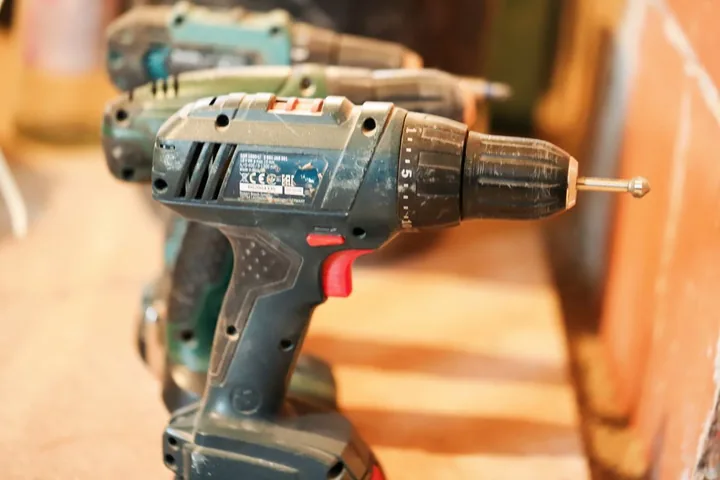
Chuck size is a small detail in how to choose a power drill that changes which bits you can use for years.
Torque in inch pounds, and how the drill should feel in your hand
Torque is the number that decides whether a drill stalls on a long screw. It is measured in inch pounds, and it is the spec most buyers skip when they learn how to choose a power drill. Two drills from the same brand show the gap plainly.
Makita 12V Max CXT driver drill, the only standard drill in Makita 12V line, makes up to 250 inch pounds of torque and weighs 2.4 pounds with the battery. The standard Makita 18V LXT half inch drill driver makes up to 480 inch pounds, and the brushless 18V LXT version makes up to 970 inch pounds. In general, 12 volt drills sit near 250 to 400 inch pounds and 18 volt drills near 400 to 700, with premium brushless models well over 1,000.
| Drill | Torque | Weight with battery |
|---|---|---|
| Makita 12V Max CXT driver drill | Up to 250 in-lb | 2.4 lb |
| Makita 18V LXT half inch drill driver | Up to 480 in-lb | About 3.5 lb |
| Makita 18V LXT brushless half inch drill driver | Up to 970 in-lb | About 3.5 to 4 lb |
Torque is only half the choice, because a drill with a high torque number and a poor grip still hurts your wrist, and the clutch saves the screw only if the drill feels right in your hand. Hold the drill in the store before you pay, because weight and balance decide whether your wrist still works after an hour, and a 12 volt drill at 2 to 2.5 pounds with the battery is easy to hold overhead and fits in tight spaces, while an 18 volt compact at 3 to 3.5 pounds is heavier but steadier for decks and long screws, and a hammer drill at 4 pounds or more is a different tool for masonry. Check the grip, the balance, and the position of the reverse switch, and if the drill feels nose heavy or the grip digs into your palm, try another one.
| Drill class | Torque | Weight with battery |
|---|---|---|
| 12 volt | 250 to 400 inch pounds | 2 to 2.5 pounds |
| 18 volt compact | 400 to 700 inch pounds, premium brushless over 1,000 | 3 to 3.5 pounds |
| Hammer drill | Torque not stated in this guide | 4 pounds or more |
Chuck, Clutch, and Speed: The Specs That Change Daily Use
The chuck is the clamp at the front that grips the bit, and most home drills use a 3/8 inch or a 1/2 inch keyless chuck. A 1/2 inch chuck fits larger bits and holds them tighter, which helps with hole saws and spade bits. A 3/8 inch chuck keeps the drill compact and light, which helps for overhead work and tight corners.
If you plan to drill large holes, choose the 1/2 inch chuck, since a small chuck limits the bits you can use.
The clutch is the numbered ring behind the chuck, and it controls how much twisting force the drill applies before it slips. A low clutch setting stops a screw before it sinks too deep or strips the head, which protects cabinets, trim, and drywall. The drill setting gives full power for making holes.
A drill with at least 16 clutch settings gives finer control than one with only a few, and it is worth having if you drive many small screws into finished surfaces.
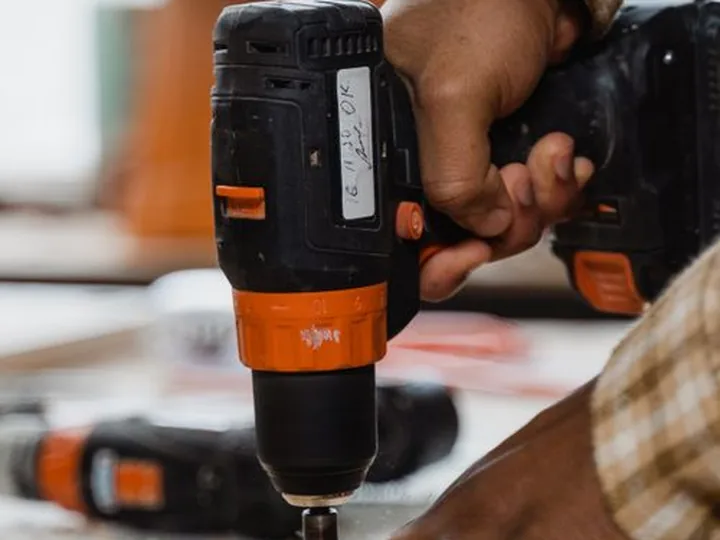
Check the grip and balance before you buy, because a drill that feels nose heavy will tire your wrist on overhead jobs. Hold the drill with a battery fitted, since the battery adds real weight, and check that the trigger, forward and reverse switch, and clutch ring all fall under your fingers without shifting your grip. A built in LED work light sounds like a small extra, but it helps a lot inside cabinets and closets.
A belt hook is useful if you work on a ladder, and it keeps the drill close when both hands are busy.
Battery platform is the long term cost in how to choose a power drill, since spare batteries add up.
Brushless Motors, Batteries, and the Platform Trap
A brushless motor uses electronics instead of small carbon brushes, so it runs with less friction and less heat, and it usually lasts longer than a brushed motor. Brushless drills cost more, but they are worth the extra money if you drill often, because they use battery charge more efficiently and hold up better under load. A brushed drill still suits a homeowner who drills a few holes a month, and it can save money on a first kit.
Do not pay a premium for a brushless label alone, since a good brushed drill on a strong platform can beat a weak brushless drill.
Battery capacity, measured in amp hours, sets runtime, not power, and watt hours tell you the same thing in a different unit: multiply volts by amp hours, so an 18 volt 4 amp hour pack holds 72 watt hours, against 24 watt hours for a 12 volt 2 amp hour pack. A 2.0 amp hour pack suits light work and keeps the drill light, but it drains fast under heavy drilling, while a 4.0 amp hour to 5.0 amp hour pack runs much longer and suits deck screws and large holes, but it adds weight. Speed bands matter too: a low gear around 0 to 450 RPM suits driving screws with torque, and a high gear around 0 to 1,800 RPM suits small bits and fast drilling, following CoffeeChaos.
Two smaller batteries often beat one large battery, because you can charge one while you use the other, and you never stop a job to wait for a charge. Check that the kit includes a charger, since some low prices cover the tool only.
The platform trap is the most expensive buying mistake. Each brand uses its own battery shape, so the first battery you buy tends to lock you into that brand for future tools. Before you choose, look at the other tools on the same battery platform, such as a circular saw, an oscillating tool, or a yard tool, and ask whether you would want any of them later.
A wide platform with fair battery prices beats a cheap drill with costly spare batteries, and this matters more the second time you buy a tool.
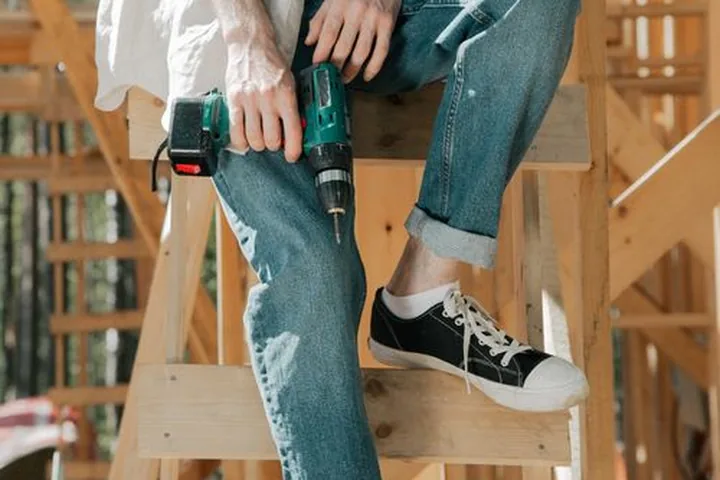
Budget is where how to choose a power drill meets real store prices, so compare full kits, not tool only prices, and ToolsServe puts the sweet spot at 18 volt class, because it covers most home jobs without the weight of a 36 volt tool.
How Much Should You Spend
Most homeowners should budget $99 to $200 for a first cordless drill kit with a battery and charger. A compact 12 volt kit often costs less, while a brushless 18 volt class kit with two batteries sits at the top of that range. Spending more buys durability and power for daily trade use, which most homes never need.
Spending far less often buys a weak battery, a loose chuck, and a tool you replace within a year.
Real store prices show how wide the range is. A Ryobi 18 volt ONE+ HP brushless compact drill kit was listed at Home Depot at $99 in late October 2026, with a 4 amp hour battery and charger, per Clark Deals, and the same brand’s brushless kit with two smaller batteries was listed at $139, per Kinja, so check the live listing before you buy, because prices move with sales.
A DeWalt 20V Max drill driver combo kit with two batteries and charger was listed at Amazon at $129 in late October 2026, per DealNews. Prices change often, so treat these figures as a guide to the market, not as a promise at your local store.
Compare kits fairly before you judge a price. Check the battery size, the number of batteries, whether a charger and bag are included, and whether the motor is brushless. A $99 kit with a 4 amp hour battery can be better value than a $79 tool only unit that still needs a battery and charger.
Watch for combo kits at holiday sales, since a drill plus impact driver kit can cost little more than a drill alone, but only buy the combo if you will use both tools.
This example shows how to choose a power drill by job, not by the biggest number on the box.
A Concrete Example: Fitting Two Floating Shelves
Picture a homeowner fitting two floating shelves on a 10 foot living room wall, with brackets that need screws into studs spaced 16 inches apart. The job needs a pilot hole through drywall, a screw driven into each stud, and a level check before the shelf goes up. A compact 12 volt drill handles this job easily, and a small drill fits between the shelf and the wall without marking the paint.
An 18 volt class drill also handles it, but it is heavier to hold overhead while you mark bracket positions.
The same homeowner then builds a small deck step from pressure treated boards, using 3 inch screws driven into dense lumber all afternoon. Here the 12 volt drill slows down, the battery drains fast, and the clutch slips on long screws. The 18 volt class drill drives those screws without strain, and a second battery keeps the job moving.
This pair of jobs shows why the buying question is never which drill is best in general, but which drill matches the jobs you actually do most.
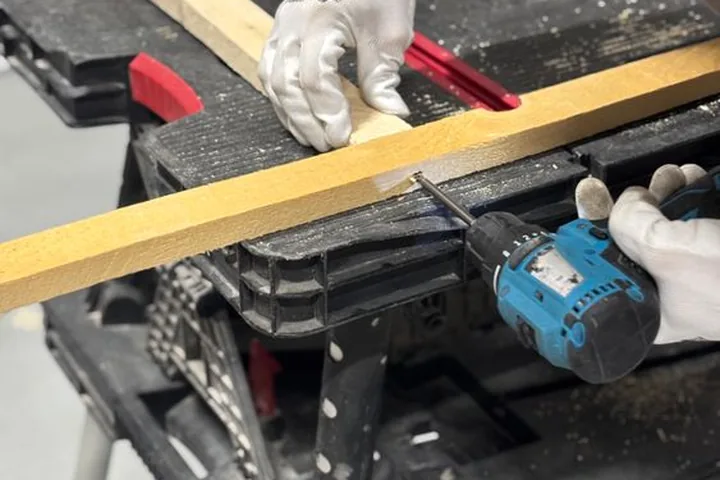
Step by Step Buying Checklist
Use this checklist in the store or while you compare listings online. It takes a few minutes and stops most regret purchases. Use this checklist when you learn how to choose a power drill, and keep it open while you compare listings.
- List your five most common jobs, and note the material and the largest screw or bit each job needs.
- Choose cordless for jobs around the house and yard, and corded only for long bench work.
- Choose 12 volt for light assembly and tight spaces, or 18 volt class for decks, framing, and long screws.
- Pick a 1/2 inch chuck if you drill large holes, and a 3/8 inch chuck if you value light weight.
- Check the torque figure, the clutch range, and the two speed ranges on the spec sheet.
- Decide brushless if you drill weekly, and brushed if you drill a few times a month.
- Count the batteries, check the amp hour rating, and confirm a charger is included.
- Look at the battery platform and check the price of a spare battery before you commit.
- Hold the drill with a battery fitted and check grip, balance, and trigger reach.
- Compare the full kit price, not the tool only price, and keep the receipt and warranty terms.
Most regret comes from skipping the basics of how to choose a power drill and buying on voltage alone.
Mistakes That Waste Money
The most common mistake is buying the most powerful drill in the store for light home jobs. A heavy high torque drill tires your arm, strips small screws, and makes cabinet work harder, not easier. The second mistake is buying a tool only deal without checking battery and charger prices, which can double the real cost.
The third mistake is ignoring weight, since a drill that feels fine for one hole feels very different after fifty screws overhead.
Another mistake is judging a drill by voltage alone, which ignores torque, gearing, and battery quality. Two drills labelled 20V Max can differ sharply in real power, and a well built 18 volt class drill can outperform a weak 20V Max drill. Cheap bit sets cause trouble too, since a dull bit forces you to push harder, which overheats the motor and splits wood.
Buy a small set of sharp bits for wood, metal, and masonry, and replace a bit as soon as it stops cutting cleanly.
Finally, do not skip the safety basics that come with any drill you buy. Our guide to power drill safety tips covers eye protection, clamping, and wall checks, and it is worth reading before your first job. Wear safety glasses every time the drill runs, clamp the workpiece so it cannot spin, and check for wires and pipes before you drill into a wall.
A good drill cannot make up for a rushed setup, and most drill injuries come from skipped checks rather than tool faults. Safety belongs in how to choose a power drill too, since a comfortable drill is easier to control.
Keep this guide beside you when you learn how to choose a power drill, and check each spec before you pay.
Sources for this how to choose a power drill guide: ToolsServe cordless drill guide, 18 volt class is the sweet spot for most home jobs; SlashGear, Makita 12V vs 18V, September 2026; The Honest Reviewers, 12V vs 18V Drill, updated 13 November 2026; Clark Deals and Kinja, Ryobi 18 volt ONE+ HP brushless compact drill kit prices, late October 2026. The ToolsServe link opens the publisher guide directly.
Related guides
- How to Use a Power Drill: A Beginner Guide for 2027
- Power Drill Safety Tips Every DIYer Should Know for 2027
- DIY Basics for Homeowners: Essential Skills to Learn in 2027
- Circular Saw Safety Tips Every DIYer Should Know for 2027
Frequently Asked Questions
Is a 12 volt drill enough for home projects?
Yes, for light home projects such as furniture assembly, hanging pictures, and fitting cabinet hardware, a 12 volt drill is enough and easier to control. It struggles with large bits and long screws in dense wood, so choose an 18 volt class drill if you build decks or drive structural screws.
Is 20V Max more powerful than 18 volt?
No, because 20V Max and 18 volt describe the same battery class, with 20V Max naming the peak voltage straight off the charger and 18 volt naming the normal working voltage. Compare torque, weight, and battery size instead, since those figures show the real difference between drills.
Should a beginner buy a corded or cordless drill?
A beginner should usually buy a cordless drill, because it is easier to carry, simpler to set up, and ready for jobs anywhere in the house or yard. A corded drill suits long bench jobs and the lowest budget, but a cordless drill is the tool a beginner will reach for most often.
What size chuck should I choose?
Choose a 1/2 inch chuck if you drill large holes with hole saws or spade bits, since it fits larger bit shanks and grips them firmly. Choose a 3/8 inch chuck if you want a lighter drill for overhead work and small screws, and you rarely drill holes wider than 1/2 inch.
Is a brushless drill worth the extra money?
Yes, if you drill weekly or drive many screws, because a brushless motor runs cooler, uses charge more efficiently, and usually lasts longer. If you drill only a few holes a month, a brushed drill on a good battery platform can save money without holding back your projects.
Stay safe with any drill you choose. Wear eye protection, secure your work, keep loose clothing and hair away from the bit, and stop and ask a professional if you find wiring, plumbing, or structural damage you do not understand. If a job needs work inside a wall or near electrical wiring, call a qualified tradesperson rather than guessing.