HVAC Filters Maintenance: How Often to Check, Clean and Replace in 2027
Check your filter every month, change a standard 1 inch pleated filter every 30 to 90 days, and keep a thicker media filter for 6 to 12 months where your system allows it. That simple routine is hvac filters maintenance in full, and pets, allergies, or heavy use mean changing sooner.
Your heating, ventilation, and air conditioning system, usually called HVAC, pushes every bit of indoor air through its filter before that air reaches your rooms. The filter catches dust, lint, pet hair, and pollen, and it protects the blower, the coils, and the ducts from buildup. When the filter clogs, airflow drops, rooms feel less comfortable, dust settles faster, and the system works harder than it should.
This hvac filters maintenance guide covers the full routine in plain terms. You will learn how often to check and change each filter type, how household factors shift that timing, how to spot a filter that needs attention right now, and how to replace a disposable filter and look after a washable one.
It also covers size, MERV rating, yearly cost, and the point where a technician should take over.
What Does HVAC Filter Maintenance Actually Involve?
At its simplest, hvac filters maintenance has three jobs, and none of them takes long. First, you look at the filter on a regular schedule so a clog never sneaks up on you. Second, you replace a disposable filter or clean a washable one when the check shows it is loaded.
Third, you keep the air path clear by keeping vents open, returns free of furniture and rugs, and the area around the indoor unit clear of storage.
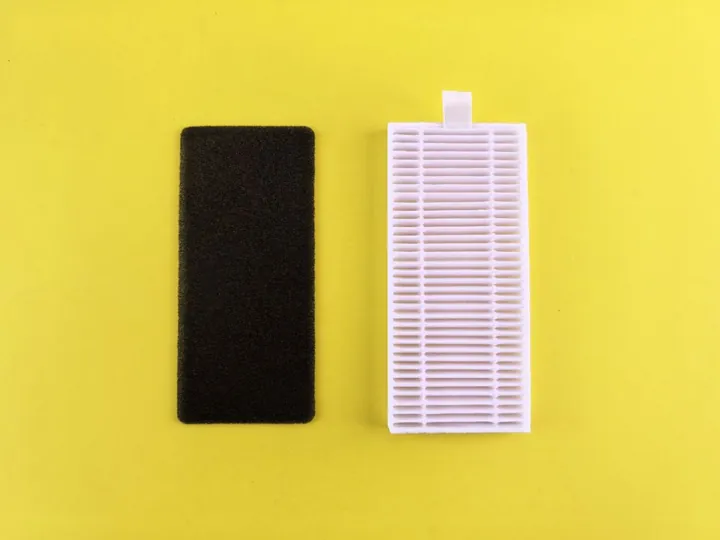
The filter itself is a frame holding a sheet of material, usually fiberglass or pleated synthetic fiber, that air passes through. Pleats fold the material into ridges so a small frame holds a large surface area, which is why a pleated filter can trap more dust than a flat fiberglass filter of the same size. Thicker media filters use a deeper pleated pack, which holds even more dust and lasts longer, but they only fit systems built with a media cabinet or a deeper slot.
Good hvac filters maintenance also means knowing what not to touch. Filter changes, vent checks, and visual checks are homeowner jobs. Refrigerant work, electrical repairs, and coil cleaning inside the unit are not, and this guide flags those jobs clearly in the technician section near the end.
How Often Should You Check and Change Your Filter?
The short version is simple: check every month, and change the filter when it looks dirty, not when the calendar says so, and that monthly look is the habit that makes hvac filters maintenance work. ENERGY STAR, the program run by the United States Environmental Protection Agency, tells owners to look at the air filter monthly, more often in the heavy use months of winter and summer, and to change it at least every three months. That monthly look is the habit that makes every other timing rule work, because two homes with the same filter can load it at very different speeds.
Take these intervals as your starting point for hvac filters maintenance, then adjust them for your home. They come from manufacturer guidance published by Bryant and Carrier, two large heating and cooling equipment makers, and they line up with the ENERGY STAR advice.
| Filter type | Typical change interval | Check it |
|---|---|---|
| Fiberglass, 1 inch | Every 30 days | Every month |
| Pleated, 1 inch | Every 30 to 90 days | Every month |
| Pleated, 2 inch | About every 2 months | Every month |
| Media, 4 inch to 5 inch | Every 6 to 12 months | Every 2 to 3 months |
| Washable, reusable | Clean every 30 to 90 days | Every month |
Household factors move you inside those ranges, sometimes a lot. One dog or cat usually shortens a pleated filter life to about every 60 days, and two or more pets can push it to every 30 to 45 days. Allergies or asthma in the household point the same way, since a loaded filter lets more fine dust and pollen circulate.
Heavy system use shortens filter life as well. A system that runs most of the day through a hot summer or a cold winter pulls far more air through the filter than a system that runs a few hours a day in mild weather. Building work, a dusty road nearby, wildfire smoke, and a home that stays closed up for weeks all add load, and each one is a reason to check sooner rather than later.
A quiet home can sit at the longer end of the range with a clear conscience, provided the monthly check backs it up. A single occupant home with no pets, hard floors, and light system use may honestly get 90 days from a pleated filter. In hvac filters maintenance, the check is what proves it, not the calendar, and a filter that still passes the light test at 90 days has earned its extra weeks.
How Do You Know Your Filter Needs Attention Right Now?
Between scheduled changes, your home gives you clear warning signs, and hvac filters maintenance is easier when you act on them early. The most direct sign is the filter itself: hold it up to a bright light or a sunny window and look through the pleats. If light passes evenly, the filter still has life in it, and if the pleats look gray, matted, or dark in patches, or light barely gets through, it is time for a change even if the calendar says you have weeks left.
Airflow signs matter just as much. Rooms that heat or cool unevenly, weak air from a vent that used to blow strongly, or a whistling sound at a vent can all point to a loaded filter. Dust settling fast on furniture near vents, or a musty smell when the system starts, can point the same way, though a musty smell that persists after a filter change deserves a closer look from a technician.
Energy and comfort signs build up more slowly, so they are easy to miss. A system that runs in very long cycles to reach the thermostat setting, or a power bill that climbs without a change in weather or use, may mean the blower is fighting restricted airflow. The United States Department of Energy notes that replacing a dirty filter can lower an air conditioner energy use by 5 percent to 15 percent, which is why a filter change is one of the cheapest efficiency fixes in any home.
Physical damage is an immediate change signal, whatever the date. A filter that is bent, torn, bowed inward, damp, or sagging in its slot cannot do its job, and air slipping around its edges carries dust straight into the system. Replace a damaged filter at once, and if dampness keeps returning, ask a technician to find the source before it damages more than the filter.
How Do You Replace a Disposable Filter Step by Step?
Replacing a disposable filter takes about five minutes once you know where the slot is, and this hvac filters maintenance routine is worth learning by doing it once slowly. Work through the steps in order, and keep the old filter beside you until the new one is in place so you can match the size and the airflow arrow.
- Switch the system off at the thermostat so the blower is not pulling air while the slot is open.
- Find the filter slot, usually at the indoor unit, in a return grille in a wall or ceiling, or in a media cabinet beside the furnace or air handler.
- Slide the old filter out gently and note the size printed on its frame, such as 16 inch by 20 inch by 1 inch.
- Check the airflow arrow on the old filter frame and note which way it points, usually toward the blower or the unit.
- Vacuum dust from the empty slot and the return grille so loose dust does not load the new filter at once.
- Slide the new filter in with its airflow arrow pointing the same way as the old one, and check that it sits flat with no gaps around the edges.
- Close the slot cover or grille, switch the system back on, and listen for normal airflow at the nearest vent.
- Write the date on the new filter frame with a pencil and note the change in your phone or on a calendar.
Two mistakes cause most failed changes in hvac filters maintenance, and both are easy to avoid. The first is fitting the filter backwards, which forces air against the support mesh and can bow the media inward over time. The second is fitting the wrong size, since a filter that is too small leaves gaps that let dust bypass it, and a filter that is too large will bend or crush when forced into the slot.
If you cannot find the slot, check the system manual or look for a label on the indoor unit, since many units carry a diagram showing the filter location. If the filter is stuck, torn, or damp in a way that suggests a leak, stop and ask a technician rather than forcing it, because a forced filter can tear and send debris into the blower.

How Do You Look After a Washable Filter?
In hvac filters maintenance, washable filters follow the same monthly check as disposable filters, but the change step becomes a cleaning step instead. Our guide on how to clean hvac filters walks through the full wash and dry routine, and the key rule is simple: a washable filter must be fully dry before it goes back in, since a damp filter can grow mold and restrict airflow.
As a quick outline, switch the system off, slide the filter out, and rinse it gently from the clean side so dust washes out rather than deeper in. Let it air dry completely, which can take several hours, and never refit a filter that still feels damp. Inspect the frame and media each time you wash it, and replace the filter when the media tears, the frame bends, or cleaning no longer restores airflow.
Washable filters suit homes that will actually wash and dry them on schedule, and they suit them well, since one filter can last for years. They suit poorly a home where the wash step keeps getting skipped, because a dirty reusable filter harms airflow just as surely as a dirty disposable one. Be honest about which kind of home yours is before you choose.
What About Mini Split, HEPA and Smart Thermostat Filters?
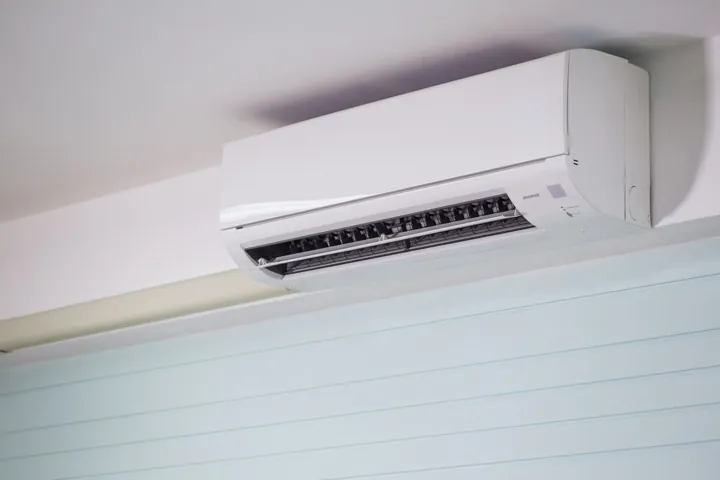
A ductless mini split does not use a pleated filter at all. Each indoor unit has a washable mesh screen that slides out from the front, and Mitsubishi Electric advises cleaning it every two weeks with regular use. A clogged mesh screen cuts airflow across the coil just like a clogged pleated filter, and it can freeze the coil in cooling mode, so set a repeat reminder and treat it as part of hvac filters maintenance, not a separate chore.
True HEPA filtration is a different story, because a HEPA filter catches 99.97 percent of particles 0.3 microns across, yet its dense mat adds so much resistance that most home systems cannot breathe through it. Ductless units were built around low resistance screens, so fitting HEPA media into one starves the coil. If allergies drive the choice, a portable room purifier with true HEPA filtration does the fine particle work, while the ducted system keeps its MERV rated filter.
A smart thermostat can take over the remembering, which is the part of hvac filters maintenance most people skip. Ecobee, Nest and Honeywell models track how many hours the system has run and send a filter reminder when the runtime hits the limit you set, and smart controls for mini splits do the same for the mesh screen. Trust the runtime count over the calendar, because a system that ran all August loads a filter far faster than one that sat idle.
Source: Mini Split Filters vs. HEPA Filters: The Facts.
What Size and MERV Rating Should You Choose?
Here are the MERV ratings in one place.
| MERV rating | What it catches | Best for |
|---|---|---|
| MERV 1 to 4 | Large dust and lint | Washable filters, basic protection |
| MERV 5 to 8 | Dust, pollen, mold spores | Most homes |
| MERV 8 to 11 | Finer dust and pollen | Everyday dust and pollen, the sweet spot for most homes |
| MERV 13 | Fine particles | Allergy homes, where the system allows it |
MERV runs from 1 to 16 under the ASHRAE 52.2 test, and a MERV 13 filter needs a deep media cabinet or a system built for it, because a thin 1 inch frame cannot breathe through that much resistance.
Size comes first, because a filter that does not fit cannot do its job. Read the size printed on the old filter frame and buy that exact nominal size, and if the label is unreadable, measure the slot or check the system manual. Common home sizes include 16 inch by 20 inch by 1 inch, 20 inch by 20 inch by 1 inch, and 20 inch by 25 inch by 1 inch, but your system may use a different size, so never guess from a neighbor’s filter.
MERV stands for Minimum Efficiency Reporting Value, the scale that rates how well a filter catches particles of different sizes. Higher numbers catch smaller particles, but they can also push back against the airflow, so the right rating is the highest your system can take without starving the blower. Most homes do well with MERV 8 to MERV 11 for everyday dust and pollen, and MERV 13 suits homes that want finer particle capture, provided the manual or a technician confirms the blower can handle it.
When finer particle capture is the goal, the United States Environmental Protection Agency points to MERV 13, or the highest rated filter your system can handle, and a filter only filters air while the system runs, under a quarter of the time in heating and cooling season, following the same EPA guide. That advice carries a condition that matters: check the manual first, because a high MERV filter in a system built for low resistance can cut airflow and strain the blower. If you are unsure, ask a technician at your next service visit, and keep the answer with your filter notes so every future purchase matches it.
What Does a Year of Filter Care Cost?
A filter is cheap next to a repair bill, but it still deserves honest numbers, and hvac filters maintenance is easy to budget once you know your own interval. Retail listings from The Home Depot commonly show pleated filters at about $5 to $20 each in multipacks, and a furnace filter guide from eheatcool.com puts basic fiberglass filters at about $5 to $15 each. Washable filters cost more at first purchase, often about $30 to $80, but they can be cleaned and reused for years.
Here is a concrete example from a home this routine fits well. The home has one cat, one 16 inch by 20 inch by 1 inch slot, and a pleated filter that costs about $10 in a multipack. With the cat and steady summer cooling, the filter lasts about 60 days, so the home uses six filters a year at about $10 each, which is about $60 a year.
Compare that with two other common cases so you can place your own home on the scale. A quiet home with no pets that changes a $10 pleated filter every 90 days uses four filters a year, which is about $40 a year. A home with a $45 thick media filter changed twice a year spends about $90 a year, but buys far fewer changes and far less hassle.
In each case the filter bill is far below the cost of a technician visit, and a clean filter also helps the system use less energy, as the Department of Energy figure above shows. Buying a multipack and keeping one spare by the unit removes the most common reason changes get delayed, which is simply not having a filter in the house when the check says it is time.
When Is It Time to Call a Technician?
Filter changes, vent checks, and visual checks are homeowner jobs in hvac filters maintenance. Refrigerant work, electrical work, coil cleaning inside the unit, and heat exchanger checks are not, and they belong to a qualified technician. Call one if a new filter does not fix weak airflow, if ice keeps forming on the indoor coil, if water pools near the unit, or if the system short cycles, which means it switches on and off in rapid bursts.
Safety warning signs do not wait for the next monthly check, so call promptly. A gas smell means get out and call your gas utility or emergency services. A burning electrical smell, sparking, or a breaker that trips again and again means switch the system off and call a professional.
If a carbon monoxide alarm sounds, leave the home and call emergency services, since carbon monoxide has no smell and no color. A technician visit once a year for a full service also makes sense, because belts, coils, fans, and ducts need checks that go well beyond what a filter change covers.
Safety Notes Before You Start
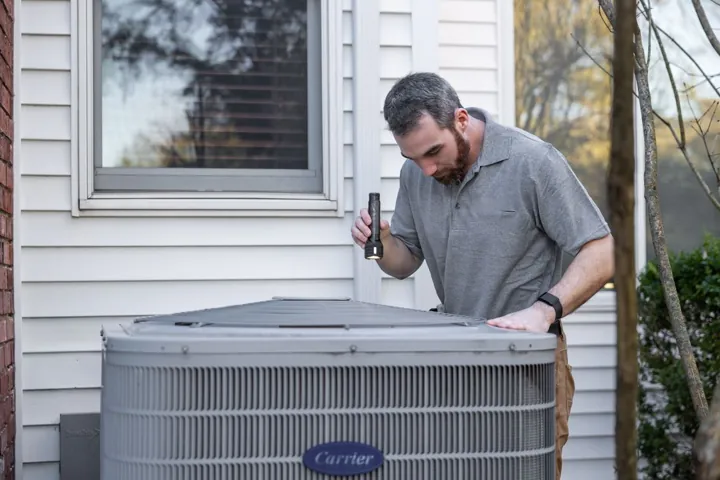
Switch the system off at the thermostat before you open the filter slot. If you rinse the outdoor unit or work near any fan, switch power off at the disconnect too. Keep your hands away from a running blower or fan, and keep a pressure washer off the coil fins, since bent fins block airflow and can need a professional repair.
This hvac filters maintenance guide covers general homeowner maintenance only, and your system manual beats any general advice here, especially on filter size, MERV limits, and service intervals. Warranty terms matter too: if your system is under warranty, read them before changing filter types, because some warranties ask for specific filter ratings or professional service.
To keep this routine beside your other seasonal jobs, add it to your wider home maintenance checklist, and if you are ever unsure whether a filter is due, use our guide on when to replace hvac filters to judge the signs. That way filter care stays a small monthly habit, not a repair waiting to happen.
Sources for this hvac filters maintenance guide: United States Environmental Protection Agency guide to air cleaners in the home, MERV 13, or the highest rated filter your system can handle; United States Environmental Protection Agency what is a MERV rating, MERV 13 captures at least 50 percent of particles 0.3 to 1.0 microns; eheatcool.com furnace filter guide, fiberglass $5 to $15, washable $30 to $80; United States Department of Energy, replacing a dirty filter can lower air conditioner energy use by 5 to 15 percent. All three links open the publisher guides directly.
Related guides
- How to Clean HVAC Filters the Right Way in 2027
- When to Replace HVAC Filters: A Homeowner Guide for 2027
- The Ultimate Home Maintenance Checklist for 2027
Frequently asked questions
How often should I change my HVAC filter?
Check it every month, and change a standard 1 inch pleated filter every 30 to 90 days, sooner with pets, allergies, or heavy use. ENERGY STAR says check monthly and swap it at least every three months, or sooner once it looks dirty.
Will a MERV 13 filter work in my system?
Not always, so the manual comes first. The United States Environmental Protection Agency suggests MERV 13, or the highest rated filter your system can handle, and a technician can confirm the right rating for your blower.
Can I wash a disposable filter and reuse it?
No, and trying it usually makes things worse. Shaking or vacuuming a disposable filter can tear the media and let dust through, so clean only filters marked washable or reusable, and dry them fully before refitting.
What happens if I leave a dirty filter in place too long?
Airflow drops, rooms heat and cool unevenly, dust builds up faster, and the system works harder, which can raise energy use and strain parts. In extreme cases a clogged filter can contribute to ice on the indoor coil or overheating, so a late change can turn into a repair.
Does a filter change replace a yearly technician service?
No, filter care is the homeowner layer of maintenance, while a yearly service checks belts, coils, fans, ducts, refrigerant, and safety controls. Keep both layers going, and use the monthly filter check to spot problems early between services.