Is Roof Replacement Tax Deductible in 2027
A $12,000 roof raises one question first: is roof replacement tax deductible? No, not in the year you pay for it. The IRS treats a new roof as a capital improvement, so the cost adds to your home cost basis and can cut the tax you pay when you sell.
Rentals, home offices, storm damage, and a home equity loan follow different rules, and this guide gives the straight answer for each type of owner.
Many homeowners ask, is roof replacement tax deductible, right after they get a quote near ten thousand dollars. A new roof is one of the biggest bills a homeowner faces, so the tax question matters. This guide gives the straight answer for each type of owner, with the 2027 rules, real numbers from the IRS and Angi, and a worked example you can follow.
This guide uses the IRS itself as the main source, including Publication 523, Selling Your Home, and the IRS pages on the energy efficient home improvement credit and the residential clean energy credit. Cost figures come from Angi 2026 data based on 32,999 verified projects. Tax law changes often, so check the current IRS pages or a qualified tax professional before you file.
Why a New Roof Is Not Deductible on the Home You Live In
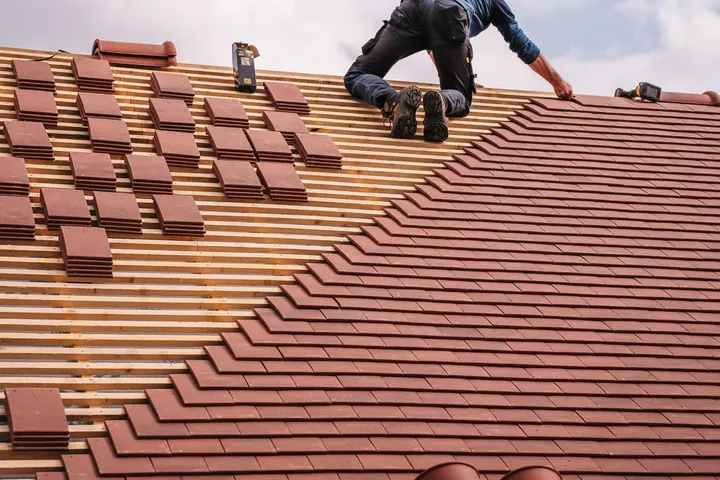
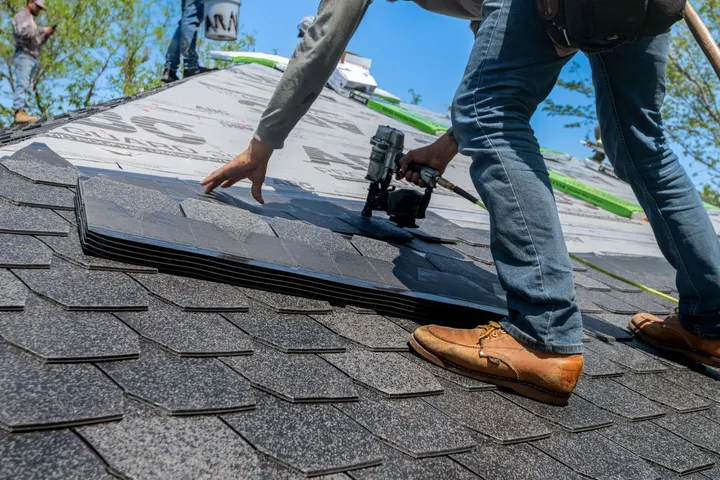
The IRS draws a clear line between a repair and an improvement. A repair keeps your home in its normal working state, while an improvement adds value, extends the life of the property, or adapts it to a new use. A full roof replacement falls on the improvement side of that line, so you cannot deduct it as a current year expense on a home you live in.
That rule surprises many homeowners, because the bill is large and the work feels necessary. The tax code still treats your own home as personal property, not as a business, so its upkeep is a personal cost. The benefit comes later, through your cost basis, which this guide explains next.
| Roof work | Tax treatment on your own home |
|---|---|
| Patching a few shingles after a storm | Repair, no deduction, no basis increase |
| Fixing a roof leak around flashing | Repair, no deduction, no basis increase |
| Full tear off and new roof | Capital improvement, adds to basis, no current year deduction |
A roof leak fixed early is usually a repair, and a roof repair such as patching shingles costs far less than a replacement. The line matters because only improvements add to your cost basis. A repair adds nothing to your basis, so it never cuts your tax bill at sale, while a replacement adds its full cost.

How a New Roof Raises Your Cost Basis and Cuts Tax When You Sell
Your cost basis is the running total of what you paid for your home plus the cost of capital improvements. IRS Publication 523 lists a new roof as an improvement that increases basis. When you sell, your taxable gain is the sale price minus your basis, so a higher basis means a lower gain.
Is roof replacement tax deductible when you sell: the worked numbers
Here is a worked example with real 2026 costs. Angi puts the national average roof replacement at $9,611, with most homeowners paying $5,903 to $13,380.
Say you bought your home for $250,000 and later paid $12,000 for a new asphalt shingle roof. Your basis rises to $262,000.
Say you then sell the home for $550,000. Your gain is $288,000 with the roof in your basis, against $300,000 without it.
A single filer can exclude up to $250,000 of gain if they owned and lived in the home for at least two of the five years before the sale, under Section 121 of the tax code.
That leaves $38,000 taxable with the roof, against $50,000 without it. At the 15 percent long term capital gains rate, the roof saves $1,800 in tax.
The catch is that the exclusion often wipes out the gain on its own. A married couple filing jointly can exclude up to $500,000, so many sellers owe no capital gains tax at all, with or without the roof. The basis benefit only pays when your gain runs past the exclusion, which is common in high value markets and for owners who held the home for decades.
Insurance changes the math. If your insurer pays part of the roof bill, only the amount you pay from your own pocket adds to your basis.
IRS Publication 551 says you must reduce your basis by any insurance reimbursement. A $20,000 roof with $12,000 from insurance adds only $8,000 to your basis, minus any casualty loss deduction you claimed for the same damage.
Are Energy Tax Credits Still Available for a New Roof in 2027
This is where most online guides are now wrong. If you search is roof replacement tax deductible online, you will still find articles that promise a 30 percent energy credit for a new roof through 2032.
That promise is out of date. Both federal credits that touched roofing ended for property placed in service after December 31, 2025, under Public Law 119-21.
The Energy Efficient Home Improvement Credit, known as Section 25C, was worth 30 percent of qualifying costs up to $1,200 a year. It never listed roofing materials among its qualifying components.
The IRS page lists exterior doors, windows, skylights, insulation, and air sealing, but no roof covering. It also ended for property placed in service after December 31, 2025, so a standard metal or asphalt roof installed in 2026 or later gets no federal credit.
The Residential Clean Energy Credit, known as Section 25D, was the generous one. It paid 30 percent of the full cost, including labor, for solar property installed from 2022 through December 31, 2025.
Solar shingles and solar roofing tiles qualified because they generate electricity. Plain shingles that only support solar panels did not qualify.
The IRS states plainly that the credit is not available for any property placed in service after December 31, 2025.

So is roof replacement tax deductible through an energy credit in 2027? No, for any roof installed in 2026 or later.
A roof finished in 2025 could still qualify under the old dates, and you claim it on Form 5695 for the tax year the property was installed. A roof finished in 2026 or later gets no federal energy credit, standard or solar. State rebates and utility incentives are a different matter, so check your state energy office before you rule out local help.
If a contractor or a guide promises you a federal credit for a 2027 roof, ask them to show the current IRS page. The IRS pages for both credits now carry the December 31, 2025 end date, and any guide that still quotes 2032 has not been updated since the law changed.
Is Roof Replacement Tax Deductible on a Rental Property
So is roof replacement tax deductible on a rental? Yes, but not all at once. A new roof on a residential rental is a capital improvement that you recover through depreciation over 27.5 years, using the straight line method under IRS Publication 527.
Small repairs are different, and you can deduct them in full in the year you pay for them.
Take an $11,000 roof on a single family rental. Spread over 27.5 years, the deduction is $400 a year. That is a modest yearly benefit, but it runs for nearly three decades, and it sits beside the rent, repairs, insurance, and mortgage interest you already deduct on Schedule E.
Two extra rules help landlords. The de minimis safe harbor lets you expense items that cost up to $2,500 per invoice instead of capitalizing them, or up to $5,000 if you have audited financial statements. A small roof job that fits under that limit can be deducted in full in the year you pay for it.
The partial disposition election helps when you replace an old roof that still has undepreciated value on your books. It lets you write off the remaining basis of the old roof as a loss in the year you replace it, instead of depreciating a roof that no longer exists. You then start depreciating the new roof over a fresh 27.5 year period.
Do not guess on the repair line. Calling a full replacement a repair can trigger an accuracy related penalty of 20 percent of the resulting tax underpayment, under Section 6662 of the tax code. When the job is close to the line, a tax professional can confirm which side it falls on before you file.
Is Roof Replacement Tax Deductible for a Home Office
If you use part of your home regularly and only for business, a share of the roof cost can be deductible. The IRS treats a new roof as an indirect expense, because it benefits the whole home, including the office. You must use the actual expenses method, because the simplified method does not allow deductions for improvements or depreciation.
The share follows your floor space. An office of 200 square feet in a 2,000 square foot home is 10 percent of the home, so 10 percent of a $15,000 roof, or $1,500, counts as a business cost. The business share of a roof is depreciated over 39 years, so that $1,500 gives about $38 a year in deductions.
The trade off comes when you sell. Depreciation you claimed on a home office is recaptured as ordinary income, taxed at a rate of up to 25 percent, even when the rest of your gain falls inside the Section 121 exclusion. Keep the records, because the recapture applies to every dollar of depreciation you claimed after May 6, 1997.
So is roof replacement tax deductible for a home office? Yes, for the business share only, and only through the actual expenses method.
A home office also changes the energy credit picture, because a property used only for business cannot claim the residential credits at all. If the business use is 20 percent or less, the full credit still applied for work done before the 2025 end date. Above 20 percent, only the share tied to personal use qualified.
Is Roof Replacement Tax Deductible After a Storm
A storm damaged roof can give a tax deduction, but only in narrow cases. Since 2018, a personal casualty loss is deductible only when the damage comes from a federally declared disaster, under IRS Publication 547. A bad storm that never gets a federal disaster declaration gives no casualty deduction on your own home.
Two thresholds cut the deduction down. Each separate casualty loss is reduced by $100, and your total casualty losses for the year are reduced by 10 percent of your adjusted gross income.
With an adjusted gross income of $80,000, your unreimbursed loss must pass $8,100 before a single dollar is deductible. Report the loss on Form 4684, and keep the FEMA disaster declaration number for your area.
So is roof replacement tax deductible after a storm? Only when the storm brought a federal disaster declaration and your loss clears both thresholds.
| Your situation | What you can claim |
|---|---|
| Own home, standard roof | No current year deduction, cost adds to basis |
| Own home, solar roof installed 2022 to 2025 | 30 percent clean energy credit under Section 25D |
| Own home, roof installed in 2026 or later | No federal energy credit |
| Rental property | Depreciation over 27.5 years, repairs deductible at once |
| Home office | Business share through the actual expenses method |
| Storm damage in a federal disaster area | Casualty loss on Form 4684, after $100 and 10 percent of income |
| Commercial building | Possible full expensing under Section 179 |
Other Routes to a Deduction
A home equity loan is a separate path that many homeowners miss. Interest on a home equity loan or line of credit is deductible when the borrowed money buys, builds, or substantially improves the home that secures the loan, under IRS Publication 936. A full roof replacement counts as a substantial improvement, so the interest on a loan taken out to pay for the roof can be deductible, even though the roof itself is not.
A medical need is the rarest path. Under Section 213, a roof can count as a medical expense when a doctor certifies that it is medically necessary, for example when mold from a failing roof harms a person with severe breathing problems.
Only the cost above the increase in your home value counts, and only total medical costs above 7.5 percent of your adjusted gross income are deductible. A $20,000 roof that adds $15,000 to your home value leaves $5,000 as a possible medical expense, before the 7.5 percent threshold.
Business owners get one more route. A roof on a nonresidential commercial building may qualify for Section 179 expensing, which can deduct the full cost in the year the roof is placed in service. That rule covers roofs on offices, shops, and warehouses, but it does not cover residential rental property, which stays on the 27.5 year schedule.
What Records to Keep for Your Roof
Every roof tax benefit above depends on records. Keep the signed contract with the roofing company, proof of payment, itemized invoices that separate materials from labor, the building permit, the manufacturer certification for any energy rated product, and letters from your insurer about what they paid. For a medical claim, keep the doctor statement and appraisals from before and after the work.
- Signed contract. The agreement with the roofing company showing the scope of work and the total price.
- Proof of payment. Bank records or card statements that confirm the amount you paid.
- Itemised invoices. Materials and labor on separate lines, because energy credits counted materials only.
- Building permit. The permit from your local authority, which also proves the date of the work.
- Manufacturer certification. The maker statement that confirms an energy rated product met the standard.
- Insurance letters. Written proof of what the insurer paid, so you can work out your true basis.
- Before and after appraisals. Needed for a medical expense claim or a casualty loss.
- FEMA disaster number. The declaration number for your area, for a storm claim.
Keep these records for at least three years after you file the tax return for the year you sell the home, not the year you fitted the roof. The IRS can extend the review period to six years if you underreport income by more than 25 percent, so holding the file longer is the safe choice. If your roofer also fits gutter guards, keep that invoice separate, because guards are a separate improvement with their own cost.

How to Claim Each Roof Tax Benefit
Follow these steps in order, so you claim the right benefit on the right form.
- Match the benefit to your property. A home you live in, a rental, a home office, and a commercial building follow different rules, so start with the table above.
- Check the dates. Federal energy credits ended for property placed in service after December 31, 2025, so a 2026 or later roof claims no credit.
- Gather your records before tax season. A missing invoice or permit can cost you the whole benefit.
- File the right form. Use Form 5695 for a credit on a 2025 install, Form 4684 for a casualty loss, Schedule E for rental depreciation, and Form 8829 for a home office.
- Talk to a qualified tax professional before you file. Roof tax rules turn on small facts, and a short review costs less than a wrong claim.
This guide gives general information about United States federal tax rules. It is not tax advice, and tax law changes often. Your state may add its own rules, and your situation may differ from the examples here, so check with a qualified tax professional before you file.
The question is roof replacement tax deductible has a different answer for each type of owner. A homeowner gets no deduction this year but gains a higher cost basis.
A landlord spreads the cost over 27.5 years. A home office owner claims a small yearly share.
One date decides the energy credit, and it has already passed. A roof finished after December 31, 2025 gets no federal energy credit at all, whatever older guides still promise. The credit deadline is a separate question from is roof replacement tax deductible, so do not let an old credit guide answer the wrong question for you.
State Breaks Worth Checking
These state breaks sit outside the question, is roof replacement tax deductible, and they are the reason to check your state rules before you file. None of these change the federal answer to is roof replacement tax deductible. They are state rules, and they stack on top of it.
Alabama Code section 40-18-15.5 gives a state income tax deduction for wind and flood mitigation retrofits, the lesser of 50 percent of qualifying costs or $3,000, and you do not need to itemize to claim it. The Strengthen Alabama Homes program offers grants of up to $10,000 for the same work. A FORTIFIED Roof home can cut up to 35 percent off the wind portion of a homeowners premium, and a FORTIFIED Gold home up to 55 percent.
Louisiana runs a Fortify Homes program with a tax deduction of up to $5,000 for qualifying mitigation work.
Partial Disposition and Depreciation Recapture
When a rental roof is replaced, the old roof still has a remaining tax basis, and Treasury Regulation section 1.168(i)-8 lets you elect to treat it as disposed of. You write off the remaining adjusted basis as a loss in the year the old roof is removed, report it on Form 4797, and make the election on the timely filed return for that year. It generally cannot be fixed later by amendment.
When the property sells, the depreciation you claimed comes back. Under Internal Revenue Code section 1250, unrecaptured Section 1250 gain is taxed at a maximum federal rate of 25 percent.
Residential rental property recovers over 27.5 years and nonresidential property over 39 years. Section 179 roof expensing is commercial only, so a residential rental roof does not qualify.
Related guides
These guides cover the roof and gutter jobs that often go with a replacement.
- How Much Does It Cost to Repair a Roof? 2027 Guide
- How Much Does It Cost to Repair a Roof Leak? 2027
- How Much Do Gutter Guards Cost in 2027? Prices by Type
- How Much Does a Building Permit Cost? [2027 Guide]
- How Much Does Spray Foam Insulation Cost in 2027
Frequently Asked Questions
Is roof replacement tax deductible for a primary residence?
No, not in the year you pay for it. A new roof on the home you live in is a capital improvement, so the cost adds to your cost basis and can lower the tax you pay when you sell. A small repair is not deductible either, and it does not add to your basis.
Is roof replacement tax deductible if I pay with a home equity loan?
The roof itself is not deductible, but the loan interest can be. Interest on a home equity loan is deductible when the money buys, builds, or substantially improves the home that secures the loan, and a full roof replacement counts as a substantial improvement under IRS Publication 936.
Is roof replacement tax deductible on a rental property?
Yes, through depreciation. A new roof on a residential rental is depreciated over 27.5 years, so an $11,000 roof gives a $400 deduction each year. Small repairs are deductible in full in the year you pay for them.
Can I still claim an energy credit for a new roof in 2027?
No. Both federal credits ended for property placed in service after December 31, 2025. The Energy Efficient Home Improvement Credit under Section 25C and the Residential Clean Energy Credit under Section 25D are no longer available for roofs installed in 2026 or later.
Is roof replacement tax deductible when I sell my home?
It can. A new roof adds its full cost to your cost basis, which lowers your taxable gain.
On a $12,000 roof, a single filer selling for $550,000 after buying for $250,000 would pay tax on $38,000 instead of $50,000, saving $1,800 at the 15 percent rate. The saving only appears when your gain runs past the $250,000 or $500,000 exclusion.
Is a roof repair tax deductible?
No, not on the home you live in. A repair is a personal cost, and it does not add to your cost basis either. On a rental property, a repair is deductible in full in the year you pay for it, because it is a business expense.
Sources: IRS, Energy Efficient Home Improvement Credit, credit for improvements made through December 31, 2025; IRS, Residential Clean Energy Credit, 30 percent for property installed 2022 through December 31, 2025; IRS Publication 523, Selling Your Home; IRS Publication 527, Residential Rental Property; IRS Publication 587, Business Use of Your Home; IRS Publication 547, Casualties, Disasters, and Thefts; Angi, How Much Does Roof Replacement Cost, updated October 22, 2026, national average $9,611 based on 32,999 verified projects.