What Is the Labor Cost to Install Vinyl Plank Flooring in 2027
What is the labor cost to install vinyl plank flooring? Most homeowners pay $1.50 to $4 per square foot for click lock labor, or about $750 to $2,000 in labor for a 500 square foot room. Glue down work costs more, and old floor removal, leveling, and stairs add to the bill.
\n
The planks were $900. The labor was another $1,100, and that is the part nobody prices first.
Vinyl plank flooring looks like real wood, stands up to water, and costs far less than hardwood. That is why it now covers living rooms, kitchens, basements, and rental homes across the country. The planks themselves are only part of the bill.
Labor is often the line that surprises people, because the same floor can cost very different amounts depending on the install method, the shape of the rooms, and where you live.
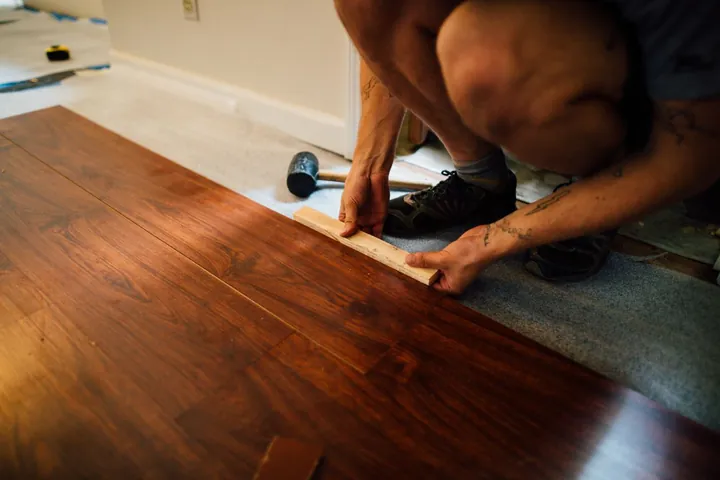
This guide uses real 2026 prices from HammerIO, Modernize, and Clear Home Projects to show what installers charge per square foot, what the labor price covers, what pushes it up, what a full room costs, and how to read a quote line by line.
What Is the Labor Cost to Install Vinyl Plank Flooring Per Square Foot?
The short answer to what is the labor cost to install vinyl plank flooring is that it depends on the install method. Click lock planks snap together and float over the subfloor, so crews work fast and charge the least. Glue down planks are stuck to the subfloor one by one, which takes longer and costs more.
Loose lay planks sit in place with a grippy backing and fall in between on speed and price.
HammerIO and Clear Home Projects price labor only, per square foot, using 2026 pricing. Materials, underlayment, removal, and prep are separate lines on the bill, so check each one before you sign.
| Install method | Labor per square foot | Best for |
|---|---|---|
| Click lock floating | $1.50 to $4 | Most homes, fastest install |
| Glue down | $3 to $8 | Concrete slabs, radiant heat, commercial rooms |
| Loose lay | $2 to $5.50 | Large open rooms, quick installs |
Modernize puts click lock labor a little higher, at $2 to $5 per square foot, and glue down at $3 to $6. The gap between sources is normal. Local labor rates move the number more than any national chart does, so treat these bands as a check on quotes, not as a price promise.
One more number matters. Most installers charge a job minimum of $150 to $300, according to Modernize, no matter how small the room is. A tiny closet still needs a crew to drive out, unload tools, and set up.
That minimum is why small jobs often look pricey per square foot.
What Does the Labor Price Cover?
A labor quote should cover the full install, not just laying planks. A normal click lock job includes measuring the rooms, planning the layout so the last row is not a thin sliver, cutting planks to fit, locking the rows together, fitting planks around door jambs and vents, and installing transition strips where the new floor meets another surface. The crew should also leave the room swept and the planks tight, with no gaps at the joints.
The labor price usually does not cover old floor removal, subfloor leveling, underlayment if your planks do not have a pad built in, or moving heavy furniture. Those items show up as separate lines, and they are where many quotes grow. Ask for each one as its own line before you sign, so you can see what is labor and what is extra work.
Most crews also include a short acclimation check. Planks should sit in the room for at least 48 hours before install, so they adjust to the temperature and humidity of your home. Some brands skip this step for rigid core planks, so follow the instructions in the box you bought.
When you compare quotes, ask which of these tasks are inside what is the labor cost to install vinyl plank flooring and which are billed apart.
What Makes Labor Cost More or Less?
Five factors shape what is the labor cost to install vinyl plank flooring for your home, so check each one before you judge a quote.
The first is the install method, as the table above shows. Glue down work runs about twice the labor of click lock, because every square inch of subfloor must be clean and smooth before the first plank goes down, and the adhesive adds a slow step to every row.
The second factor is room shape. A plain rectangular room is fast. Hallways, closets, angled walls, kitchen islands, and many doorways slow the crew down, because every cut takes time and wastes material.
HammerIO notes that complex layouts can add $0.25 to $0.75 per square foot in labor, and diagonal or herringbone patterns add $0.50 to $1.50 per square foot, with waste rising to 15 to 20 percent.
The third factor is stairs. Wrapping stairs in vinyl plank is fussy work that needs bull nose pieces and careful fitting around spindles. HammerIO prices stair work at $45 to $150 per step, which is why a staircase can cost as much as a small room.
The fourth factor is the subfloor. Floating vinyl plank needs a flat floor. The standard is 3/16 inch of flatness over a 10 foot span, which means no high or low spot inside 10 feet can vary by more than 3/16 inch.
Many older homes do not meet that standard, so the crew sands high spots or pours self leveling compound into low spots before they start. HammerIO prices leveling at $0.50 to $2 per square foot, and a full subfloor replacement at $3 to $5 per square foot if the wood below is damaged or badly cupped.
The fifth factor is where you live. Floor layer wages drive the labor rate, and wages vary a lot by city. The Bureau of Labor Statistics puts the median floor layer wage at $27.15 per hour nationally in May 2025, against $36.04 in San Francisco and $29.50 in New York, versus $21.13 in Dallas.
Contractor billing rates add overhead and profit on top of wages, so the same floor costs more on the coasts than in the South or Midwest.
How Much Is Labor for Common Room Sizes?
To see what is the labor cost to install vinyl plank flooring for your own home, multiply your room size by the labor rate for your install method. The table below uses click lock labor at $1.50 to $4 per square foot, which is the most common residential install.
| Room | Size | Labor only |
|---|---|---|
| Bedroom | 144 square feet | $216 to $576 |
| Living room | 300 square feet | $450 to $1,200 |
| Kitchen and dining | 350 square feet | $525 to $1,400 |
| Whole main floor | 800 square feet | $1,200 to $3,200 |
| Whole house | 1,800 square feet | $2,700 to $7,200 |
Here is a worked example. Take a 12 foot by 12 foot bedroom, which is 144 square feet. Use mid range material at $3.50 per square foot and labor at $2.25 per square foot, the sample rates HammerIO uses in its project budgets.
Buy 10 percent extra material for cuts and waste, so 160 square feet of planks at $3.50, which is $560. Labor is 144 square feet at $2.25, which is $324. Add carpet removal at $1.25 per square foot, which is $180, underlayment at $0.50 per square foot, which is $72, and two transition strips at $30 each, which is $60.
The full job lands at about $1,200, and labor is only $324 of that total. The extras, not the laying of planks, are what most people miss when they budget. That $324 is what is the labor cost to install vinyl plank flooring in a 12 by 12 bedroom, and the rest is material, removal, and prep.
To price your own room, start with what is the labor cost to install vinyl plank flooring per square foot, then add removal, prep, and transitions line by line.

How Does Labor Cost Change by Region?
What is the labor cost to install vinyl plank flooring where you live? The national band is a starting point, and the region moves it up or down. The table below shows click lock labor by region, using regional figures published by HomeGuide and cost calculators that track installer rates.
| Region | Click lock labor per square foot |
|---|---|
| South | $1.50 to $2.50 |
| Midwest | $2 to $3 |
| Northeast | $2.50 to $4 |
| West Coast | $2.50 to $4 |
Modernize notes that labor runs 20 to 40 percent higher in expensive cities than the national average. A quote that looks high in San Francisco may be fair for that market, while the same number in Dallas would be a red flag. Get three local quotes before you judge any single price.
The gap is the reason what is the labor cost to install vinyl plank flooring in San Francisco can run double the rate in Dallas for the same floor.
Big box store installs sit in the same bands. Cost Rule reports Home Depot install labor at $1.50 to $5 per square foot and Lowe’s at $2 to $7, with the work done by independent contractors rather than store staff. The store price is a starting point, and the same prep and removal extras still apply.
What Extra Charges Can Appear on Your Bill?
The labor line is rarely the whole bill. Old floor removal is the extra most people underestimate. Carpet removal is the cheapest demolition, while ceramic or porcelain tile removal is the most expensive, because crews must break tile, remove mortar, haul debris, and often repair the subfloor.
HammerIO prices removal at $0.50 to $4 per square foot depending on the old floor type.
Underlayment is another line to check. Many rigid core planks now ship with a pad attached, so you can skip it. If your planks have no pad, underlayment runs $0.25 to $0.75 per square foot, according to HammerIO.
Subfloor prep runs $0.50 to $2 per square foot for leveling, and transition strips cost $15 to $50 each.
When you ask what is the labor cost to install vinyl plank flooring, remember the quote may or may not include these extras, so compare the line items, not only the final total. A low labor number can hide a high prep charge, and a higher labor number can be the cheaper job once every line is counted.
One cost that hides in plain sight is waste. Straight layouts need about 10 percent extra material for cuts. Diagonal or herringbone layouts need 15 to 20 percent.
On a 1,000 square foot job at $3.50 per square foot, that difference is $175 to $350 of extra planks, so the pattern you pick changes the material bill as well as the labor bill.
Should You Install Vinyl Plank Flooring Yourself?
Floating vinyl plank is one of the most DIY friendly flooring projects. The click lock system needs no glue, no grout, and no special skills beyond careful measuring and cutting. A competent homeowner can install 300 to 400 square feet in a day once the subfloor is prepped, according to HammerIO, while a pro crew lays 400 to 500 square feet a day.
Before you decide to do it yourself, find out what is the labor cost to install vinyl plank flooring from two or three local installers, so you know exactly what you would save. Skipping pro labor saves $1.50 to $4 per square foot on a click lock job. On a 500 square foot main floor, that is $750 to $2,000 in savings.
Glue down jobs save more, since the labor rate is higher, yet they are also harder to get right.
Knowing what is the labor cost to install vinyl plank flooring also helps you judge DIY savings fairly, since the saving is the labor line and nothing else.
You will need a tape measure, a utility knife, a tapping block, a pull bar, spacers, a rubber mallet, and a jigsaw or circular saw for cuts around door jambs. Leave a 1/4 inch expansion gap at every wall, cabinet, and door jamb, and cover it with baseboards and transitions. Stagger the end joints by at least 6 inches from row to row, and check the box, since most makers ask for an 8 inch minimum stagger.
Never lay vinyl plank over carpet. Pull up all carpet, padding, and staples first, so the planks sit on a hard flat surface.
DIY makes sense for a single rectangular room with a flat subfloor. Hire a pro when the subfloor needs leveling, when the job includes stairs, when the layout has many angles, or when the floor runs through several rooms with transitions. A bad subfloor is the most common cause of a failed floating floor.
Planks click over low spots, foot traffic flexes them, and the joints fail within 12 to 24 months. Most warranties exclude failures caused by poor subfloor prep, so a pro is cheap insurance on a tricky floor.
Safety note: wear safety glasses and a dust mask when you cut planks, keep blades sharp so the knife does not slip, and lift boxes with your legs, since a case of planks is heavy. If the old floor may contain asbestos, which is possible in homes built before the 1980s, stop and get it tested before you pull anything up. Do not sand or break suspect tile or sheet vinyl yourself.
How to Get a Fair Quote
Getting a fair price starts with getting the right quotes. Ask at least three licensed flooring installers to visit your home and measure in person. A quote given over the phone, without seeing the subfloor or the room shapes, is a guess, and guesses grow once work starts.
Ask each installer for a line item quote that splits material, labor, subfloor prep, removal, underlayment, and transitions into separate lines. A clear quote tells you what is the labor cost to install vinyl plank flooring line by line, so you can compare the labor line, not only the total. If one quote is far below the others, look for the missing line.
It is often prep or removal, which shows up later as a change order.
Check that the quote names the exact product, including brand, wear layer thickness, and core type. A 6 mil wear layer is fine for a low traffic bedroom, yet a busy living room or a home with a large dog needs 12 mil at least, and 20 mil is the safer pick for pets and heavy traffic. Also ask for the waste factor in writing, the warranty on labor, and proof of license and insurance.
A deposit of 10 to 30 percent is normal. Be wary of any installer who asks for half or more before work starts.
Two money saving moves are worth trying. First, buy the planks yourself only if the installer agrees, since some crews will not warranty labor on material they did not supply. Second, schedule the work in the slow season if you can.
Flooring crews often have open calendars in late winter, and an open calendar can mean a better rate.
How Much Does Vinyl Plank Flooring Cost Installed in Total?
Now you know what is the labor cost to install vinyl plank flooring and what moves the price up or down. Labor is only one part of the total. Most homeowners pay $4 to $11 per square foot installed for vinyl plank flooring in 2026, according to HammerIO, with budget floors at $4 to $6, mid range at $6 to $8, and premium at $8 to $11. HomeGuide puts the same total at $4 to $16 per square foot.
Clear Home Projects lands in the same place, at $4 to $10 per square foot installed, with most mid grade jobs at $5 to $7.
For a 1,000 square foot home, mid range vinyl plank professionally installed runs $6,000 to $8,000, and a full job with removal and prep can reach $8,000 to $15,000, according to HammerIO. Compare that with hardwood flooring cost, which runs $6 to $12 per square foot installed, according to Angi, and epoxy flooring cost, which runs $3 to $12 per square foot. Vinyl plank wins on price and water resistance, while hardwood wins on lifespan and resale value.
The cheapest quote is not always the best deal. A crew that skips subfloor prep can leave you with gapping joints in a year, and a floor that fails early costs far more than the labor you saved. Pick the installer who measures carefully, prices prep honestly, and puts every line in writing.
Four things set the bill, and the planks are not one of them. What is the labor cost to install vinyl plank flooring? It comes down to method, room shape, subfloor, and region, and most homes land at $1.50 to $4 per square foot for click lock work.
Which Brand, and How Thick Should the Wear Layer Be?
| Brand and line | Material, per square foot | Core and wear layer |
|---|---|---|
| LifeProof Rigid Core | $2 to $4 | SPC, 12 mil wear layer, with some lines up to 20 mil |
| Shaw Floorté Pro | $2.50 to $5.50 | SPC, 20 mil wear layer |
| COREtec Plus Premium | $3.80 to $7 | WPC with attached cork, 20 mil wear layer |
The wear layer is the clear coat that takes the scratches, and it is measured in mils. A 6 mil wear layer is enough for a bedroom or a low traffic room. A 12 mil wear layer is the sensible minimum for a kitchen, a hallway, or a home with pets. A 20 mil wear layer is the heavy duty choice for busy family rooms and commercial spaces. A thick plank with a thin wear layer will look tired long before the plank itself fails.
SPC and WPC change the labor bill very little. The method sets what is the labor cost to install vinyl plank flooring, not the core, so pick the core for how the room feels underfoot. That feeling is one thing, and the labor line is another. SPC, stone plastic composite, is dense limestone and PVC. It is rigid, resists dents, holds its shape over concrete, and copes with temperature swings. WPC, wood plastic composite, is thicker and softer underfoot, warmer and quieter to walk on, and dents more readily. Both are waterproof.
Related guides
- How Much Does Hardwood Flooring Cost in 2027
- How Much Does Epoxy Flooring Cost in 2027
- How Much Does It Cost to Remodel a Small Bathroom in 2027
Common Questions
What is the labor cost to install vinyl plank flooring?
Labor runs $1.50 to $4 per square foot for click lock floating installs, $3 to $8 for glue down, and $2 to $5.50 for loose lay, using UseCalcPro and HomeGuide figures. A 500 square foot room costs $750 to $2,000 in labor for click lock work, before removal, prep, and transitions.
How much does vinyl plank flooring cost per square foot installed?
Vinyl plank flooring costs $4 to $11 per square foot installed in 2026, according to HammerIO, with most mid range jobs at $5 to $7 per square foot. That total covers planks, labor, and underlayment, yet it excludes old floor removal and subfloor prep, which can add $1.50 to $6 per square foot.
Is vinyl plank flooring cheaper than hardwood flooring?
Yes. Vinyl plank costs $2 to $5 per square foot for materials and $4 to $11 installed, while solid hardwood runs $6 to $15 for materials and $6 to $12 installed, according to Angi. Vinyl plank is also fully waterproof, so it suits kitchens, bathrooms, and basements where hardwood fails.
Can I install vinyl plank flooring myself?
Yes. Floating vinyl plank is one of the easiest DIY flooring jobs, and a careful homeowner can lay 300 to 400 square feet in a day. You save $1.50 to $3 per square foot in labor.
The key step is the subfloor, which must be flat to 3/16 inch over a 10 foot span before the first plank goes down.
Does vinyl plank flooring add value to a home?
It can help resale when it replaces worn carpet or damaged sheet vinyl with a clean waterproof surface. Do not expect a dollar for dollar return. Buyers pay for the house, not for the floor alone, yet a fresh floor photographs well and signals a maintained home.
Sources
HammerIO vinyl plank flooring cost guide, Modernize luxury vinyl plank flooring cost guide, Clear Home Projects LVP flooring installation cost guide, Cost Rule vinyl plank installation cost guide, and the Bureau of Labor Statistics Occupational Employment and Wage Statistics, May 2025. Figures are national averages for 2026, so a written quote from a local installer is the price that counts.