How to Save Money on a Kitchen Remodel in 2027
Keep the sink and range where they sit, refresh sound cabinets instead of replacing them, and pick a countertop without a luxury price tag. That is how to save money on a kitchen remodel. The $20,000 saving in the worked example comes from those three lines.
A kitchen is the most expensive room in most homes to remodel, so a small percentage saved here is real money. Angi puts the 2026 national average kitchen remodel cost at $26,952, with most projects landing between $14,589 and $41,567, and a 10 percent saving on that middle is worth more than a whole bathroom paint job.
Where does the money actually go in a kitchen remodel, and how much does each line cost?
Cabinets usually take the largest share of the budget. Angi and other 2026 cost guides put cabinets at roughly 25 percent to 35 percent of the total, with labor close behind at roughly 20 percent to 35 percent. Appliances, countertops, flooring, plumbing and electrical work, lighting and demolition share the rest.
When you see what homeowners actually pay across those shares, you see how to save money on a kitchen remodel: change the big lines, not the small ones.
Think of the budget as a set of buckets. A 150 square foot kitchen with a $50,500 midrange budget might put $15,000 into cabinets, $13,000 into labor and $6,000 into appliances. That set of buckets is where the saving starts for how to save money on a kitchen remodel. The rest covers countertops, flooring, plumbing and electrical work, lighting, permits and design.
Cut one big bucket in half and you save thousands.
How can keeping the same layout save thousands?
Keeping the same layout is the single biggest step, because moving a sink or a gas range means new plumbing, electrical, and gas work. Moving a sink or a gas range means new plumbing runs, new electrical work, new gas lines, patching floors and walls, and extra inspections. Published guides put moving a single fixture at $1,500 to $4,000, and moving plumbing or gas lines for a full layout change can add $5,000 to $20,000 before you have improved anything you can see.
Consider a real layout decision when you plan how to save money on a kitchen remodel. A family with a 12 foot by 12 foot kitchen wants an island and a larger range. If they move the sink to the island, they pay for a new drain run, a new water supply run, a vent change and floor patching.
If they keep the sink on the same wall and add a freestanding island with seating and storage instead, they get most of the function with none of the pipe moving cost.
Keeping the layout does not mean keeping a bad kitchen. You can still change cabinet fronts, add pullout storage inside existing cabinets, improve lighting and replace the backsplash. A designer can often fix a cramped feel with better storage and better lighting rather than by moving walls.
Get three written quotes that price any layout change separately, so you can see exactly what the move itself costs.

Should you paint or reface cabinets instead of replacing them?
Cabinets are the first place to look, because replacing them is the most expensive single line in many kitchens. If your cabinet boxes are square on the wall, free of cracks and free of peeling veneer, you probably do not need new boxes. Painting, refacing or replacing only the doors and drawer fronts can give you a new kitchen look for far less money.
Refacing means adding new veneer to the outside of the cabinet boxes and fitting new doors and drawer fronts. For homeowners studying how to save money on a kitchen remodel, This Old House reports that refacing costs 30 percent to 50 percent less than replacing cabinets, and that a refaced kitchen can last 15 to 20 years. Painting costs less again, and a careful paint job can last 5 to 8 years before it needs refreshing.
Painting cabinets well takes preparation, not talent. Remove the doors and hardware, clean every surface, sand lightly, fill dents, prime with a cabinet primer and apply two thin coats of cabinet paint. Let each coat dry fully before the next coat, and label every door so it goes back in the same place.
If the boxes are damaged, swollen from water or badly out of square, replacement is the honest answer, and painting over damage only hides a problem that will return.

Which countertop choice saves the most money?
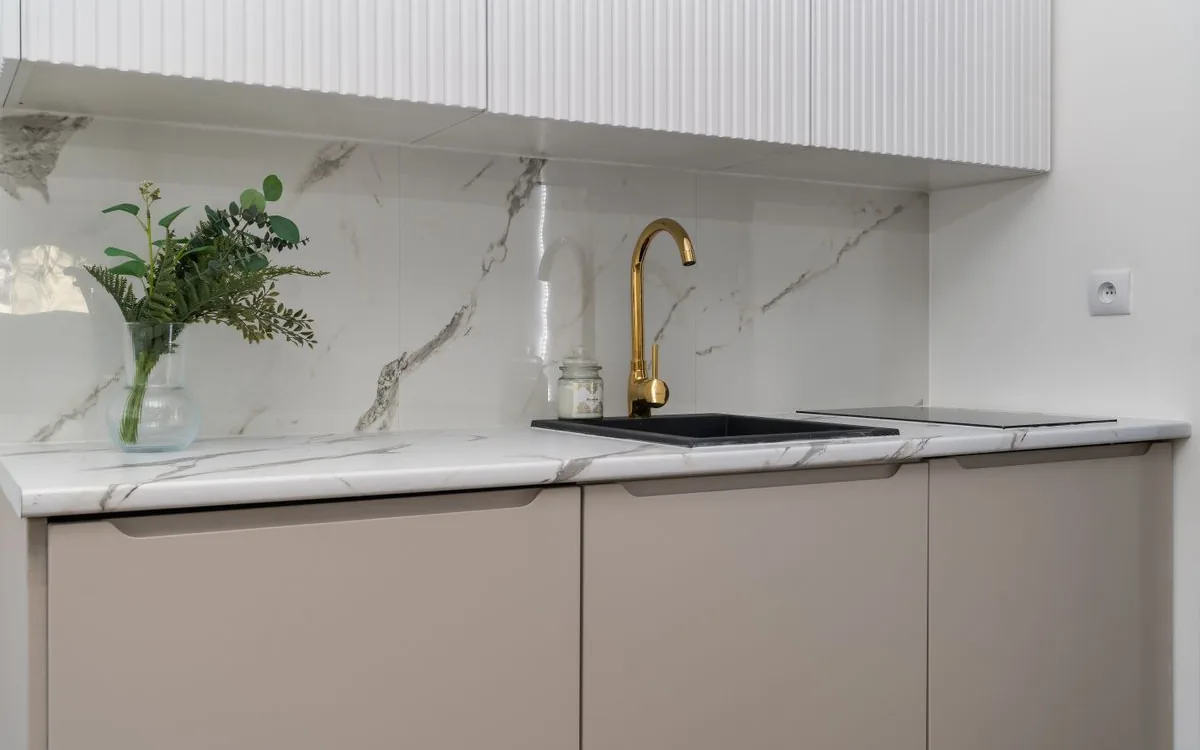
Countertops are the second big lesson, because the price gap between materials is enormous. Consumer Reports reports laminate counters at about $10 to $40 per square foot installed, compared with granite or quartz at about $40 to $100 per square foot. For a kitchen with 40 square feet of countertop, that gap alone can mean $1,200 to $2,400 or more.
Laminate has improved a great deal. Modern laminate can mimic stone patterns, resists stains well and suits a busy family kitchen. Butcher block is another lower cost option that adds warmth, although it needs regular oiling and care around water.
If you love stone, use it where it shows most, such as the island, and use laminate or butcher block on the perimeter runs. Going to a stone fabricator directly can also save money, because fabricators sometimes sell remnant pieces large enough for a small kitchen at a lower price.
Measure your countertop area before you shop. Count each run in square feet, add a little for cuts and waste, and ask every supplier to quote the same area so the prices compare fairly. A quote that looks cheap for a smaller area is not a saving.
Also confirm what the quote includes, such as the sink cutout, edge finish, backsplash and installation, because those extras can add hundreds of dollars after the headline price.
What work can you safely do yourself?
Doing safe work yourself is a practical part of how to save money on a kitchen remodel, because labor is the second largest budget share. Painting walls, replacing cabinet hardware, fitting open shelving and assembling ready to assemble cabinets are all realistic for a careful homeowner. Removing old cabinet doors and clearing the room can also cut paid hours, provided you confirm what is safe to remove first.
Some jobs must stay with licensed trades. Gas lines, new electrical circuits, moving a load bearing wall, major plumbing changes and anything inside a breaker panel are not do it yourself savings. A mistake in those areas can cause a fire, a flood or a failed inspection, and the repair bill will exceed anything you saved.
Ask your contractor which tasks they are happy for you to take on, and get that agreement in writing before work starts.
Safety comes first on every task you do take on. Turn off power at the breaker before touching wiring or outlets, turn off water before touching supply lines, wear eye protection and a dust mask for sanding and demolition, and keep children and pets out of the work area. If a task feels beyond your skill, stop and hire help.
A kitchen remodel has no deadline worth an injury.
How do you buy appliances and materials for less?
Appliances are a good place to save without touching quality, and a smart part of how to save money on a kitchen remodel. Consumer Reports notes that keeping appliances you already own in good working order can save $1,500 to $5,000, according to the National Association of the Remodeling Industry. If an appliance must go, shop holiday sales and off season clearance events, compare floor models and scratch and dent stock, and check energy rebates through the Database of State Incentives for Renewables and Efficiency before you buy, because rebate programs change by state and by year.
Cabinets can also be bought for less. Ready to assemble cabinets from big box stores cost far less than custom cabinets, and standard stock cabinets are the cheapest option for a 10 by 10 kitchen. Used cabinets from local groups, salvage yards and kitchen demolition firms are another option if you can inspect them for water damage and check that the sizes fit your layout.
Buy materials in the right order. Order cabinets and appliances early, because long lead times delay every trade that follows. Keep all receipts, warranties and model numbers in one folder, and photograph each delivery before installation.
If a damaged item arrives, report it at once, because a damaged countertop discovered after installation is far harder to replace.
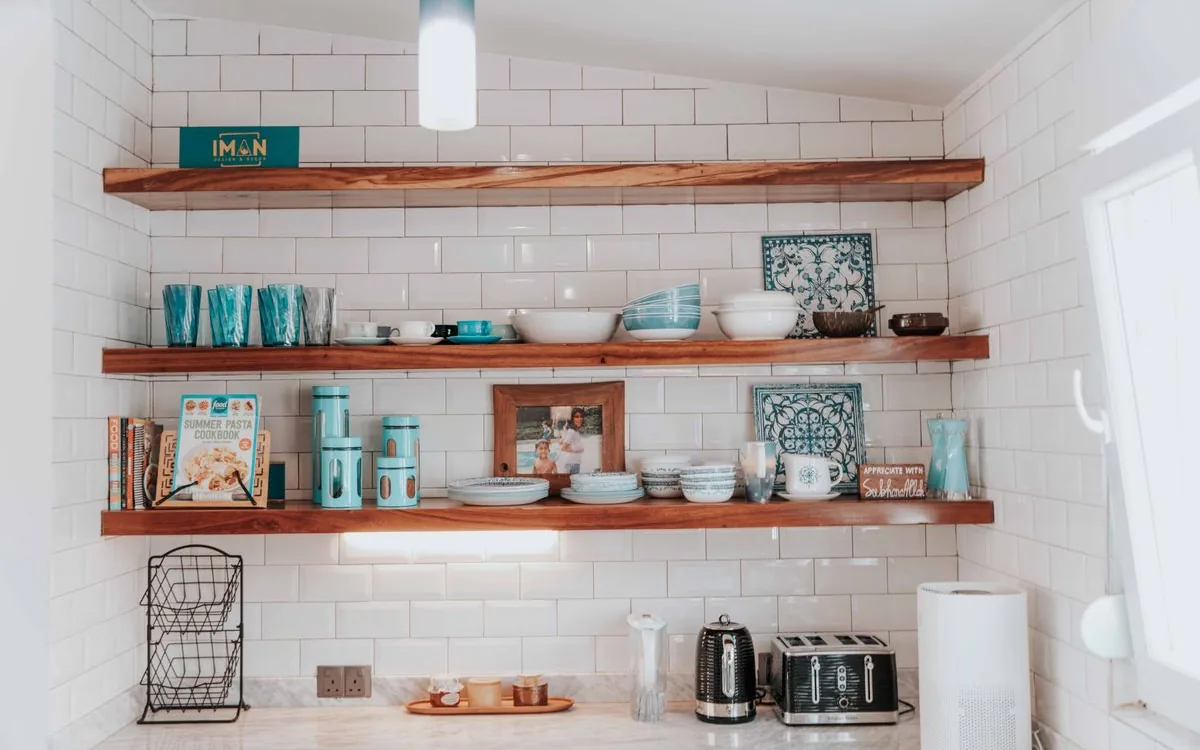
Can you save money with open shelving and a new backsplash?
Removing upper cabinets and fitting open shelving is one of the cheapest visual changes in a kitchen. Shelving boards and brackets cost a small fraction of new upper cabinets, and the open look makes a small kitchen feel larger. Keep the shelving to items you use daily, such as plates, bowls and glasses, so it stays tidy and useful rather than turning into clutter.
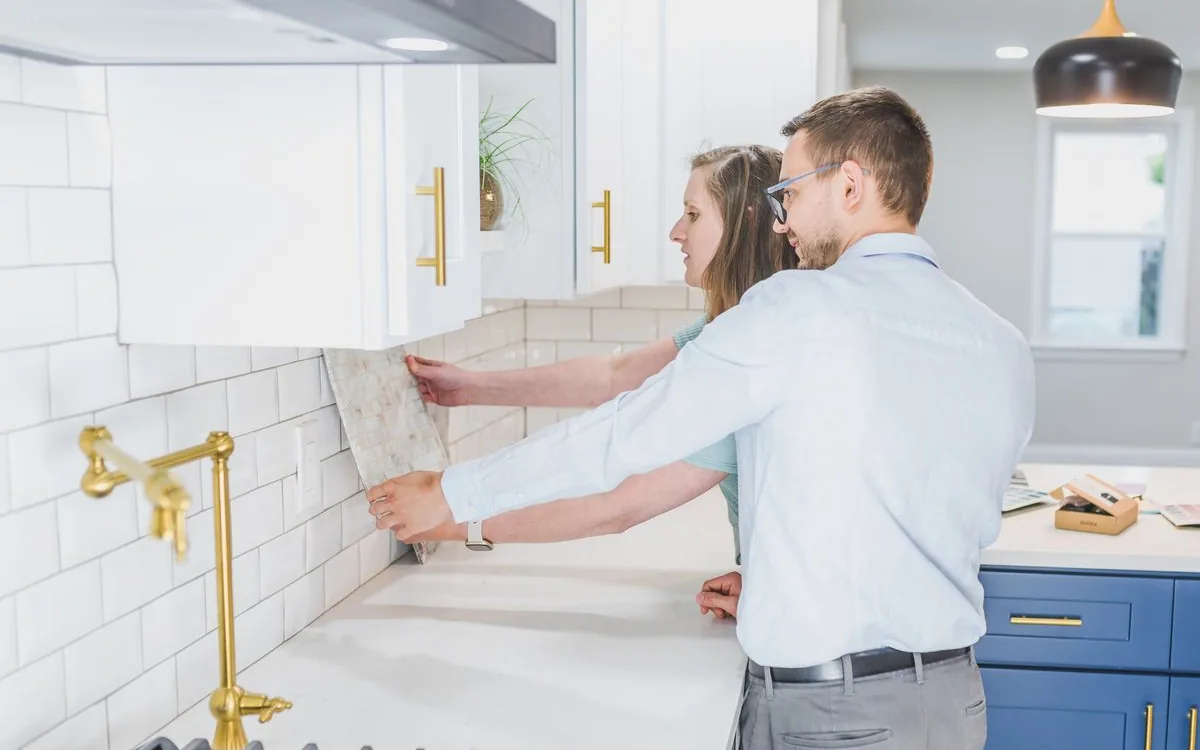
A backsplash refresh is another low cost, high impact change. A simple subway tile backsplash, a peel and stick tile for a rental friendly refresh, or a fresh coat of tile paint can transform a wall for a few hundred dollars. If you tile yourself, practice your cuts on spare tiles first, keep grout lines even with spacers, and seal natural stone tiles so cooking splashes do not stain them.
What do $5,000, $10,000 and $15,000 buy when you learn how to save money on a kitchen remodel?
The $50,500 worked example below is a midrange kitchen. Most readers start smaller, so here is what each budget buys, from Angi, updated 9 July 2026. Read the rows as a ladder: each step adds one more job, and none of them moves a wall.
| Budget | What it buys |
|---|---|
| $5,000 | Repainted cabinets, $100 to $200; open shelving instead of upper cabinets, $100 to $300 per linear foot; a kitchen island cart, $100 to $500 if you build it yourself; new lighting and hardware; one or two appliances upgraded |
| $10,000 | Everything in the $5,000 row, plus new custom cabinetry at about $5,000 on average, new countertops at $25 to $100 per square foot, a backsplash at about $1,000, and more appliances upgraded |
| $15,000 | Everything in the $10,000 row, plus a kitchen island at about $4,000 on average and new flooring at $1,510 to $4,650 depending on the material |
On appliances, timing is the saving. Angi advises planning appliance upgrades around holiday weekends and comparing prices across local shops, and bundling helps too: buying a fridge, range, and dishwasher as a set usually costs less than buying each one alone. Floor models and last year lines are the other quiet discount, and the worked example below already uses holiday sale prices for its $1,000 appliance saving. Those appliance timing figures come from Angi, How to Save Money on a Kitchen Remodel.
Worked example: saving $20,000 on a 150 square foot kitchen
This worked example shows how to save money on a kitchen remodel with a real room size and real price lines, so you can see how the savings add up instead of trusting a vague promise. Start with a 150 square foot kitchen and a midrange baseline budget of $50,500. That baseline includes $15,000 for cabinets, $13,000 for labor, $6,000 for appliances, $5,500 for countertops, $3,500 for flooring, $3,000 for plumbing and electrical work, $3,000 for backsplash, lighting and fixtures, and $1,500 for permits and design.
Each line is a planning figure, not a quote, and local prices will vary.
Now apply five savings. Keep the layout and avoid moving the sink and the range, which saves $6,000 in plumbing, electrical and patching work. Reface the cabinets for $7,500 instead of replacing them for $15,000, which saves $7,500.
Choose laminate counters for $2,500 instead of quartz for $5,500, which saves $3,000. Paint the walls, replace the hardware and fit the backsplash yourself, which saves $2,500 in labor. Shop appliance sales and claim an energy rebate, which saves $1,000.
Total saving: $20,000. New total: $30,500.
Notice what was not cut. The budget still pays for licensed electrical and plumbing work, permits, a proper sink and faucet, and quality lighting. The kitchen still gets new cabinet fronts, new counters, a new backsplash and better storage.
Saving money here means spending less on the same result, not buying a worse kitchen. If your own quotes differ, redo the same table with your figures and keep any line that protects safety or structure.
Checklist: keep your kitchen remodel on budget
Use this checklist for how to save money on a kitchen remodel before you sign any contract. Set a total budget and hold back 10 percent to 15 percent as a contingency for surprises behind walls. Get three written quotes with the same scope, so each contractor prices the same work.
Price layout changes separately from the rest of the job. Decide your cabinet strategy in writing: paint, reface or replace. Choose your countertop material by total installed cost per square foot, not by the sample price alone.
During the job, approve every change in writing with its price before the work happens. Photograph each stage, keep every receipt, and pay in stages tied to completed work, never in full up front. At the end, walk the kitchen with your contractor, test every drawer, door, outlet and appliance, and keep a punch list of small fixes until each one is done.
A written record protects both sides and stops small extras from growing into a large overrun.
What should you never cut to save money?
Knowing how to save money on a kitchen remodel also means knowing which cuts cost far more than they save. Never skip a building permit where one is required, because unpermitted work can block a future sale, void insurance and force costly rework. Never reuse damaged wiring, a leaking supply line or a vent that does not meet code.
Never remove a wall without confirming whether it carries load, and never cover water damage with new cabinets instead of fixing the leak first.
Ventilation is another line worth protecting. A range hood that vents outside removes cooking moisture and grease, which protects cabinets and indoor air. Cheap unvented recirculating fans look similar but do far less.
Likewise, proper waterproofing behind a sink and around a dishwasher prevents slow leaks that rot cabinet bases unseen. These are invisible savings that only show up years later, when the cheap option fails.
Safety disclaimer: this guide gives general planning information, not trade advice for your home. Gas, electrical, plumbing and structural work must follow local codes and be done by licensed professionals where the law requires it. If you are unsure whether a task is safe or legal to do yourself, ask a licensed trade professional before you start.
Sources
- Angi, How to Save Money on a Kitchen Remodel, updated 9 July 2026. Read the Angi guide
- Angi, How Much Does a Kitchen Remodel Cost, 2026 data, national average $26,952. Read the Angi guide
- This Old House, Cabinet Refacing: Everything You Need to Know. Read the This Old House guide
- Consumer Reports, countertop pricing, and DSIRE, energy rebate finder. Search DSIRE rebates
Related guides
- How Much Does a Kitchen Remodel Cost in 2027?
- Kitchen Remodel Cost in 2027: What Homeowners Actually Pay
- How Much Does a Building Permit Cost? 2027 Price Guide
- How Much Should a 10×10 Kitchen Remodel Cost in 2026
- How Much Do Kitchen Cabinets Cost in 2027
Frequently asked questions
How much can a typical homeowner save on a kitchen remodel?
A typical homeowner can save $5,000 to $20,000 by keeping the layout, refacing cabinets and choosing a lower cost countertop. The exact figure depends on kitchen size, starting condition and local labor rates. A written quote comparison shows your own saving far better than any national average.
Is it cheaper to reface cabinets or to buy new ones when you want to learn how to save money on a kitchen remodel?
Refacing is usually 30 percent to 50 percent cheaper than replacing cabinets, based on published remodeling guides. Refacing suits cabinet boxes that are square, solid and free of water damage. If boxes are swollen, warped or out of square, replacement is the better long term choice.
What is the cheapest countertop that still looks good?
Laminate is usually the cheapest countertop that still looks good, at about $10 to $40 per square foot installed according to Consumer Reports. Modern laminate patterns mimic stone well and resist stains in daily use. Butcher block is another lower cost option, but it needs regular oiling and care around water.
Should I keep my old appliances during a remodel?
Keep appliances that work well, fit the new layout and match in style, because replacing a full set can cost $1,500 to $5,000 or more. Replace any appliance that leaks, wastes energy badly or no longer fits the space. Shop sales and rebates for the replacements you truly need.
Do I need a permit for a kitchen remodel?
You need a permit when the work moves plumbing, gas or electrical lines, removes walls or changes structure, and rules vary by city. Cosmetic work such as painting, replacing hardware and refacing cabinets usually needs no permit. Check with your local building department before work starts, because unpermitted work can cause problems at sale time.