Is Tankless Water Heater Better Than a Tank in 2027
So is tankless water heater better? For a household that stays put, yes, and for a big family on a tight budget, often no. Tankless costs $2,000 more to install than a tank, saves $50 to $100 a year on gas, and lasts more than 20 years.
Tuesday, 6:40 in the morning. Mark is third in line for the shower, and the water turns cold halfway through his rinse. The tank in the garage is ten years old, it holds 40 gallons, and the family has outgrown it.
His plumber gives him two prices. A new tank, fitted by Friday, for a modest sum. A tankless unit, fitted next week, for about $2,000 more.
Mark asks the question every homeowner asks at this point. Is a tankless water heater better, or is it just a dearer box on the wall?
This article answers it with real numbers, not sales talk: cost, energy, hot water supply, space, lifespan, and the hidden work a switch needs.
How each one heats your water
A tank water heater is a big insulated cylinder that stores 30 to 80 gallons and keeps it hot around the clock. It reheats the water as it cools, so it burns energy even when nobody is home. That steady loss is called standby heat loss.
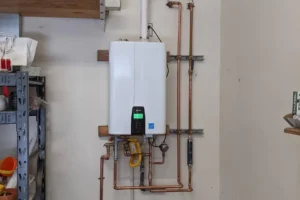
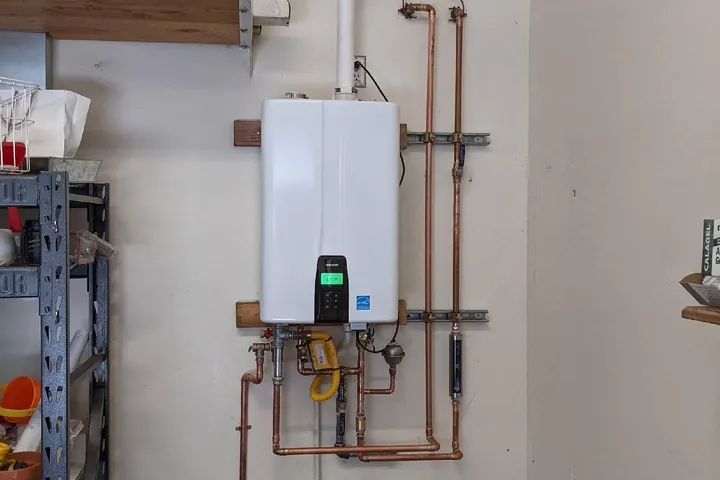
A tankless water heater has no tank at all. When you open a hot tap, cold water flows through a heat exchanger, a bundle of coils that heats the water as it passes through. The burner or element fires only while the tap runs, then shuts off.
The U.S. Department of Energy says water heating takes up nearly 20 percent of average home energy use. It is typically the second largest energy expense in any home, after heating and cooling. That is why the choice matters.
Both types come in gas and electric models. Gas heats faster and usually costs less to run, while electric needs no vent and no gas line. Our guide to how a tankless water heater works explains the heat exchanger in full.
The whole comparison in one table
Read down the column that matches your priority. No row wins every time.
| Factor | Tank water heater | Tankless water heater |
|---|---|---|
| Installed cost | $600 to $3,100 | $1,400 to $5,600 |
| Energy use | Loses heat around the clock | Heats water only while a tap runs |
| Hot water supply | Limited by tank size, then it recovers | Endless, up to the flow limit |
| Several taps at once | Handles it well until the tank runs low | Needs the right size or it runs cool |
| Space | Needs a floor spot | Hangs on the wall |
| Lifespan | 10 to 15 years | More than 20 years |
| Upkeep | Flush sediment from the tank | Descale the heat exchanger each year |
Costs in the table come from HomeGuide 2026, and lifespans come from the U.S. Department of Energy.
Tankless water heater better for a busy household?
For a family that showers back to back, the tankless water heater better question starts with the queue. A properly sized tankless unit never runs out, so the fourth shower is as hot as the first.
A tank cannot promise that. A 50 gallon tank gives you one long shower and part of a second, then the water cools while the tank recovers. In a house with teenagers, that recovery time is the whole argument.

Space is the second win. A tankless box hangs on the wall and frees the floor a tank would take. In a small home, that freed closet or garage corner is worth real money.
Energy is the third win. The U.S. Department of Energy puts the gain at 24 percent to 34 percent more energy efficient than a storage tank. That figure holds at 41 gallons of hot water a day or less, and it shrinks to 8 percent to 14 percent at about 86 gallons a day.
When you compare models, look for the UEF rating, the Uniform Energy Factor, which rates how efficiently the unit turns energy into hot water. ENERGY STAR asks gas tankless units for a UEF of at least 0.95.
Lifespan is the fourth win. The U.S. Department of Energy puts a tankless unit at more than 20 years with regular care, against 10 to 15 years for a storage tank. One tankless unit can outlast two tanks, and that changes the long term math.
Where a tank still wins
Start with the price tag. HomeGuide puts a traditional tank at $600 to $3,100 installed, against $1,400 to $5,600 for a tankless unit.
Gas tankless runs $2,100 to $5,600 installed, and electric tankless runs $1,400 to $3,000. Our guide to how much a tankless water heater costs breaks the install price into lines.
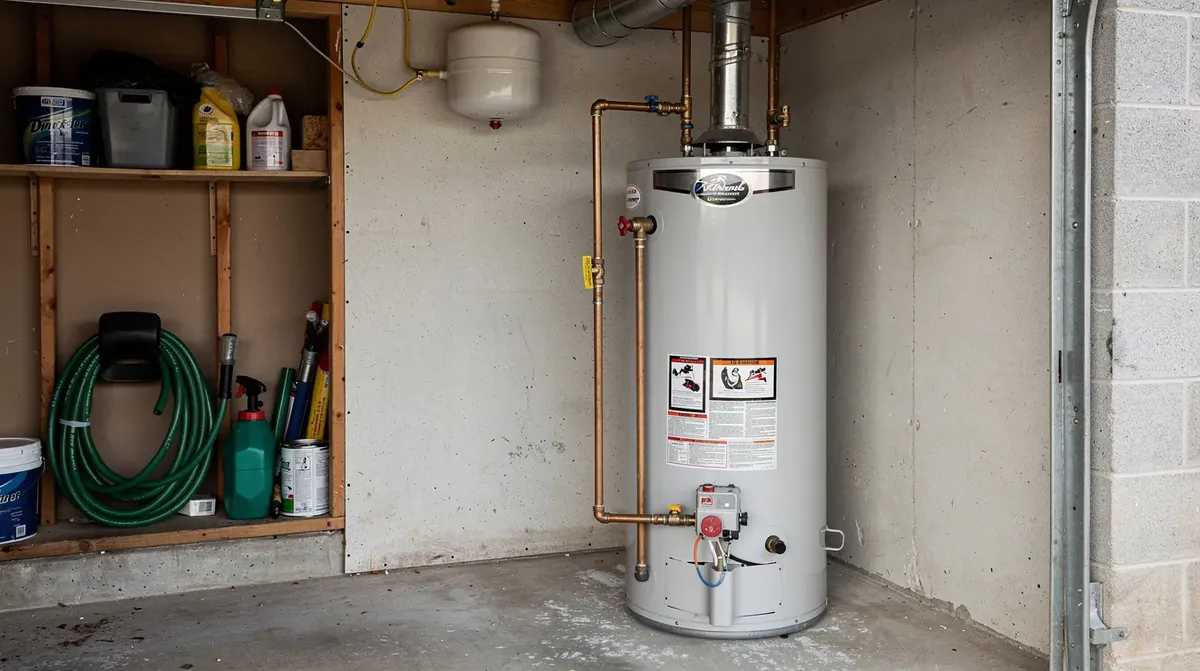
A tank swap is also the simple job. The new tank uses the same gas line, vent, and water lines as the old one, so a plumber can often finish in a few hours.
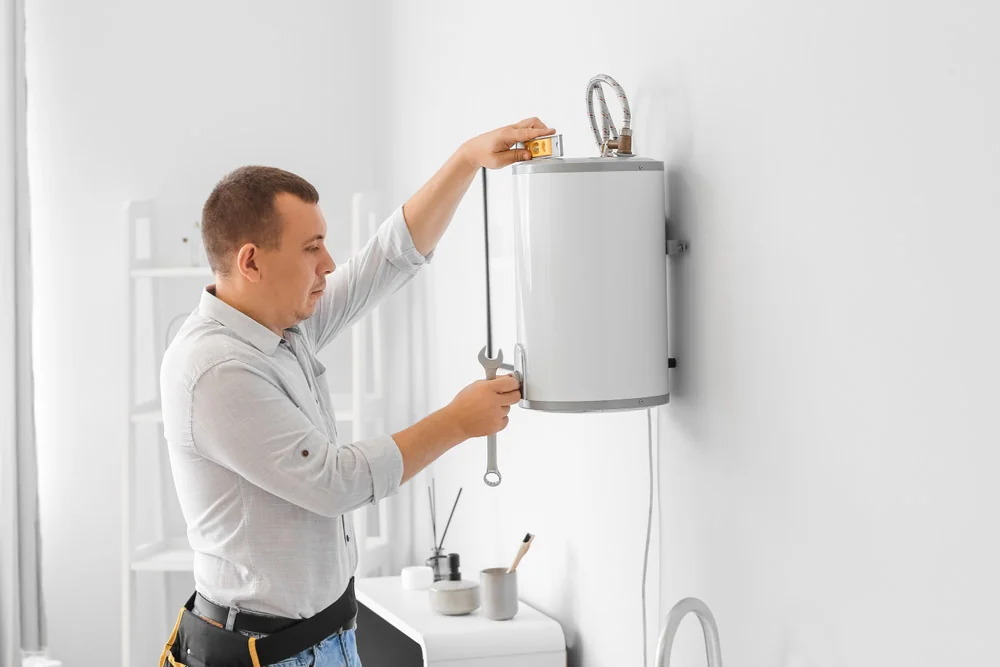
Is tankless water heater better when the old tank just died? Usually not. According to the American Council for an Energy Efficient Economy, quoted by ARS, 90 percent of water heater installations happen during an emergency.
A tank also handles several taps at once without special sizing. Showers, laundry, and the dishwasher can all run together until the stored water runs low.
So, on money alone, tankless water heater better is a hard sell. For most gas homes, the honest answer is no, and the next section shows why with the arithmetic.
Tankless water heater better on energy bills?
Consumer Reports tested both types in 2019. A gas tankless unit cost $195 a year to run, against $245 for a gas tank.
An electric tankless unit cost $535 a year, against $580 for an electric tank. Those figures come from 2019 tests at 2019 energy rates, so your own costs will differ.
Do the subtraction. Gas saves about $50 a year, and electric saves about $45 a year. That is the real saving, not the percentage.
Percentages sound big, but dollars sound small, because they are.
The U.S. Department of Energy adds one warning. A gas tankless unit with a standing pilot light can waste enough gas to cancel much of the saving. Pick a model with intermittent ignition, which lights the burner only when water flows.
The payback math, worked out
Take a planning premium of $2,000, the gap between a mid range tank install and a mid range tankless install in the HomeGuide ranges above. Tankless water heater better for your wallet comes down to payback. Divide the premium by the yearly saving, and you get the payback in years.
| Household | Yearly saving | Payback on a $2,000 premium |
|---|---|---|
| Gas, Consumer Reports 2019 saving | $50 a year | 40 years |
| Gas, ENERGY STAR typical saving | $100 a year | 20 years |
| Electric, Consumer Reports 2019 saving | $45 a year | 44 years |
Forty years is longer than the unit lasts. Twenty years is the whole life of the unit. Even the kindest figure only just breaks even, and that is before you pay for yearly descaling.
Consumer Reports reached the same verdict from the other direction. It put the wait at 22.5 to 27.5 years for lower energy bills to cover a tank to tankless swap.
That is the honest answer to the tankless water heater better question on money alone. It is not. It is better on comfort, space, and lifespan, and you pay for those things up front.
The switch costs that decide it
Switching from a tank to a tankless unit is rarely a simple swap, and each check below can add a line to the quote.
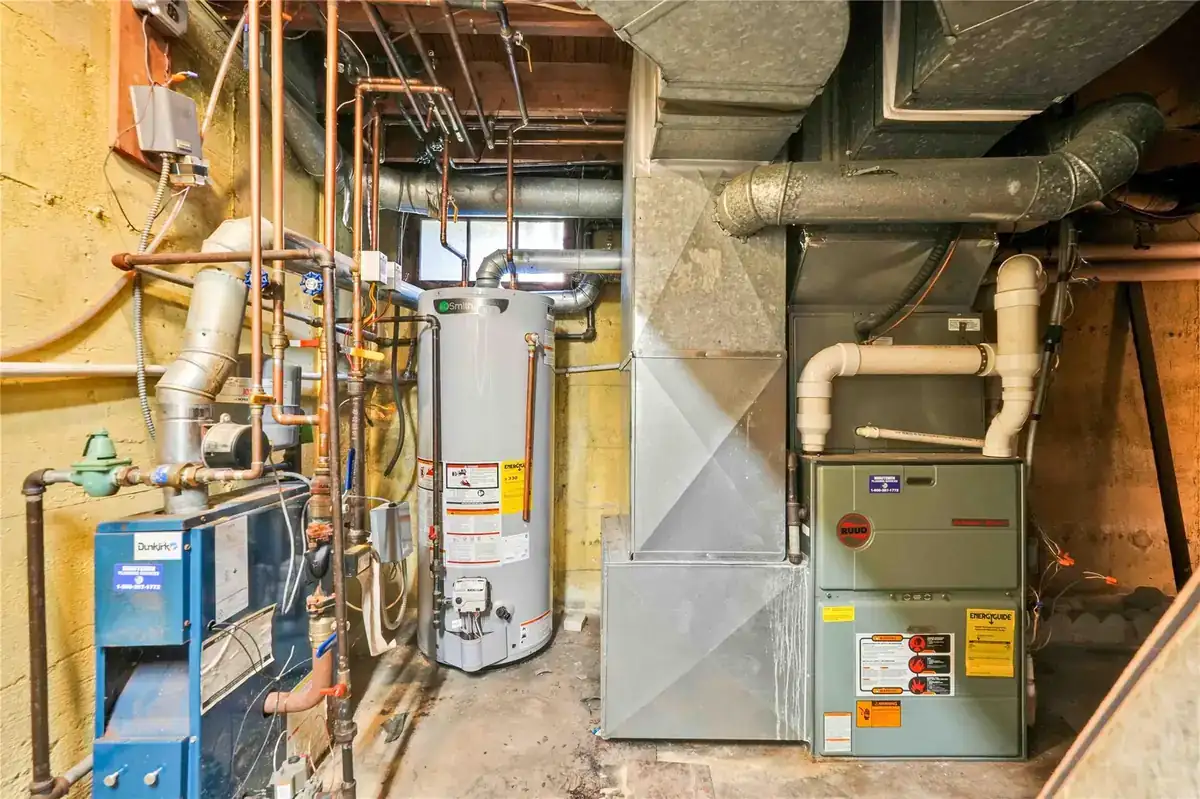
Gas supply comes first. A gas tankless burner drinks gas far faster than a tank burner, so the old line may be too narrow, and upsizing it runs $350 to $750, according to HomeGuide.
Venting comes next. Its exhaust must leave the house through a vent pipe, and HomeGuide puts vent replacement at $100 to $600. Plastic vent pipe suits a condensing unit, since its exhaust runs cooler.
Electric buyers can get the same kind of surprise. HomeGuide puts a dedicated circuit at $250 to $900 and a full electrical panel replacement at $850 to $1,700.
HomeGuide puts permits at $50 to $200 and old tank removal at $75 to $500. A like for like tank swap needs none of this work, which is why its quote looks so much smaller.
Is the tankless water heater better case strong enough to justify a new gas line and vent? Only you can answer that once you see each line priced on its own.
Where tankless can let you down
Flow rate is the limit most buyers miss. The U.S. Department of Energy says tankless units typically deliver 2 to 5 gallons of hot water per minute, with gas models generally producing more than electric ones. A shower runs about 1.25 to 2.5 gallons per minute, so two showers plus a dishwasher can push a small unit past its limit.
When that happens, the water does not stop. It just runs cooler than you set it.
The fix is a larger unit, a second unit, or a small point of use heater for one fixture. All three cost money, so size the unit before you buy it, not after.
Cold water can also surprise you in a smaller way. A tankless unit can give a brief burst of cool water between uses. Hot water left in the pipes cools, then reaches the tap before the heater fires again.
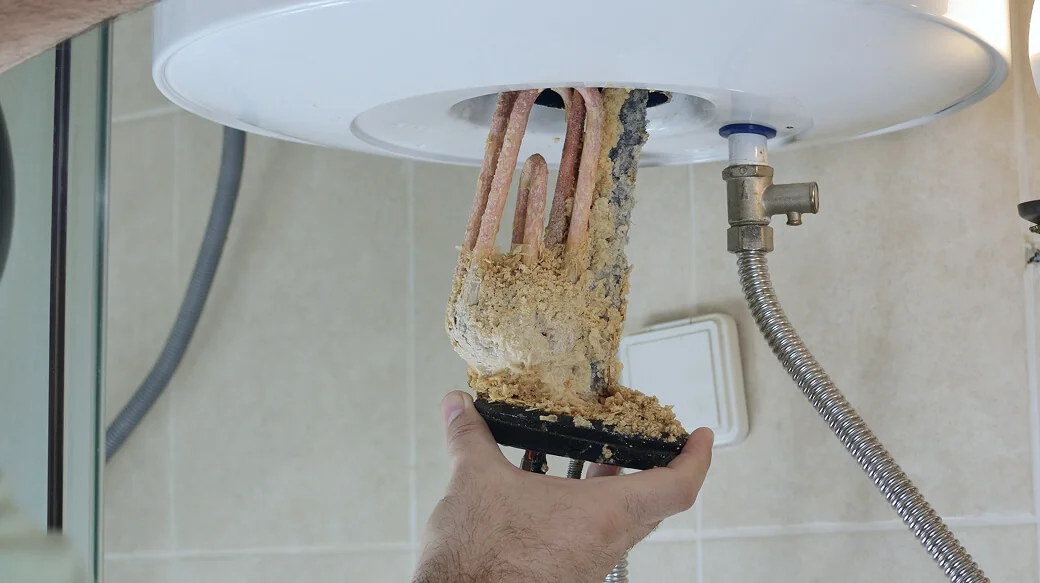
Hard water is the slow problem. Mineral deposits, called scale, coat the inside of the heat exchanger and cut its performance over time. The fix is a yearly descale, and our guide to how to flush tankless water heater units walks through it.
Winter is the last test. In cold months the incoming water can arrive near 40 degrees, so the heater must add 80 degrees to every gallon. A unit that coped fine in July can struggle in January.
The tax credit is gone
Old cost pages still mention a federal tax credit for energy efficient water heaters. Do not plan your budget around it. The federal energy efficiency tax credit, known as 25C, ended for equipment placed in service after December 31, 2025, according to the IRS.
While it lasted, the credit paid 30 percent of qualified costs, up to $600 for a gas water heater. That money is gone for new installs in 2026. Work finished and in service by December 31, 2025 can still be claimed on a 2025 return, using IRS Form 5695.
Utility and state rebates of $400 to $1,200 still exist in many places. Income qualified federal rebates of up to $1,750 exist in the states that have opened them, for replacing electric equipment, so check your utility before you sign a quote.
Once a rebate lands, tankless water heater better gets easier to justify. A rebate cuts the premium, so redo the payback math with the lower number.
Five questions that settle it
The question “tankless water heater better” has no single answer, so work through these five questions first. They settle it faster than any sales brochure.
First, how long will you stay in this house? Tankless pays back slowly, so it suits a home you plan to keep for 15 years or more, while a move in five years favours a tank.
Second, how many showers run at once in your house? One shower at a time suits either type. Two or three at once needs a big tankless unit, sized and priced for that peak, or a tank that simply holds more water.
Third, what does your house need behind the wall? A gas line upgrade, new venting, or a panel replacement can add $1,000 or more to a tankless install. The gap shrinks a lot if your house already has what tankless needs.
Fourth, is your water hard? Hard water means yearly descaling for a tankless unit and yearly flushing for a tank. If you will not keep up that care, a tank is the more forgiving choice.
Fifth, is your tank dead now or still running? A dead tank means a fast tank swap restores hot water the same day. A working tank gives you time to plan a tankless switch during a remodel, when the extra work is cheap to add.
A third option worth a look
If your home runs on electricity, a heat pump water heater is worth a look. It moves heat from the surrounding air into a storage tank instead of generating heat directly, which can cut running costs well below a standard electric tank. It needs interior space that stays between 40 to 90 degrees Fahrenheit year round, plus 1,000 cubic feet of air space, so a cramped closet will not do.
Related guides
- What Is a Tankless Water Heater in 2027
- How Does a Tankless Water Heater Work in 2027
- How Much Is a Tankless Water Heater in 2027
- How Long Does a Water Heater Last in 2027
Frequently Asked Questions
Is tankless water heater better than a tank?
It depends on your house. Tankless wins on endless hot water, space, and lifespan, while a tank wins on upfront cost and a simple install. Small households that stay put gain most from tankless.
How much more does tankless cost to install?
HomeGuide puts a tank at $600 to $3,100 installed and a gas tankless unit at $2,100 to $5,600. The gap is mostly the gas line, venting, and electrical work a switch needs.
How much does a tankless water heater save each year?
Consumer Reports 2019 testing put the gas saving near $50 a year and the electric saving near $45 a year at 2019 energy rates. The ENERGY STAR figure for a typical family is a saving of $100 or more a year, and your own saving depends on how much hot water you use.
What is the lifespan of a tankless water heater?
More than 20 years with regular descaling, according to the U.S. Department of Energy. A storage tank lasts 10 to 15 years. Hard water shortens both lives without regular care.
Will a tankless water heater cope with two showers at once?
Yes, if it is sized for it. The U.S. Department of Energy says tankless units typically deliver 2 to 5 gallons per minute. Add up the flow of every tap that runs together and size the unit above that total.
Is there still a federal tax credit for a tankless water heater?
No, not for new installs. The federal energy efficiency tax credit ended for equipment placed in service after December 31, 2025. Check your utility and state for rebates that may still apply.
One small box holds hot water, gas, and power, so take care with every step. Set the temperature to 120 degrees Fahrenheit to lower the risk of scalding. Go lower still if children or older people live in the house.
Do not touch a gas line, a vent, or the wiring yourself. A gas or vent fault can spill carbon monoxide into the house, while a panel mistake can start a fire. Leave all three jobs to a licensed pro, and make sure the permit is filed.
Mark picked the tank. His tank had died on a Tuesday, his budget was tight, and his family of five runs three showers before school. In five years, when the new tank wears out, he may pick tankless instead.
That is the real lesson here. The better heater is the one that fits your house, your habits, and your timing. Ask is tankless water heater better one last time, and answer it with those three things, not with a sales brochure.
Sources: U.S. Department of Energy Energy Saver, Tankless or Demand Type Water Heaters; ENERGY STAR, Water Heaters; ARS, Tankless vs Tank Water Heater; HomeGuide, Tankless Water Heater Installation Cost 2026. Every figure above is a national planning figure from the source named beside it, not a price for your own home. Prices vary from town to town, so ask a licensed plumber near you for a written quote before you book.