How to Paint Bedroom Walls Like a Professional in 2027
How to paint bedroom walls like a professional comes down to prep, the right tools, and a method. Clean and repair the walls, tape the trim, cut in the edges with an angled brush, then roll in a W pattern and apply two coats. A standard 12 by 12 bedroom takes 6 to 9 hours and 2 gallons of paint.
Five steps carry the whole job, and they are how to paint bedroom walls in short. Prep the walls, tape the trim, cut in the edges, roll two coats, and let each coat dry. The rest of this piece fills in each step.
A fresh coat of paint is the cheapest way to change a bedroom. Paint costs far less than new furniture, and one weekend of work can make a tired room feel new. The difference between a job that looks done by a professional and one that looks rushed is order, patience, and a few habits that pros repeat on every wall.
This piece walks through how to paint bedroom walls from the first strip of tape to the last roller pass, with real costs, real times, and the small habits that separate a clean job from a patchy one. Follow it in order and a standard bedroom is a one day job.
What Does a Professional Finish Look Like?
A professional finish is not a talent. It is the result of the right order, the right tools, and unhurried drying time, and that is how to paint bedroom walls like a professional. The color looks even from every angle, the edges at the ceiling and trim are sharp, and there are no roller marks, drips, or shiny patches.
Run your hand over a well painted wall and it feels smooth. Look along the wall in low light and you will not see lap marks where one roller pass met the next.
Most bad paint jobs fail before the roller comes out. Dust left on the wall, holes left unfilled, and tape pressed down loosely all show through the finished coat. Paint hides nothing.
It shows every shortcut, so the prep stage below matters more than the painting itself.
What Tools and Paint Do You Need?
Gather everything on this list before you learn how to paint bedroom walls well. Stopping halfway to buy a missing brush wastes time and lets cut in edges dry before you roll, which causes lap marks.
- Interior latex paint, eggshell or satin finish, 2 gallons for a standard bedroom
- Primer, 1 gallon, only if the walls are bare, stained, or going from dark to light
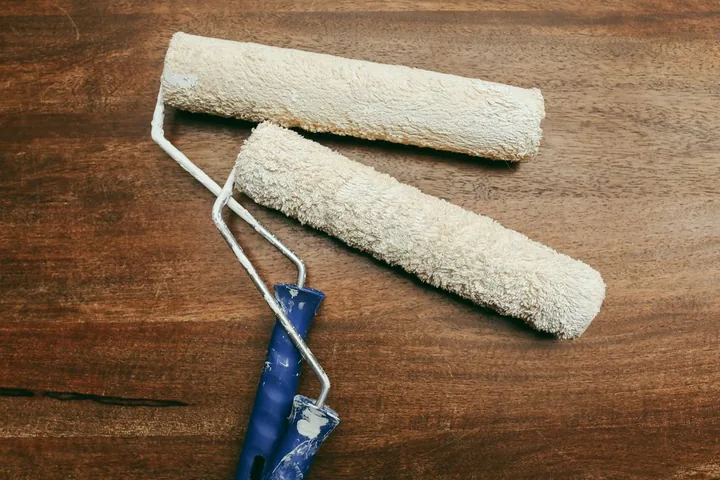
- 9 inch roller frame with 2 half inch nap roller covers
- 2 and a half inch angled sash brush for cutting in
- Paint tray with liners, 5 in 1 tool, and a stir stick
- Painter tape, 2 inch wide, plus canvas drop cloths or plastic sheeting
- Spackle, putty knife, sanding sponge, and a damp cloth
- Extension pole, step stool, and a paint can opener
Work out how much paint you need before you shop. One gallon of interior paint covers about 350 to 400 square feet per coat, according to maker data sheets from Sherwin Williams and Benjamin Moore. A standard 12 by 12 bedroom with 8 foot ceilings has about 380 square feet of wall, so 1 gallon covers one coat and 2 gallons cover two coats.
When you plan the job, buy both gallons at once so the color matches from the same batch. That is the first shopping rule in how to paint bedroom walls.
Paint costs about $25 to $60 per gallon, and primer costs about $15 to $30 per gallon. HandymanCan puts the full do it yourself cost for one room at $60 to $180, including tape, rollers, and drop cloths. A House in the Hills gives a similar range of $60 to $150.
Hiring a professional painter for the same room costs about $350 to $800, so doing it yourself saves real money.
| Item | Typical cost |
|---|---|
| Interior latex paint, 2 gallons | $50 to $120 |
| Primer, 1 gallon, if needed | $15 to $30 |
| Roller frame, covers, tray, and liners | $20 to $35 |
| Angled sash brush | $10 to $15 |
| Painter tape and drop cloths | $15 to $25 |
| Spackle, putty knife, and sanding sponge | $10 to $15 |
| Total do it yourself cost | $60 to $180 |
If you have not picked a paint yet, read our guide to the best paint for bedroom walls before you buy. Eggshell and satin are the usual picks for a bedroom, because they hide small wall flaws and still wipe clean. Flat paint hides flaws best but marks easily, while semi gloss is too shiny for large wall areas and shows every bump.
How Do You Prepare Bedroom Walls Before Painting?
Preparation is the first real step in how to paint bedroom walls like a professional, and it takes about 90 minutes in a standard bedroom. HandymanCan calls good painting 70 percent prep and 30 percent paint, and that ratio is about right. Skip the prep and the finish will show it.
Move the furniture to the center of the room, at least 3 feet from every wall, and cover it with plastic sheeting. Cover the floor with drop cloths, remove the outlet covers and switch plates, and keep the screws in a small bag.
Fill every nail hole and small dent with spackle, using a putty knife to press it in and scrape it flat. Let it dry fully, then sand each patch smooth with a sanding sponge.
Wipe the whole wall with a damp cloth to remove dust. Dust is the enemy of a smooth finish, because a roller picks it up and leaves lines in the paint.
Run painter tape along the ceiling edge, the baseboards, and around the door and window trim. Press the edge down firmly with a putty knife so paint cannot bleed under it.
Tape the edges of any built in shelves or radiators you are not painting. Take your time here, because straight tape lines are what make the finished edges look sharp.
Do Bedroom Walls Need Primer?
Primer is the step people skip most often, and it is the step that saves a third coat when you learn how to paint bedroom walls. You need primer if the walls are bare drywall, if you are covering a dark color with a light one, or if stains, smoke marks, or water marks show through. A high hiding primer also helps when the old paint is glossy, because paint grips poorly on a shiny surface.
If your walls are already painted in a similar light color and are in good shape, you can usually skip primer. Sherwin Williams advises priming when you switch from dark to light colors, and using a gray shaded primer under a deep color to help the color develop fully. When in doubt, spot prime the patched areas at least, so the spackle does not flash through the topcoat as dull spots.
Apply primer with the same method as paint, and let it dry for the time printed on the can, usually 1 hour, before the first topcoat. A primed wall takes paint evenly, so the color looks the same across the whole room.
How Do You Cut In the Edges?
Cutting in means painting the edges and corners where a roller cannot reach, and it is the skill that most separates a professional finish from an amateur one. Use a 2 and a half inch angled sash brush. Dip it about a third of the way into the paint, tap off the excess against the side of the can, and never wipe the brush on the rim.
Paint a strip about 2 to 3 inches wide along the ceiling edge, the corners, and around the trim. Hold the brush at a slight angle and use the long edge of the bristles to draw a straight line. Work in sections about 3 feet long, and keep a wet edge so the next section blends in without a visible line.
Sherwin Williams recommends cutting in first and then switching to the roller while the edge paint is still wet. That overlap blends the brush marks into the rolled area so they disappear.
If the cut in paint dries before you roll, you will see a frame of brush texture around every wall. Cut in one wall, roll it, then move to the next wall.
How Do You Roll Bedroom Walls Without Streaks?
Rolling is the fast part of how to paint bedroom walls, because one loaded roller covers a large area in minutes. Pour paint into the tray, dip the roller, and roll it back and forth on the ribbed part of the tray until the cover is evenly loaded. The roller should look full but not dripping.
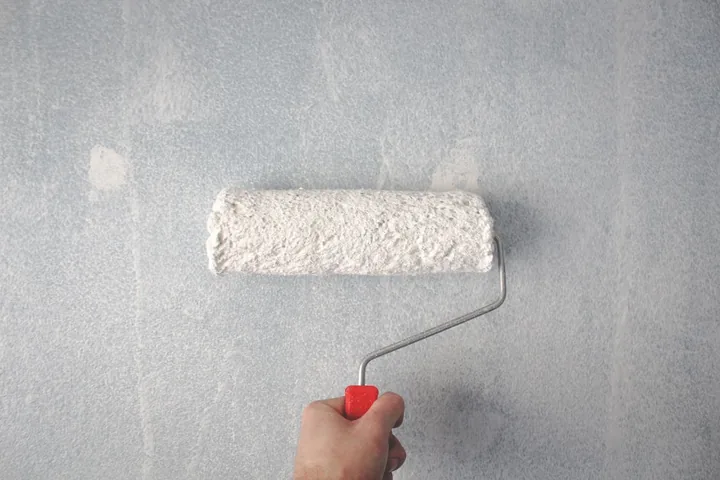
Start near the ceiling and roll down in a W or M pattern, then fill in the shape with smooth overlapping strokes. Work in sections about 3 feet wide, and always roll from a dry area toward the wet edge you just painted. That wet edge is the secret to a finish without lap marks, and it is why you should never stop in the middle of a wall to answer the phone.
Use steady pressure. Pressing hard squeezes paint out of the roller and leaves ridges at the ends of each pass. Let the weight of the roller do the work.
If you see thin spots, reload the roller rather than pressing harder. A 9 inch roller with a half inch nap is the right tool for smooth bedroom walls, and an extension pole saves your back on the upper half of the wall.
Paint the ceiling first if it needs paint, then the walls, then the trim last. Sherwin Williams gives this order because drips fall on surfaces you have not painted yet.
How Many Coats Do Bedroom Walls Need?
Two coats are the quiet rule behind a professional standard. Benjamin Moore recommends at least two topcoats for the best hide and color development, and that is how to paint bedroom walls so the color holds. One coat almost always leaves thin spots, especially over a color change, and the wall looks patchy in daylight even when it looks fine under a lamp.
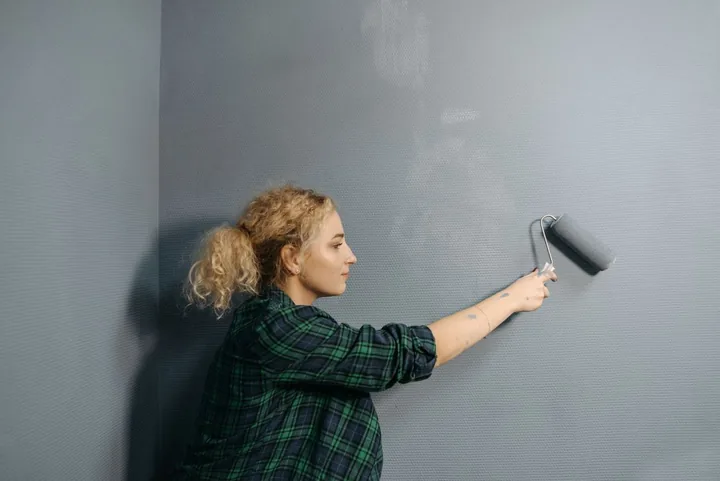
Wait for the first coat to dry fully before the second. Sherwin Williams data sheets give a recoat time of about 2 to 4 hours for most interior latex paint at normal room temperature. Rolling a second coat on too soon is a classic error, because it can lift the first coat, cause streaks, or trap moisture that later shows as bubbles, and how to paint bedroom walls starts with waiting out the recoat time.
Check the wall in daylight after the first coat dries, and look for thin areas near the corners. The second coat fixes these and deepens the color to the shade on the paint chip. Dark colors sometimes need a third coat, so keep a little paint aside for touch ups.
What Mistakes Make Bedroom Walls Look Amateur?
The most common faults come from skipping prep or rushing the second coat, and both are faults you learn to avoid when you learn how to paint bedroom walls. Paint over dust and you get a rough, gritty surface.
Roll over a dry edge and you get lap marks. Use cheap thin paint and you get a finish that needs three coats to cover.
Other common mistakes are easy to avoid. Do not paint in a cold or damp room, because paint dries slowly and can stay tacky.
Do not overload the roller, because drips run down the wall and dry as ridges. Do not pull painter tape off while the paint is fully dry, because it can peel paint with it. Pull the tape at a 45 degree angle while the last coat is still slightly tacky for the cleanest line.
Keep a small brush and a damp cloth beside you while you work. Wipe a drip the moment you see it, and touch up a missed spot while the paint is still wet.
A quick fix now is invisible. The same fix after the paint dries will show as a patch.
When Can You Sleep in a Freshly Painted Bedroom?
Fresh paint smells strongest in the first hours, so plan to sleep elsewhere on painting night if you can. Anderson Pro Painting advises waiting at least 24 hours before sleeping in a room painted with latex paint, and 48 to 72 hours if you used oil based paint. Open the windows and run a fan to move fresh air across the walls.
The full paint drying time for bedroom walls runs longer than the touch dry time. Latex paint feels dry in about 1 hour and takes a second coat in 2 to 4 hours, but it needs 2 to 4 weeks to cure fully. Wait at least 14 days before washing the walls, and leave a small gap behind the bed for the first week so the headboard does not stick to soft paint.
A Real Bedroom Example
This example shows how to paint bedroom walls in a single day without rushing, from tape to cleanup.
Take a standard 12 by 12 bedroom with 8 foot ceilings, one door, and two windows. The walls are medium beige and the new color is a muted light blue in eggshell. The wall area is about 380 square feet, so 1 gallon covers one coat and 2 gallons cover two coats.
The job runs like this. Prep takes about 90 minutes: move the furniture, fill six nail holes, sand, wipe, and tape. Cutting in and rolling the first coat takes about 1 hour.
Wait 3 hours for the first coat to dry, then the second coat takes another hour. The whole day runs about 7 hours, and the materials cost about $110, with paint at $40 per gallon plus tape, rollers, and drop cloths.
Your Painting Day Checklist
- Measure the walls and buy the paint, primer, and tools the day before
- Move furniture to the center, cover the floor, and remove outlet covers
- Fill holes, sand smooth, wipe the dust off, and tape the trim
- Prime bare spots, dark colors, and stains, and let the primer dry
- Cut in one wall, roll it while the edges are wet, then move on
- Let the first coat dry 2 to 4 hours, then apply the second coat
- Pull the tape at a 45 degree angle while the paint is slightly tacky
- Clean the brushes and rollers, and air the room overnight
Painting a Childs Room: VOC and Formaldehyde
Before you choose a color, read the label. That is the short version of how to paint bedroom walls for a room where a child sleeps.
VOCs are the solvents that evaporate as paint dries, and they are what make a freshly painted room smell. Low VOC paint generally means under 50 grams per liter.
Zero VOC usually means under 5 grams per liter, and the tint matters as much as the base, because a deep color can push a zero VOC base over the limit. Benjamin Moore Regal Select sits under 50 grams per liter, and Benjamin Moore Natura is 0 grams per liter in the base with zero VOC colorants, certified GREENGUARD Gold and Green Seal GS-11.
GREENGUARD Gold is a third party emissions test, not a marketing label. It tests the finished paint for chemical emissions with limits set for sensitive environments such as schools and nurseries. Look for it on the can when the room belongs to a child, an asthmatic, or anyone sensitive to smells.
Formaldehyde deserves the same attention. Some paint preservative systems release small amounts over time, and the Centers for Disease Control and Prevention lists formaldehyde as a known human carcinogen at sufficient exposure.
The United States Environmental Protection Agency notes that indoor VOC levels can run several times higher than outdoor levels during and after painting. Paint the room at least three days before the child sleeps in it, keep the windows open and a fan running, and wait until the smell is fully gone, not just fainter.
Safety Notes Before You Paint
Paint in a well ventilated room. Open windows on opposite sides of the room and run a fan to move air across the walls. The United States Environmental Protection Agency notes that indoor VOC levels can run up to ten times higher than outdoor levels during painting, so fresh air matters, especially in a small bedroom.
If your home was built before 1978, take the lead paint warning seriously. The federal government banned lead paint for homes in 1978, but older paint may still sit under newer layers.
The EPA advises using a lead safe certified renovator for work that disturbs old paint, and never sanding or scraping old paint without checking first. If the old paint is peeling or flaking, stop and get advice before you go further.
Use a stable step stool or small ladder for the top of the walls, and never stand on a chair or a stack of boxes. Wear old clothes and shoes you do not mind ruining. Wash your hands well after the job, and store leftover paint with the lid sealed tight for touch ups later.
The room tells you the truth the moment the tape comes off. Once the furniture is back, you will see the payoff for how to paint bedroom walls the professional way.
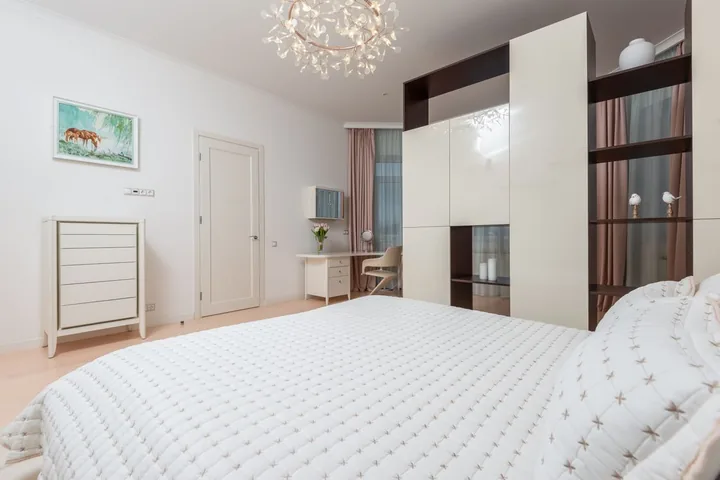
The room looks fresh, the edges are sharp, and the finish will last for years. That is a good return on one day of work and about $110 of materials.
Related guides
- Best Paint for Bedroom Walls: Types and Finishes Explained
- How Much Paint for Bedroom Walls in 2027
- Paint Drying Time Bedroom Walls Explained for 2027
Common Questions
How long does it take to paint bedroom walls?
Learning how to paint bedroom walls takes one full day of work for a standard bedroom. A beginner usually needs 6 to 9 hours from prep to cleanup, including about 90 minutes of prep and 2 to 4 hours of drying time between coats. ManoMano puts a full bedroom redecoration at 2 to 4 days, and the gap is drying time spread across days, not painting time.
Do I need primer before painting bedroom walls?
Prime when the walls are bare, stained, glossy, or changing from a dark color to a light one. If the walls are already painted in a similar light color and are in good shape, you can usually skip primer and go straight to two topcoats.
How many coats of paint do bedroom walls need?
Two coats give the best result on bedroom walls. One coat leaves thin spots and a patchy color in daylight. Dark colors over light walls sometimes need a third coat, so keep a little paint aside for touch ups.
What paint finish is best for bedroom walls?
Eggshell and satin are the best finishes for most bedrooms. They hide small wall flaws, wipe clean, and give a soft sheen that suits a sleeping space. Flat paint hides flaws best but marks easily, while semi gloss is too shiny for large wall areas.
When can I sleep in a freshly painted bedroom?
Wait at least 24 hours after painting with latex paint, and 48 to 72 hours for oil based paint. Keep the windows open and a fan running, and if the room still smells of paint, give it another night elsewhere.